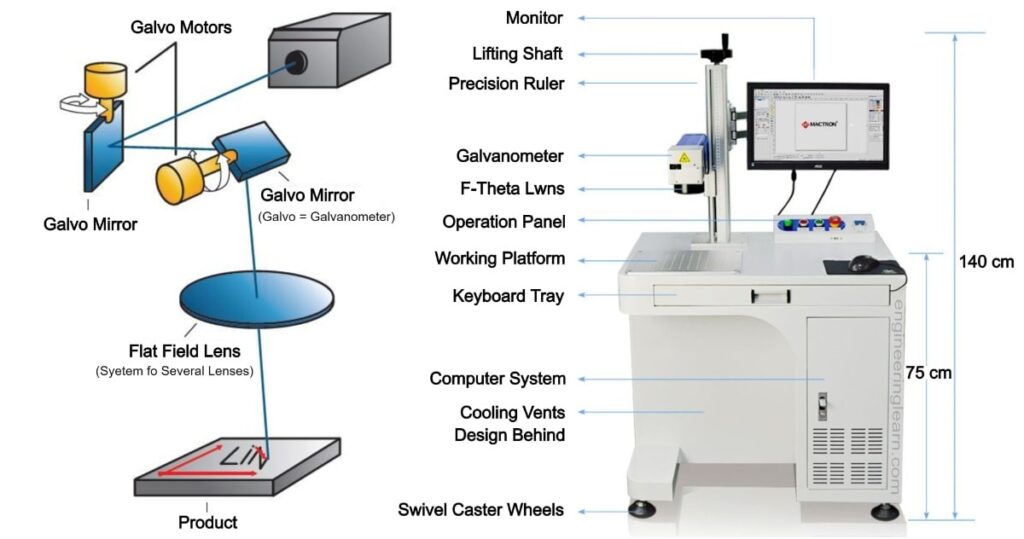
Industrial marking machines play a pivotal role in modern manufacturing, providing accurate, durable, and efficient markings for product identification, traceability, and compliance. As industries evolve, manufacturers are seeking advanced solutions that enhance productivity, improve accuracy, and reduce operational costs. The future of industrial marking machines is being shaped by technological innovations, automation, and increased demand for sustainable and smart manufacturing processes.
Collaborating with a reliable industrial marking machine manufacturer allows businesses to stay ahead of emerging trends and integrate the latest technologies into their production lines. Experienced manufacturers provide guidance on choosing machines optimized for future-ready operations, ensuring compatibility with automation systems, advanced software, and evolving regulatory requirements.
Integration with Industry 4.0
Industry 4.0, characterized by interconnected systems, IoT devices, and real-time data analytics, is transforming industrial marking. Future marking machines are expected to integrate seamlessly with smart production lines, enabling real-time monitoring, predictive maintenance, and automated quality control. These connected machines will provide detailed reporting on mark quality, production speed, and machine performance, allowing manufacturers to make data-driven decisions and reduce downtime.
Advanced Laser and Inkjet Technologies
Laser and inkjet marking technologies continue to advance, offering higher precision, faster marking speeds, and greater versatility. Next-generation laser machines are likely to feature more compact designs, enhanced beam control, and multi-material marking capabilities. Inkjet systems will benefit from improved print head technology, faster drying inks, and the ability to mark a wider range of surfaces with greater accuracy. These advancements will allow manufacturers to meet the demands of high-speed, high-volume production without compromising quality.
Automation and Robotics
The future of industrial marking machines will see increased integration with robotics and automated production systems. Robotic arms can position components precisely for marking, while automated conveyors ensure consistent product flow. This level of automation reduces human error, enhances efficiency, and allows manufacturers to scale production without significantly increasing labor costs. Combining industrial marking machines with robotic systems will also enable flexible manufacturing setups capable of handling multiple product types simultaneously.
Eco-Friendly and Sustainable Solutions
Sustainability is becoming a central concern for manufacturers worldwide. Future industrial marking machines are expected to adopt environmentally friendly practices, such as using non-toxic inks, energy-efficient lasers, and minimizing waste during the marking process. Machines designed for sustainability not only reduce environmental impact but also help businesses comply with regulatory standards and corporate social responsibility initiatives.
Enhanced Software and Traceability
Software innovations are transforming how industrial marking machines operate. Future systems will incorporate advanced coding, serialization, and traceability software, enabling manufacturers to generate unique identifiers for every product automatically. Integration with ERP, MES, and quality management systems will allow for end-to-end traceability, ensuring compliance with industry standards and facilitating rapid response to product recalls or audits.
Customization and Flexibility
Modern manufacturing demands flexibility to accommodate varying product sizes, materials, and designs. Industrial marking machines of the future are expected to offer greater adaptability, including adjustable marking heads, multi-axis operation, and programmable templates. These features will enable manufacturers to switch between product types quickly, maintain consistent quality, and reduce setup time, making operations more agile and responsive to market needs.
Artificial Intelligence and Predictive Maintenance
Artificial intelligence (AI) is poised to play a significant role in the evolution of industrial marking machines. AI-driven predictive maintenance will analyze machine performance, detect early signs of wear or malfunction, and schedule maintenance proactively. This approach minimizes unexpected downtime, extends machine lifespan, and optimizes overall production efficiency. Additionally, AI can assist in quality control by automatically identifying defective markings or inconsistencies.
Conclusion
The future of industrial marking machines is being shaped by advancements in automation, connectivity, software, and sustainable manufacturing practices. From Industry 4.0 integration and AI-driven predictive maintenance to eco-friendly technologies and multi-material capabilities, the next generation of marking machines promises greater efficiency, precision, and adaptability. Partnering with a trusted industrial marking machine manufacturer ensures access to expert guidance, cutting-edge technology, and ongoing support for implementing future-ready solutions. Embracing these trends will enable manufacturers to stay competitive, improve product quality, and achieve long-term operational success.