Home Theater Installation: Designing Cinematic Rooms People Actually Use
A true home theater installation is the combination of careful room design, acoustic treatment, disciplined wiring, and a control layer that hides complexity behind a single button. The best theaters are not defined by how much money is spent on speakers or projectors but by how well the room, the equipment, and the user experience are integrated. This article explores each phase of a professional home theater installation in depth: how to select the right room and sightlines, create an acoustic plan, choose speakers and projection/display technology, execute wiring and rack design for serviceability, calibrate audio and video for the space, and deliver an intuitive control strategy that makes the theater easy to use and maintain long term.
Begin with the room and the intended use
The most important decision in a home theater installation is the room itself. Dedicated rooms with controlled ambient light and stable acoustic boundaries give the best results. For rooms that must be multifunctional, plan for motorized blackout shades and quick-change lighting scenes. Consider the audience and the primary content: cinephiles often prioritize projector brightness and deep black levels; gamers require low latency and high refresh; music lovers focus on speaker timbre and a low noise floor. The intended use drives choices about seating geometry, screen size, acoustic treatment, and subsystem priorities.
Sightlines, screen size, and display choice
Selecting screen size and display type is an exercise in ergonomics and light control. Projectors deliver scale and the authentic cinema feeling in darker rooms, while large TVs may be preferable in multipurpose spaces or rooms with difficult ambient light. Calculate comfortable viewing angles so the top of the screen doesn’t force upward neck tilt and ensure rear rows have unobstructed sightlines, often requiring risers. Retractable screens and motorized mounts are practical in rooms that must preserve other functions. The right sightline engineering is part of a disciplined home theater installation.
Acoustic planning: treat the room, don’t just buy speakers
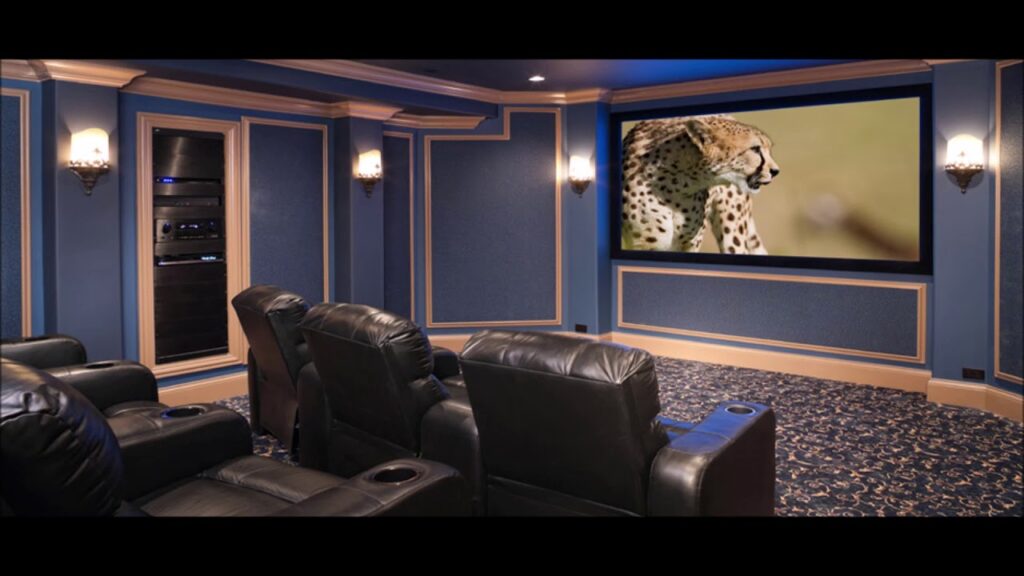
Acoustic treatment is the single most impactful investment in a home theater installation beyond the front stage. Untreated rooms produce slap echoes, excessive reverberation, and modal peaks that obscure dialogue and smear dynamic range. Treat first-reflection points with absorption panels, use diffusion at the rear to preserve spaciousness, and install bass traps in corners to tame low-frequency buildup. Acoustic treatments should be integrated with room finishes so the result is both beautiful and effective. When the room is treated, a well-calibrated mid-range system will outperform a larger system in a poor room.
Speaker architecture and immersive audio
A classic theater starts with a coherent front stage: left, center, and right speakers that share voicing for seamless dialogue and imaging. Surround channels provide lateral immersion and subwoofers deliver the low end; multiple subwoofers smooth bass response. Modern immersive formats like Dolby Atmos add height channels for overhead effects, and planning for those channels during installation avoids costly rework later. Placement, toe-in, and time alignment are critical; proper calibration aligns delays and levels so the speaker system behaves as one instrument rather than a set of isolated boxes.
Wiring discipline and rack design
A professional home theater installation hides wiring but leaves it serviceable. Run in-wall-rated speaker cable, HDMI conduit, and Ethernet to the equipment rack; centralize equipment with a ventilated rack, labeled patch panels, and a clear power distribution strategy. Avoid daisy-chained power strips; use a dedicated circuit and a quality surge protector or power conditioner. Label both ends of every run and leave spare conduit for future expansion. Wiring discipline reduces upgrade costs and prevents the spaghetti mess that complicates later troubleshooting and enhancements.
Video and audio calibration: the essential finishing step
Calibration is the stage that turns good equipment into a cohesive system for the actual room. Video calibration adjusts color balance, gamma, and HDR tone mapping for natural images and accurate shadow detail. Audio calibration sets speaker levels, crossover points, and equalization to tame room resonances while preserving speaker character. Automated room correction is a useful starting point, but manual tuning by an experienced calibrator often yields the final polish. Commissioning should include both video and audio calibration, documented presets for common inputs, and an explanation for how to return to calibrated settings after updates.
Seating and ergonomics for long sessions
Comfort and sightlines matter as much as image and sound quality. Configure seating distance and height so viewers can comfortably see the full screen without neck strain, and design circulation paths to allow entry and exit without disturbing others. Acoustic absorption behind seats reduces mid-field reflections, and seating fabrics should balance comfort with acoustic properties. Thoughtful seating design turns a high-quality system into a room people actually use for hours rather than avoiding due to discomfort.
Lighting and HVAC integration
Lighting should be layered and controllable. Provide dimmable step and aisle lights for safe movement, soft wall washing for ambience, and full blackout capability for daytime viewing. Coordinate HVAC to minimize noise; place supply and return vents away from seating and use low-velocity diffusers to reduce audible fan noise. Motorized shades tied into the control system allow rapid transitions from daytime socializing to complete blackout. Control the environment and you sustain immersion.
Isolation and neighbor considerations
If you plan to play loud, invest in isolation. Soundproofing measures like decoupled walls, floating floors, and acoustic seals on doors reduce sound transmission. Full studio-grade isolation can be expensive, but targeted improvements such as a sealed solid core door and acoustic seals often deliver meaningful reductions in leakage. Isolation protects relationships with neighbors and the rest of the household and is part of a serious home theater installation plan.
Control systems: make the complex simple
A great home theater installation hides complexity behind a simple control strategy. Program a single “Movie” scene that dims lights, lowers the screen, selects the correct input, and recalls audio presets. Provide a simple wall keypad for everyday use and an advanced app view for enthusiasts. Ensure manual fallbacks for safety lighting and test control flows for robustness under network or power outages. Simplicity encourages use; overly complex interfaces discourage it.
Commissioning, testing, and acceptance
Commissioning verifies every system under realistic use conditions. Test multiple sources, verify network behavior for streaming devices, exercise automation scenes, and validate fallback behavior for manual controls. Document calibration settings and create presets for common use cases. Walk the homeowner through daily operation and basic troubleshooting. A disciplined commissioning and acceptance process ensures the theater delivers predictable enjoyment from day one.
Maintenance, firmware, and lifecycle care
Home theaters require periodic maintenance: firmware updates for processors and displays, projector lamp replacements when lumen output falls, filter cleaning, and occasional rechecks of speaker mounts and cable terminations. Keep an inventory of serial numbers and calibration settings to speed future servicing. Consider a light maintenance plan for annual health checks that include firmware audits and a verification of acoustic and visual performance.
Budgeting and phasing
Great home theater installation outcomes don’t necessarily come from buying the most expensive single component. Prioritize acoustic treatment, wiring discipline, and calibration over chasing headline specs. Phase the project to deliver usable results early: infrastructure and front stage first, acoustics and seating next, and immersive channels later. Phasing reduces risk and spreads cost while enabling early enjoyment and informed decisions about later upgrades.
Final thoughts: design for habit, not for headlines
The best home theater installations are designed for habit—they are comfortable, easy to operate, and forgiving. They integrate room, audio, video, and controls so each component supports the others. Invest in the process—site survey, acoustic treatment, disciplined wiring, commissioning, and handoff—and you’ll have a home theater that becomes a reliable place for family, friends, and shared experiences rather than a one-time showpiece.