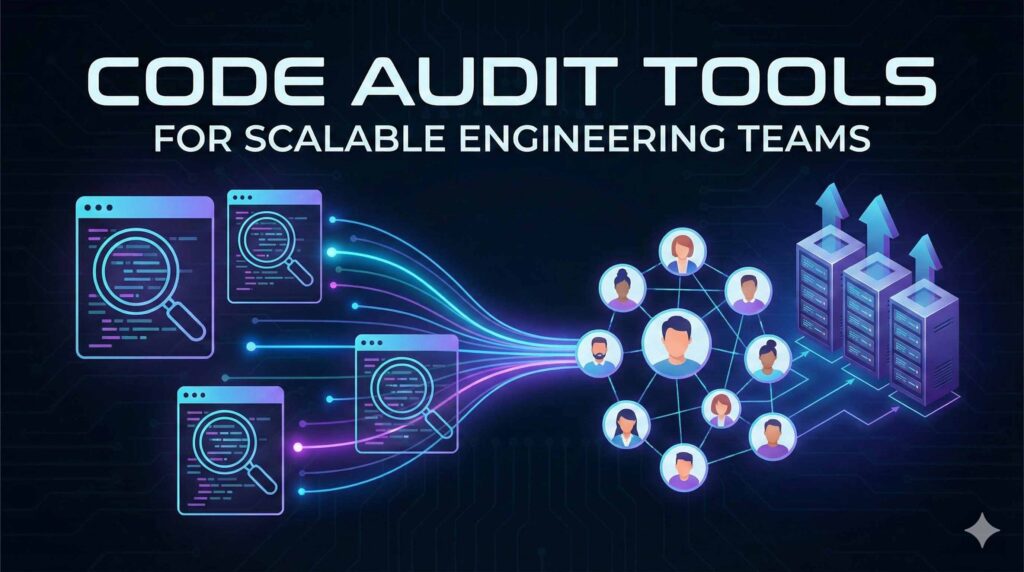
As engineering teams grow, so does the complexity of their codebases. What starts as a clean, manageable system can slowly turn into something harder to understand, maintain, and extend. New developers join, features ship faster, and small shortcuts begin to add up. Over time, teams realize that regular reviews alone are not enough to maintain long-term quality.
This is where code audit tools become important. Unlike everyday code reviews that focus on individual pull requests, audits take a broader view. They help teams understand the overall health of the codebase and identify patterns that could slow down development as the organization scales.
Why Scalable Teams Need More Than Basic Reviews
Code reviews are essential, but they’re often reactive. A reviewer looks at what changed in a pull request and gives feedback based on that moment. Audits, on the other hand, are proactive. They help teams spot risks before they turn into serious problems.
As teams scale, common challenges appear:
-
Increasing technical debt
-
Inconsistent coding standards across teams
-
Legacy modules that few people understand
-
Hidden performance or security risks
-
Slower onboarding for new developers
Without a structured way to audit the codebase, these issues tend to surface only after something breaks.
What Code Audit Tools Actually Do
Code audit tools look at the bigger picture. Instead of focusing on individual changes, they analyze the structure, patterns, and evolution of the codebase over time.
Most tools in this category help teams:
-
Identify complex or fragile areas of the code
-
Detect duplicated logic across repositories
-
Track technical debt trends
-
Highlight security vulnerabilities
-
Measure maintainability and readability
-
Surface areas that require refactoring
This kind of insight is especially valuable for teams planning long-term growth.
The Difference Between Audits and Reviews
It’s important to separate audits from regular reviews. Reviews answer the question: “Is this change okay to merge?” Audits answer a different question: “Is the system healthy as a whole?”
That’s why scalable teams often combine audits with daily reviews. Reviews keep changes safe. Audits keep the system sustainable.
Many teams rely on audits to guide refactoring efforts, prioritize technical improvements, and make informed architectural decisions.
Types of Code Audit Tools Used by Growing Teams
Rather than focusing on individual products, it’s useful to understand the main categories of tools teams rely on.
Repository-Wide Analysis Platforms
These tools scan entire repositories and generate reports on complexity, duplication, security issues, and long-term maintainability. They’re often used during scheduled audits or before major releases.
This category works well for organizations that want visibility across multiple projects and teams.
Continuous Audit Tools
Some platforms perform audits continuously rather than as one-off scans. They track trends over time and alert teams when quality metrics decline. This approach helps prevent gradual degradation instead of reacting after problems accumulate.
PR-Aware Audit Assistants
Newer tools blend auditing with pull request workflows. Instead of waiting for a full audit, they surface audit-level concerns directly during reviews. This makes it easier for teams to address deeper issues early.
For example, some platforms like Cubic focus on pull requests but also help teams recognize repeated patterns that signal deeper quality problems. By integrating directly into GitHub, they complement traditional audits without adding extra processes. Teams often pair this approach with broader code review tools to cover both short-term and long-term quality.
How Audits Support Scaling Teams
As teams grow, audits play a bigger role than many expect.
Better Planning
Audit insights help teams decide where to invest refactoring time instead of guessing.
Faster Onboarding
Clear audit data helps new developers understand risky or complex parts of the system.
Improved Collaboration
Shared visibility into code health reduces disagreements during reviews.
More Confident Releases
Teams ship faster when they trust the foundation they’re building on.
Common Mistakes Teams Make With Code Audits
Even with good tools, audits can fail if handled poorly. Some common mistakes include:
-
Treating audits as a one-time activity
-
Ignoring audit results due to time pressure
-
Overloading teams with metrics they can’t act on
-
Using audit tools as enforcement rather than guidance
Successful teams treat audits as a support system, not a punishment.
Final Thoughts
Scalable engineering isn’t just about adding more developers or shipping features faster. It’s about maintaining clarity, consistency, and reliability as systems grow. Code audits provide the perspective teams need to make smart decisions before small issues turn into major obstacles.
When combined with thoughtful reviews and the right tooling, audits become a powerful way to protect code quality without slowing development. For teams planning to scale sustainably, investing in the right audit process is not optional—it’s essential.