Underpinning Windsor:
A poorly executed home extension can do more than spoil the look of a property. When foundations are misjudged or ground conditions ignored, the added load of an extension can trigger settlement, cracking, and long-term structural instability. In such cases, underpinning becomes essential to restore safety and prevent further damage. However, modern underpinning is no longer just about digging and pouring concrete. Smart monitoring systems now play a crucial role before, during, and after Underpinning Windsor, helping engineers make informed decisions and safeguard buildings over time.
Why Extensions Fail and Trigger the Need for Underpinning
Extensions usually fail because the original ground conditions were not properly assessed. Shallow foundations, variable soil strength, nearby trees, poor drainage, or changes in load distribution can all contribute to uneven settlement. When an extension moves independently from the original structure, cracks often appear at junction points; doors and windows start sticking, and floors may slope.
Underpinning is required when the foundation can no longer support the structure safely. But before any remedial work begins, understanding how and why movement is happening is critical. This is where smart monitoring systems come into play.
The Role of Monitoring Before Underpinning Begins
Before recommending underpinning, structural engineers increasingly rely on monitoring data rather than visual inspection alone. Cracks may look severe, but not all are actively worsening. Installing smart monitoring systems allows professionals to distinguish between historic movement and ongoing structural failure.
Crack monitors, tilt sensors, and ground movement gauges are installed at strategic points around the extension and the main building. These devices track movement over weeks or months, providing precise measurements of displacement, rotation, and settlement. If readings show progressive movement, underpinning becomes a justified and targeted solution rather than a precautionary one.
Smart Crack Monitoring: Beyond Traditional Gauges
Traditional tell-tale crack gauges require manual readings and periodic site visits. Smart crack monitors, by contrast, use digital sensors that record data continuously. Many are cloud-connected, allowing engineers to access live updates remotely.
These systems capture even microscopic changes that the human eye would miss. This is particularly important after a failed extension, where small ongoing movements can indicate deeper foundation problems. Continuous data helps engineers design an underpinning solution that addresses the real cause, not just the visible damage.
Ground and Soil Monitoring for Accurate Diagnosis
In failed extension cases, soil behaviour is often the root problem. Smart ground monitoring tools such as settlement plates, piezometers, and moisture sensors are used to track changes beneath the structure.
Moisture sensors, for example, reveal fluctuations caused by leaking drains, poor surface water management, or tree root activity. Settlement sensors detect vertical movement beneath the extension. Together, these tools help engineers determine whether underpinning alone is sufficient or whether drainage repairs and soil stabilisation are also required.
Monitoring During Underpinning Works
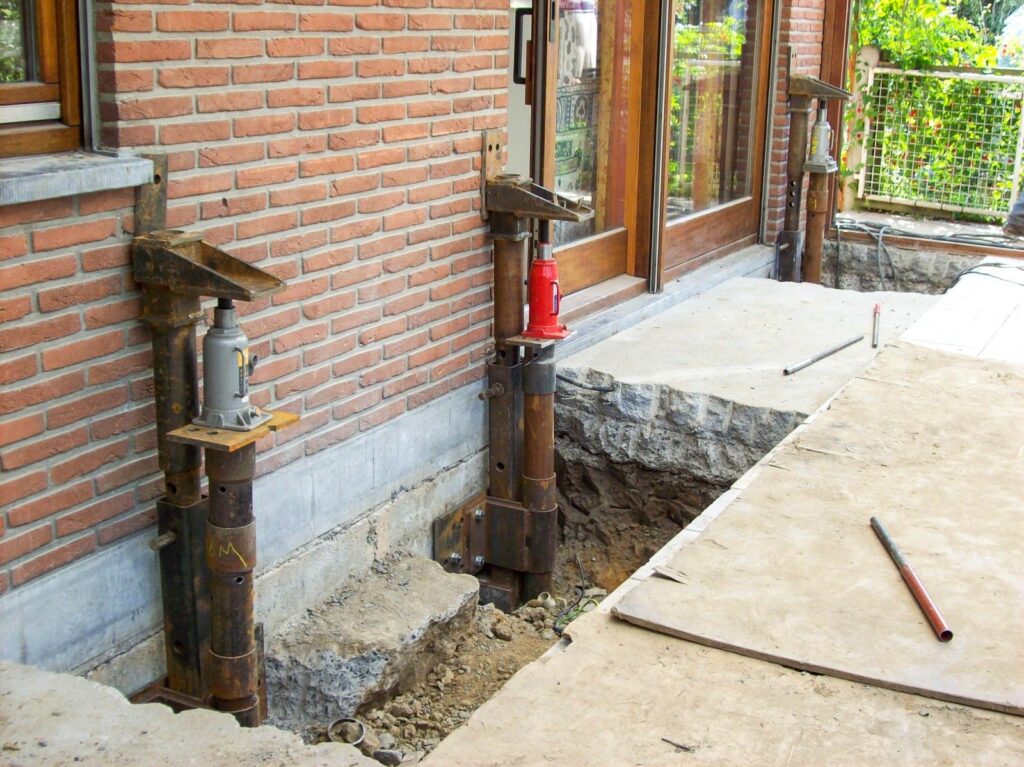
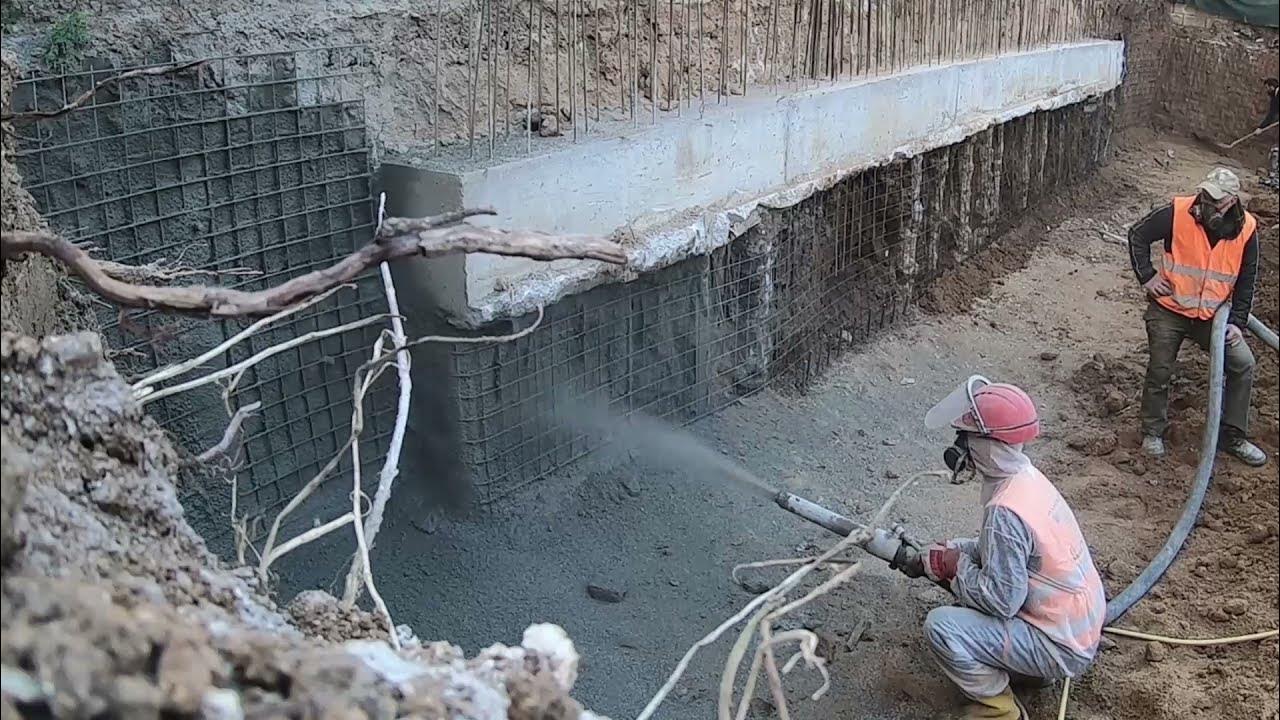
Underpinning itself introduces controlled disturbance to the ground. Excavating beneath foundations, even in stages, can temporarily alter load paths. Smart monitoring systems ensure this process remains safe.
Real-time tilt sensors and vibration monitors are used during underpinning to alert engineers if unexpected movement occurs. If thresholds are exceeded, work can be paused immediately, preventing damage to the building or neighbouring properties. This level of control is especially important in terraced or semi-detached homes where party wall issues may arise.
Remote Access and Predictive Maintenance Benefits
One of the major advantages of smart monitoring is remote accessibility. Engineers can review data without repeated site visits, reducing costs and enabling faster response if anomalies appear.
Over time, the data also supports predictive maintenance. If moisture levels rise or subtle movement resumes, early intervention can prevent another structural failure. This proactive approach is especially valuable for properties that have already suffered from a failed extension.
Improving Trust and Transparency for Homeowners
Failed extensions often leave homeowners anxious and frustrated. Smart monitoring systems add transparency to the underpinning process. Instead of relying solely on expert opinion, homeowners can see objective data showing what is happening to their property.
This builds confidence in the underpinning solution and provides documented proof of stability, which is particularly useful when selling or refinancing the property in the future.
The Future of Underpinning After Failed Extensions
As technology advances, smart monitoring is becoming a standard part of responsible underpinning projects. Wireless sensors, AI-driven data analysis, and long-term digital records are transforming how structural problems are diagnosed and resolved. For properties affected by failed extensions, underpinning supported by intelligent monitoring offers a safer, more precise, and more accountable solution.
Final Thoughts:
By combining modern underpinning techniques with smart monitoring systems, structural engineers can not only fix the damage caused by a failed extension but also protect the property’s future. In today’s construction landscape, data-driven Underpinning Birmingham is no longer a luxury—it is a necessity.