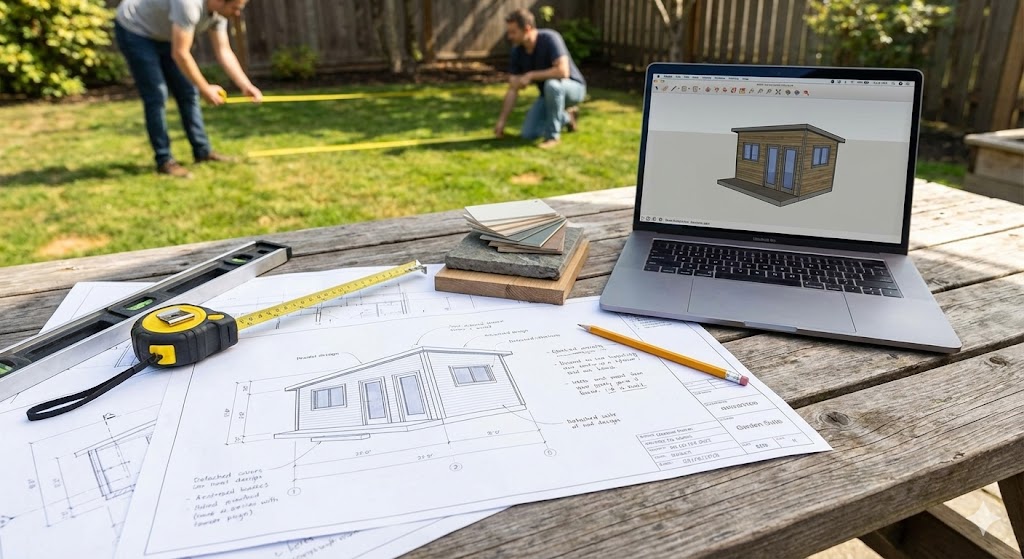
Garden suites are quickly becoming one of the most practical and valuable housing solutions in urban areas. Whether used for rental income, multigenerational living, or a private workspace, a well-planned garden suite can significantly increase property value while making better use of backyard space.
This step-by-step guide to designing garden suites walks you through the full process—from early planning to final construction—so you can create a functional, compliant, and visually appealing space that fits your lifestyle and long-term goals.
Step 1: Understand What a Garden Suite Is
A garden suite is a detached residential unit located in the backyard of a primary home. Unlike additions, garden suites are standalone structures with their own kitchen, bathroom, and living space.
Key benefits include:
- Extra rental income
- Flexible living for family members
- Increased property value
- Efficient use of urban land
With rising housing demand, garden suite design has become especially popular in major Canadian cities.
Step 2: Review Local Zoning and Permit Requirements
Before beginning any garden suite construction, it’s critical to understand local bylaws and zoning regulations. Cities like Toronto have specific rules regarding:
- Maximum size and height
- Setbacks from property lines
- Servicing and utility connections
- Fire and safety requirements
Skipping this step can lead to costly redesigns or permit delays. Many homeowners consult professionals or experienced custom home builders toronto early to ensure compliance from day one.
Step 3: Define the Purpose of Your Garden Suite
Your design decisions should align with how the garden suite will be used. Common purposes include:
- Long-term rental unit
- Short-term guest accommodation
- Housing for aging parents
- Home office or studio
Clearly defining the purpose helps guide layout, size, storage needs, and overall garden suite planning.
Step 4: Plan the Layout and Floor Design
Smart layouts are essential when working with limited square footage. Efficient garden suite floor plans focus on openness, natural light, and multi-functional spaces.
Design considerations include:
- Open-concept living areas
- Compact kitchens with full functionality
- Efficient bathroom layouts
- Built-in storage solutions
A thoughtful layout ensures comfort without making the space feel cramped.
Step 5: Focus on Natural Light and Ventilation
Natural light plays a major role in successful backyard garden suite design. Large windows, sliding doors, and skylights can make even small suites feel bright and welcoming.
Good ventilation is equally important:
- Proper window placement
- Energy-efficient HVAC systems
- Cross-ventilation strategies
These features improve livability while supporting energy efficiency.
Step 6: Choose Durable and Sustainable Materials
Material selection impacts both aesthetics and long-term maintenance. For garden suite construction Ontario, materials should be chosen with climate durability in mind.
Popular choices include:
- Engineered wood flooring
- High-performance insulation
- Low-maintenance exterior cladding
- Energy-efficient windows and doors
Sustainable materials can reduce operating costs and increase long-term value.
Step 7: Design Utilities and Services Carefully
A fully functional garden suite requires careful planning for:
- Electrical systems
- Plumbing connections
- Heating and cooling
- Internet and smart-home features
Working with an experienced Home construction company in brampton helps ensure all systems are properly designed, code-compliant, and future-ready.
Step 8: Incorporate Privacy and Outdoor Integration
Privacy is essential for both the main house and the garden suite occupants. Thoughtful design solutions include:
- Strategic window placement
- Landscaping buffers
- Separate entrances and pathways
Blending indoor and outdoor spaces also enhances usability, making the suite feel like a natural extension of the property.
Step 9: Budget Planning and Cost Control
Designing garden suites requires balancing ambition with budget. Costs vary depending on size, finishes, servicing, and site conditions.
Budget planning should account for:
- Design and architectural fees
- Permit costs
- Construction and materials
- Utility connections
Clear budgeting prevents surprises and ensures the project remains financially viable.
Step 10: Work With Experienced Construction Professionals
Executing a successful garden suite project requires coordination across design, permits, and construction. Partnering with professionals experienced in residential and mixed-use projects—such as a toronto commercial construction company—can streamline timelines and ensure quality workmanship.
Professional guidance helps avoid mistakes that could impact safety, resale value, or long-term durability.
Final Thoughts
Designing a garden suite is more than just adding a structure to your backyard—it’s about creating a livable, efficient, and future-proof space. With proper planning, smart design choices, and expert execution, garden suites can provide long-term benefits for homeowners and communities alike.
By following this step-by-step guide to designing garden suites, you’ll be well-equipped to turn unused backyard space into a valuable and functional living area.