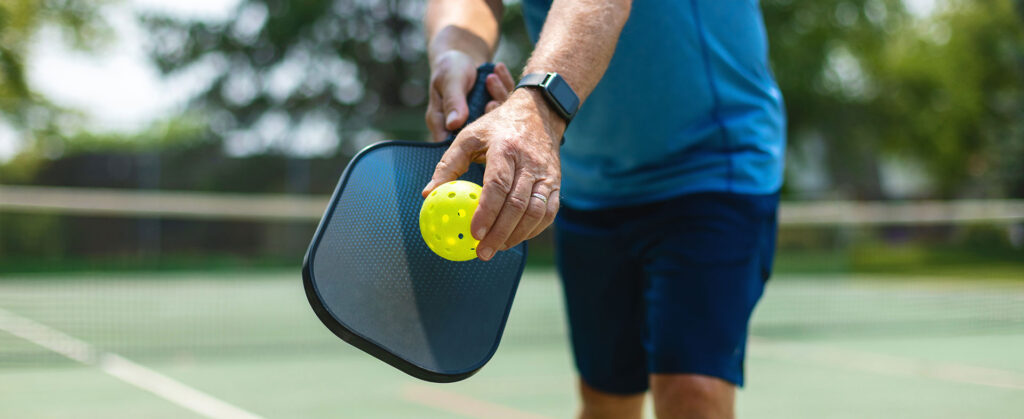
Consistently placing shots accurately in pickleball separates recreational players from competitive ones. Mastering placement requires intentional practice setups that simulate real-game conditions and challenge precision. Using tools like bulk indoor pickleballs allows players to maximize repetitions and refine control without interruption. Structured drills, court modifications, and equipment selection all influence how a player develops accuracy and consistency over time. This guide outlines practical approaches and step-by-step setups designed to strengthen placement skills across different play scenarios.
Court Layout Adjustments for Placement Practice
- Target Zones: Place cones or markers in key areas of the court to encourage aiming at specific points, such as deep corners or near the non-volley line.
- Angle Variations: Narrow or widen practice lanes to train cross-court and down-the-line shots, helping players adjust their angles dynamically.
- Net Height Manipulation: Use portable net extenders or adjustable nets to simulate different shot trajectories and improve control.
- Obstacle Placement: Set up small barriers or tape lines that force players to adapt their shot heights and directions to clear or avoid obstacles, creating precision under constraint.
Court adjustments create a controlled environment where players focus on accuracy while gradually introducing match-like variability. Repetition within these modified setups strengthens muscle memory and encourages strategic thinking regarding shot placement.
Drills That Improve Shot Accuracy
- Consistency Drills: Repeating the same shot multiple times at a target improves accuracy and builds confidence in execution.
- Random Placement Drills: Mixing shot locations randomly trains reflexes and adaptability, reflecting actual game unpredictability.
- Partner Feed Drills: Receiving varied feeds from a partner enhances reaction time and teaches players to maintain control under different speeds and spins.
- Solo Practice Drills: Using baskets of balls or a ball machine allows players to focus solely on precision and placement without external interruptions.
Drills focusing on placement require deliberate intention and repetition. Structured practice emphasizes both short-range and long-range accuracy, enabling players to maintain shot consistency even during competitive scenarios. Over time, these exercises help develop a natural feel for court positioning and target recognition.
Equipment and Ball Selection for Placement Training
Choosing the right equipment and balls has a significant effect on placement practice. Paddles with varying weights, grips, and surface textures influence control and shot trajectory. Using bulk indoor pickleballs ensures high-volume practice without running out of balls, maintaining rhythm during sessions. Tools like rebound nets, portable targets, or ball machines provide immediate feedback and repeatable conditions that enhance accuracy. Players should experiment with different ball types and paddles to discover what combination offers the best control for precise placement, gradually improving their consistency across different playing surfaces and styles.
Progressive Skill Challenges
Increasing the difficulty of practice drills challenges players to refine placement under pressure. Starting with larger target areas and gradually decreasing the size sharpens accuracy. Adding time constraints introduces speed without sacrificing precision. Tracking progress using shot charts, video analysis, or scoring systems provides feedback and motivates improvement. Incorporating angled shots, backhand placements, and varying ball heights ensures that players build a full range of placement skills applicable in competitive matches. Progressive challenges combine physical skill with strategic thinking, making each practice session more effective.
Partner and Group Practice Setups
Structured partner drills simulate match conditions and provide interactive learning opportunities. Partners can alternate feeding balls to different court zones, forcing adaptive responses and control under movement. Group drills replicate real-game scenarios, with multiple players moving and covering the court, creating pressure situations that sharpen placement skills. Communication and coordination among players enhance anticipation and decision-making while practicing strategic placement. Combining solo, partner, and group exercises offers comprehensive development, allowing players to apply refined placement skills in any match context.
Mental Focus and Visualization in Placement Practice
Mental preparation plays a crucial role in executing precise shots. Visualization techniques allow players to imagine target zones and shot paths, reinforcing neural patterns associated with accuracy. Concentration routines, such as controlled breathing or pre-shot rituals, improve focus and reduce errors caused by tension or distraction. Practicing mental focus alongside physical drills enhances consistency, helping players maintain precise placement under pressure. Integrating visualization into practice sessions turns physical repetition into strategic mastery, strengthening the connection between decision-making and execution on the court.
Integrating Technology for Placement Feedback
Technology offers innovative ways to improve placement accuracy and monitor progress. Video analysis allows players to identify strengths and weaknesses in their shot selection and execution. Sensor-equipped paddles and training apps track shot patterns, highlighting areas for improvement. Automated ball machines provide consistent feeds that replicate various game situations, supporting high-volume, focused practice. Using technology to measure accuracy and analyze performance ensures that players receive objective feedback, making each session more efficient and goal-oriented. Combining traditional drills with technological tools accelerates skill development while maintaining attention on shot precision.
Conclusion
Developing better placement in pickleball requires thoughtful practice setups, structured drills, appropriate equipment, and focused mental preparation. Court modifications, target-based exercises, partner and group drills, and equipment selection all contribute to improving shot accuracy. Incorporating feedback tools and progressive challenges ensures players remain engaged while tracking measurable improvement. Consistent practice, guided by clear objectives and repeated reinforcement, allows players to gain precision, adaptability, and confidence in their placement skills, ultimately leading to stronger performance in matches.
FAQs
What are the best drills to improve pickleball placement?
Target-based repetition drills, random placement drills, partner feed exercises, and solo ball-machine practice help players consistently hit precise areas of the court.
How does equipment affect placement practice?
Paddle weight, grip, and ball type influence control and shot trajectory. Using bulk indoor pickleballs ensures consistent repetition without interruption.
Can mental visualization improve placement accuracy?
Yes, visualizing target zones, shot paths, and pre-shot routines enhances focus, reinforcing physical execution and improving consistency under pressure.
How do progressive challenges benefit placement skills?
Gradually increasing difficulty by narrowing targets, adding time constraints, or varying angles trains adaptability, precision, and strategic decision-making in real-game scenarios.