LED Screens
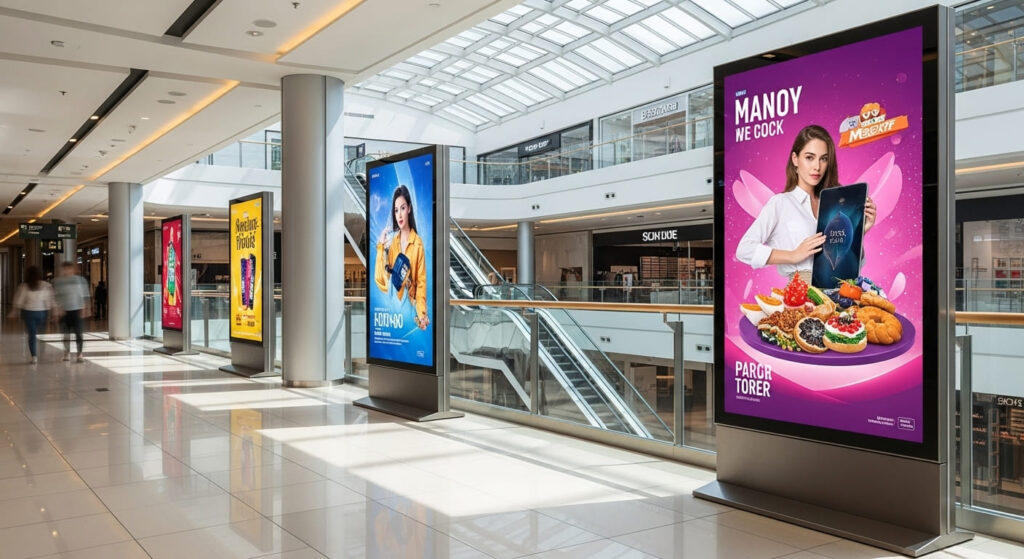
Walk through the bustling streets of Melbourne’s CBD or step into a major retail hub like Chadstone, and you will notice a distinct shift in the visual landscape. The static, printed billboards of the past are slowly fading away, replaced by vibrant, moving displays that demand attention. These are LED Screens, and they have become the gold standard for businesses that want to dominate visibility in a crowded marketplace.
For decades, signage was a passive game. You printed a banner, hung it up, and hoped people looked at it. Today, the game is active. It is about motion, brightness, and the ability to change your message in a split second. Top brands understand that the human eye is biologically wired to detect movement. By leveraging digital technology, they turn their storefronts and pylons into dynamic communication channels that engage customers rather than simply existing in the background.
However, installing these digital assets is not as simple as hanging a television on a wall. There is a science behind the sparkle. From understanding pixel pitch to battling the harsh Australian sun, mastering LED Screens requires a blend of technical knowledge and strategic planning.
The Shift from Static to Dynamic
The primary reason businesses are migrating to digital solutions is flexibility. With traditional signage, every change in strategy requires a new print run. If you want to promote a flash sale, a new menu item, or a seasonal greeting, you have to design, print, and install a new physical board. This takes time and money.
LED Screens remove this friction. With the click of a button, a retailer can switch from a morning coffee promotion to a lunchtime sandwich deal. A car dealership can update its pylon sign to feature a new model the moment it arrives on the lot. This agility allows businesses to react to the market instantly.
Furthermore, digital displays allow for storytelling. A static image captures a moment, but a video captures a feeling. Showing a steaming hot meal or a car driving through rugged terrain creates an emotional connection that flat vinyl simply cannot match. This depth of engagement is why digital signage often delivers a higher return on investment despite the initial setup costs.
Decoding the Tech: Pixel Pitch Explained
When you start looking into LED Screens, you will immediately encounter the term “Pixel Pitch,” usually denoted as P2, P3, P5, or P10. For many business owners, this is confusing. However, it is the most critical factor in determining the clarity of your image and the cost of the screen.
Pixel pitch refers to the distance, in millimeters, between the center of one LED cluster (pixel) and the center of the next. A P2 screen has 2mm between pixels, while a P10 has 10mm.
The Rule of Viewing Distance
The secret to choosing the right pitch lies in the viewing distance.
- Low Pitch (P1.5 – P3):These pack pixels closely together. They are designed for indoor use where the viewer is standing close to the screen, such as in a fashion retail store or a corporate boardroom. If you stand two meters away, the image looks smooth and crisp like a TV.
- High Pitch (P6 – P16):These have larger gaps between pixels. They are designed for outdoor billboards or high-up signage where the viewer is tens of meters away. From a distance, the human eye blends the pixels together to form a clear image.
Choosing the wrong pitch is a common mistake. Using a P10 screen inside a small shop will look blocky and pixelated. Conversely, using a fine P2 screen on a highway billboard is a waste of money because the drivers are too far away to appreciate the detail.
Battling the Australian Sun
Australia presents a unique challenge for digital signage: the sun. Our sunlight is incredibly harsh and bright. If you take a standard domestic television and put it in a shop window facing the street, the image will vanish. The sun will wash it out, leaving you with a black rectangle.
Commercial LED Screens are engineered to win this battle. We measure brightness in “nits.” A standard laptop or TV might have 300 to 500 nits of brightness. To be visible in an outdoor Australian environment, a screen needs to be capable of producing 5,000 to 7,000 nits.
This high-brightness capability ensures that your content punches through the glare, remaining vibrant and readable even at high noon. Top brands use sensors that automatically adjust this brightness. They pump up the power during the day and dim it down at night to save energy and prevent dazzling drivers.
Built for the Weather
It is not just the light; it is the elements. An outdoor screen in Victoria might experience scorching heat, driving rain, and hail all in the same week. Electronics and water do not mix, so the engineering of outdoor LED Screens must be robust.
This brings us to the IP Rating (Ingress Protection). A quality outdoor screen will typically have an IP65 rating or higher. This means the front and rear of the cabinet are sealed against dust and low-pressure water jets. The internal components are often coated to prevent corrosion from humidity.
Heat management is also vital. LEDs generate heat, and when combined with a 35-degree day, internal temperatures can soar. Advanced screens have built-in cooling fans and heat dissipation designs to keep the electronics running within a safe range. Without this, the screen would overheat and shut down, or the LEDs would degrade rapidly.
Content Management: The Brains of the Operation
The hardware is the canvas, but the software is the brush. A beautiful screen is useless if it is difficult to update. This is where Content Management Systems (CMS) come into play.
Modern LED Screens are connected to a network. This allows a business owner to control the content from a central office, a laptop at home, or even a smartphone. For a franchise with ten locations, the head office can push a brand-wide promotion to all screens simultaneously. Alternatively, they can allow local managers to update a specific section of the screen with local community news.
This software also allows for scheduling. You can program the screen to dim at night, turn off after closing hours, and play specific content on weekends. This automation means the signage runs itself, ensuring the right message reaches the right audience at the right time.
Navigating Local Regulations
In Australia, you cannot simply erect a glowing billboard wherever you like. Local councils have strict planning schemes regarding illuminated and electronic signage. They are concerned with two main things: driver distraction and amenity.
A screen that flashes rapidly or is too bright at night can be a hazard to motorists. Consequently, static images that change every 30 or 60 seconds are often permitted, while full-motion video might be restricted to pedestrian-only zones.
Furthermore, councils want to ensure the sign fits the character of the neighborhood. A massive, bright screen might be approved in an industrial zone or a highway corridor but rejected in a heritage shopping strip.
Navigating these permits is part of the service provided by professional signage companies. They understand the local laws, can prepare the necessary brightness reports, and ensure the installation is compliant. Ignoring this step can lead to fines and an order to switch off the screen.
The Modular Advantage
One of the great secrets of LED Screens is their modularity. Unlike a TV, which is one single piece of glass, LED walls are built from smaller square cabinets or modules locked together.
This offers two massive advantages.
- Size Customization: You can build a screen to fit any space. It can be a long, thin banner above a doorway, a massive square on a wall, or a column wrap. You are not limited to standard 16:9 aspect ratios.
- Maintenance: If a section of the screen fails—perhaps a rogue cricket ball hits it or a power supply blows—you do not have to replace the whole screen. A technician can simply pop out the damaged module and replace it with a spare. The screen stays operational, and the repair cost is minimal.
Questions and Answers: Common Questions About LED Screens in Australia
Q: What is the difference between an LED screen and a video wall made of TVs?
A video wall made of TVs (LCDs) has visible lines or “bezels” where the screens meet. This creates a grid over your image. LED Screens are seamless. When the modules are locked together, there are no visible gaps, creating one large, uninterrupted canvas. Additionally, LEDs are much brighter and better suited for outdoor use compared to LCD panels.
Q: How much power do these screens consume?
Power consumption varies based on the brightness and the content. Displaying a white background uses more power than a black background. However, modern LED technology is energy efficient. Most systems use smart power management to adjust brightness based on ambient light, significantly reducing electricity usage during cloudy days and at night.
Q: How long do LED screens last?
The industry standard lifespan for the LEDs themselves is around 100,000 hours. If you run the screen for 12 hours a day, that is over 20 years. However, other components like power supplies or fans may need maintenance or replacement sooner. Regular servicing ensures the screen keeps running for a decade or more.
Q: Do I need a permit to install an LED screen inside my shop window?
Generally, signage inside a building (more than 30cm from the glass) does not require a planning permit in many jurisdictions, but this varies by council. However, if the screen faces the street and is designed to advertise to people outside, it may still fall under outdoor advertising regulations. It is always safer to check with your signage provider who can advise on the specific rules in your suburb.
Q: Can I play sound from my LED screen?
Yes, but the screen itself usually does not have speakers. It acts as the visual display. You would connect the media player to an external sound system. However, for outdoor screens, sound is often restricted by noise pollution regulations. Most outdoor advertising relies on strong visuals rather than audio.
Conclusion: Your Path to a Successful LED Screens in Australia
The transition to digital is more than a trend; it is a fundamental shift in how businesses communicate with the physical world. LED Screens offer a powerful way to cut through the noise, delivering bright, dynamic, and relevant content to your audience. They signal that a brand is modern, active, and professional.