Power Press Machines Explained: Working Principle and Applications
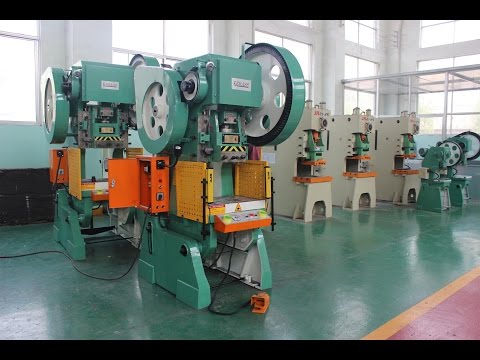
Power press machines are indispensable in modern manufacturing industries, providing the capability to cut, shape, and form metal and other materials with precision. These machines are widely used in automotive, electronics, aerospace, and consumer goods sectors, where high productivity and consistent quality are essential. Understanding their working principle, components, and applications is vital for manufacturers looking to optimize production and select the appropriate equipment for their operations.
A Power Press Machine is designed to apply controlled force to a workpiece through a die, which shapes or cuts the material into the desired form. For detailed information about industrial-grade machines and their applications, you can visit Power Press Machine. These machines combine mechanical or hydraulic power with precision engineering to perform repetitive operations efficiently, making them essential tools in mass production environments. Their versatility allows them to handle a range of operations, from simple stamping to complex forming and bending.
Working Principle of Power Press Machines
The working principle of a power press machine is based on converting mechanical or hydraulic energy into a pressing force that is applied to a workpiece. Depending on the type of press, this force is generated through a flywheel-driven crank mechanism, hydraulic cylinders, or servo motors.
Mechanical Power Presses use a flywheel that stores energy from an electric motor. When engaged, the energy is transmitted through a crankshaft and connecting rod to move the ram downward. The ram presses the material against a die, cutting, bending, or forming it according to the die’s shape. The stroke length and tonnage are fixed or adjustable, allowing the press to accommodate different operations.
Hydraulic Power Presses operate using a hydraulic cylinder filled with fluid. When pressure is applied to the fluid, it moves the ram downward with a controlled force. Hydraulic presses offer variable tonnage and stroke lengths, making them ideal for deep drawing, forming, and operations that require precise force control. They are slower than mechanical presses but provide greater flexibility and power.
Servo Presses combine mechanical and electronic technologies. A servo motor controls the ram’s motion, allowing precise adjustment of stroke, speed, and force. This technology enables high accuracy and repeatability, making servo presses suitable for complex or customized production tasks. They also offer energy efficiency and reduced noise compared to traditional presses.
Key Components of a Power Press Machine
A power press machine consists of several key components that work together to perform operations efficiently:
-
Frame: The main structure that supports all other components and absorbs operational stresses.
-
Ram/Slide: The moving part that applies force to the workpiece through a die.
-
Die: A specially designed tool that shapes or cuts the material according to the desired output.
-
Clutch and Brake System: Controls the start and stop of the ram movement in mechanical presses.
-
Hydraulic Cylinder or Flywheel: Provides the energy required for the pressing action.
-
Control System: Manages stroke, speed, and safety mechanisms to ensure accurate and safe operation.
Each of these components plays a crucial role in ensuring the precision, safety, and durability of the power press machine.
Industrial Applications of Power Press Machines
Power press machines are used across a wide range of industries for various applications. In the automotive sector, they are employed to produce body panels, engine components, suspension parts, and other metal elements. Mechanical and hydraulic presses enable high-speed stamping and forming, ensuring consistent quality for large-scale production.
In the electronics industry, power presses are used to manufacture small, delicate components such as connectors, switches, and metal housings. Servo and pneumatic presses are preferred for these applications due to their precision and adjustable force settings, which prevent damage to sensitive materials.
The aerospace industry utilizes hydraulic and servo presses to shape high-strength alloys and lightweight materials into structural and engine components. Precision and repeatability are critical in aerospace applications, as even minor deviations can impact safety and performance.
Consumer goods and packaging industries also rely on power press machines to produce containers, lids, cans, and metal parts. High-speed mechanical and pneumatic presses ensure efficient mass production while maintaining consistent dimensions and quality.
Benefits of Using Power Press Machines
Power press machines provide several advantages for industrial production:
-
High Productivity: Capable of performing repetitive operations quickly and efficiently.
-
Precision: Consistent application of force ensures accurate shaping and cutting.
-
Versatility: Can handle a wide variety of materials and operations, including stamping, forming, bending, and blanking.
-
Automation Integration: Can be combined with automated feeding, handling, and control systems to increase efficiency.
-
Durability: Engineered to withstand high operational stresses for long-term use.
Conclusion
Power press machines are critical for modern industrial manufacturing, providing reliable and precise methods for shaping, cutting, and forming materials. Understanding their working principle, components, and applications allows manufacturers to select the right type of press for their operational needs. Whether mechanical, hydraulic, or servo-driven, power press machines enhance productivity, maintain consistent quality, and support a wide range of industrial processes. Investing in a high-quality power press machine ensures efficient production, safety, and long-term operational success.