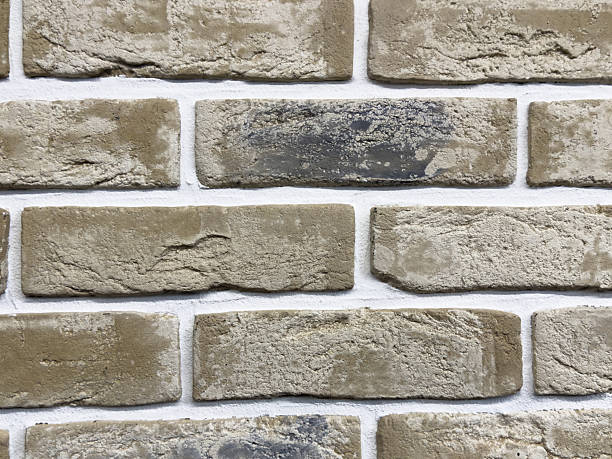
Bbrick wall background texture. Close up shot. Brick wall pattern
Most people still lump brick staining in with paint. Big mistake. Paint sits on the surface. Brick staining soaks in. That difference alone changes how a wall looks, ages, and breathes over time. Silicate stain takes this even further. It doesn’t just soak in — it reacts. It bonds chemically with the mineral structure of the brick. That’s why it doesn’t peel, bubble, or trap moisture the way paint always eventually does. Brick is meant to breathe. Staining respects that. Paint fights it. If you’ve ever seen a painted brick wall fail after a few wet seasons, you already understand why this matters.
Why Brick Color Fades, Blotches, and Goes Sideways
Bricks aren’t uniform. Anyone telling you they are hasn’t spent much time around masonry. Clay sources vary. Firing temps vary. Even bricks from the same batch can absorb moisture differently. That’s why brick staining exists in the first place. It corrects uneven color, modernizes tired facades, and tones down ugly patchwork repairs. But here’s the catch — not all stains behave the same. Traditional acrylic stains sit closer to paint than people admit. They mask. They coat. And sooner or later, they flake. Silicate stain works with the brick instead of against it. It penetrates deep, bonds permanently, and fades naturally instead of failing dramatically. Big difference.
What Silicate Stain Actually Is (Plain English Version)
Silicate stain is mineral-based. Potassium silicate, to be specific. That’s not marketing fluff — it’s chemistry. When applied to masonry, it reacts with the silica already inside brick and mortar. The result is a crystalline bond. No film. No skin. No surface layer waiting to crack. This is why silicate stain has been used in Europe for over a century on historic buildings. When preservation matters, coatings are avoided. Mineral stains aren’t. Once you understand that, it’s hard to go back to anything else.

Brick Staining vs Painting: The Comparison Nobody Finishes
Paint looks good fast. That’s the appeal. Brick staining takes patience. Multiple passes. Controlled dilution. A bit of skill. But look five years down the road. Painted brick chips at edges. Traps moisture. Turns into maintenance debt. Brick staining doesn’t peel because there’s nothing to peel. Silicate stain becomes part of the wall. It ages the same way brick ages — slowly, evenly, honestly. If you care about longevity more than instant gratification, staining wins every time. Short-term thinking ruins masonry. Long-term thinking preserves it.
Where Silicate Stain Works Best (And Where It Doesn’t)
Silicate stain loves porous masonry. Fired clay brick. Lime mortar. Cement-based substrates. That’s its sweet spot. It struggles on sealed brick, glazed surfaces, or walls already coated in acrylic paint. You can’t chemically bond through plastic. No workaround exists, despite what some contractors claim. Testing matters here. Always. One test patch can save you from a full-wall regret. If stain doesn’t absorb evenly, stop. Fix the surface. Don’t force it.
Brick staining rewards patience. It punishes shortcuts.
Color Control Isn’t About One Coat
This trips people up. Brick staining is layered. You don’t blast color on in one pass. You build it gradually. Thin coats. Let it flash. Adjust. Silicate stain behaves more like watercolor than paint. The underlying brick tone always plays a role. That’s not a flaw — that’s the point. You’re enhancing brick, not burying it.
Good installers read the wall as they go. Bad ones try to rush coverage. Guess which jobs age better.
Breathability Is the Silent Advantage Everyone Ignores
Here’s something most blogs skip. Brick needs to release moisture. When it can’t, you get spalling, efflorescence, freeze damage, the whole mess. Silicate stain stays vapor permeable. Moisture moves through the wall naturally. No pressure builds behind a coating. No trapped water freezing inside brick faces. This is especially critical in older buildings and humid climates. Brick staining with mineral products protects the wall by not interfering with how masonry actually works.
Sometimes the best protection is knowing when not to interfere.
Interior Brick Gets the Same Respect
People think brick staining is only for exteriors. Not true. Interior brick benefits just as much — sometimes more. Painted interior brick looks flat. Lifeless. Like drywall pretending to be masonry. Silicate stain keeps texture visible. Mortar joints stay honest. Light plays off the surface instead of dying on it. For lofts, restaurants, heritage spaces, this matters. A lot. Interior brick deserves subtlety, not suffocation.
Maintenance Isn’t Zero — But It’s Close
Nothing is truly maintenance-free. Anyone promising that is lying or selling something disposable. That said, silicate stain requires almost nothing once applied correctly. No peeling. No touch-up cycles every few years. Occasional cleaning. That’s it. Color may soften over decades. That’s natural mineral weathering, not failure. Most people prefer that look anyway. It feels earned, not artificial. Brick staining should reduce work, not create more of it.

Common Brick Staining Mistakes (Seen Them All)
Over-saturating the wall. Skipping surface prep. Ignoring test patches. Applying stain like paint. Using the wrong dilution. All common. All avoidable. The biggest mistake? Treating silicate stain like a shortcut. It’s not. It’s a precision material. Respect it, and it performs beautifully. Rush it, and results get weird fast.
This is where product quality matters. Cheap mineral stains behave unpredictably. Consistent chemistry equals consistent results.
Why Mineral Stains Are a Different Category Entirely
Not all stains are created equal. Mineral stains aren’t just another SKU on a shelf. They’re a system. Chemistry, technique, and patience working together. Mineral Stains focuses on this for one reason — it works. Long-term. Across climates. Across decades. Brick staining done right shouldn’t need defending five years later.
If you’re serious about masonry, you eventually land here.
Brick Staining Is a Decision You Live With
This isn’t throwaway paint on siding. Brick staining changes a building’s identity. Done right, it elevates. Done wrong, it’s expensive to undo. Silicate stain gives you permanence without plastic. Color without suffocation. Control without fakery.
If you want brick to still look like brick in twenty years, this is the path. No gimmicks. No coatings pretending to be something else.

FAQs: Brick Staining and Silicate Stain
What is brick staining used for?
Brick staining is used to change or correct brick color while preserving texture and breathability. It enhances rather than covers masonry.
How is silicate stain different from regular masonry stain?
Silicate stain chemically bonds with brick minerals instead of forming a surface film. That’s why it doesn’t peel or trap moisture.
Can silicate stain be applied over painted brick?
No. Silicate stain requires direct contact with mineral surfaces. Painted brick must be stripped completely first.
How long does brick staining last?
When done correctly, silicate-based brick staining lasts decades with minimal maintenance.
Does brick staining seal the brick?
No. Silicate stain remains vapor permeable, allowing moisture to pass through naturally.
Is brick staining suitable for historic buildings?
Yes. Mineral silicate stains are widely used in historic preservation because they don’t damage masonry.