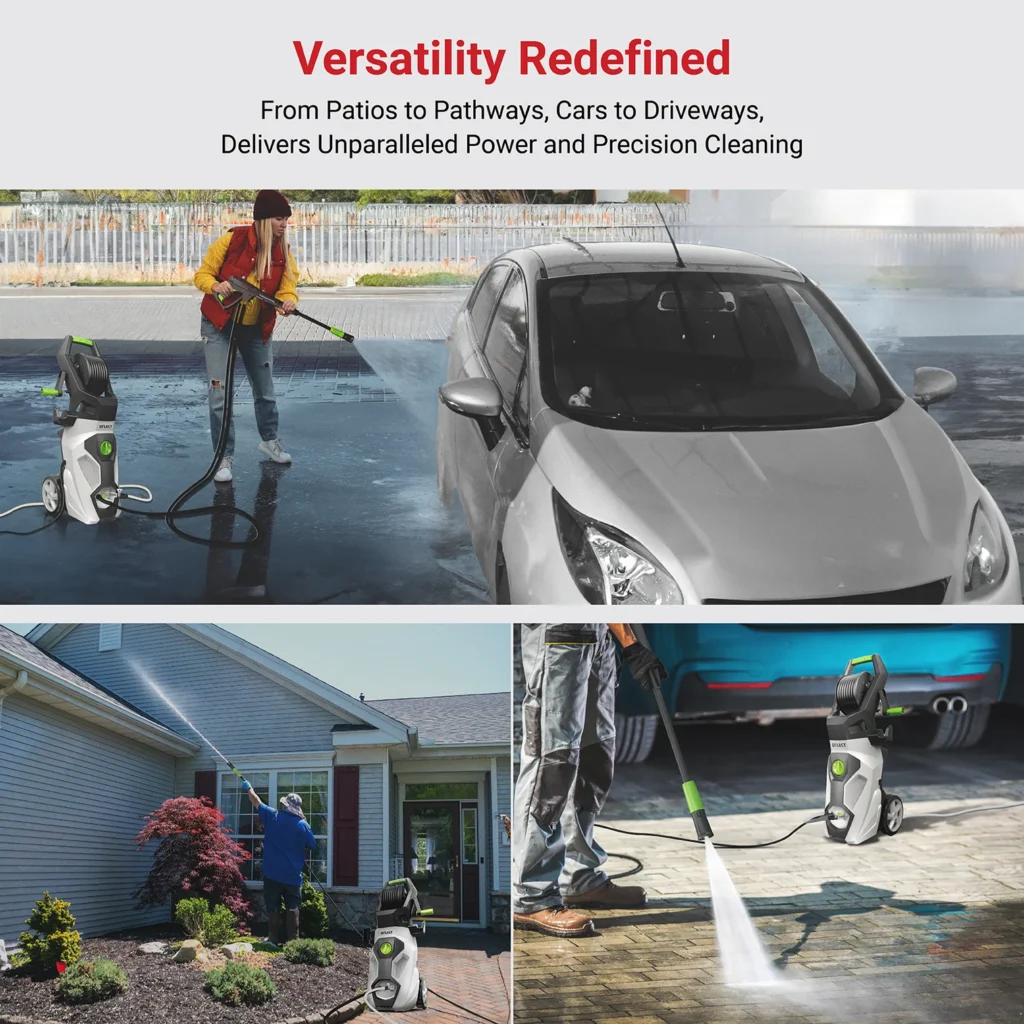
Pressure Washer
A pressure washer is one of the most useful tools a homeowner can buy. It can clean driveways, patios, siding, decks, cars, and garden furniture quickly—often in a fraction of the time hand-scrubbing would take. But not all pressure washers are the same. Choosing the right model requires understanding a few core features and matching them to your needs. This guide will walk you through everything important in simple, professional language so you can make a confident choice.
1. Decide what you will clean
Start by listing the tasks you expect the pressure washer to do. Typical home tasks include:
- Washing cars, motorcycles, and bicycles
- Cleaning patios, driveways, and sidewalks
- Removing mold and mildew from house siding
- Cleaning fences and decks (wood or composite)
- Washing outdoor furniture and garden tools
Different jobs require different power and accessories. For example, washing a car needs lower pressure and a foam cannon, while a concrete driveway needs higher pressure and a rotating surface cleaner.
2. Understand the two main power types: electric vs gas
Electric pressure washers
- Best for light to medium home jobs (cars, patios, small decks).
- Pros: quieter, lighter, lower maintenance, no fumes, easier to store.
- Cons: less powerful than gas models, limited by cord length or battery life for cordless units.
Gas pressure washers
- Best for heavy-duty tasks (large driveways, farmhouse siding, thick grime).
- Pros: more power, portable without a cord, higher flow rates.
- Cons: louder, heavier, require oil and gas, more maintenance, produce exhaust fumes.
For most suburban homeowners focused on routine cleaning, a quality electric model is sufficient. If you have large areas or very stubborn stains, choose a gas-powered unit.
3. Key performance numbers: PSI and GPM
Two numbers tell you how powerful a pressure washer is:
- PSI (pounds per square inch) — measures the pressure of the water stream. Higher PSI means more force to remove tough dirt and stains.
- GPM (gallons per minute) — measures water flow. Higher GPM rinses away dirt faster.
Both matter. A useful combined metric is Cleaning Units (CU) = PSI × GPM. CU gives a practical sense of real-world performance.
Recommended ranges for home tasks
- Light jobs (cars, patio furniture): 1,300–1,800 PSI, 1.2–1.6 GPM
- Medium jobs (decks, siding, small driveways): 1,800–2,400 PSI, 1.5–2.5 GPM
- Heavy jobs (large concrete areas, farm equipment): 2,500+ PSI, 2.5+ GPM
Avoid using excessive pressure on vehicles or wood; it can damage surfaces.
4. Nozzles and spray tips: pick the right spray pattern
Most washers include a set of quick-connect nozzles identified by color and spray angle:
- 0° (pinpoint): highest pressure for tough spots — use with extreme caution.
- 15°: narrow, good for removing tough stains on hard surfaces.
- 25°: general cleaning on surfaces like driveways and siding.
- 40°: wide spray for gentle cleaning and rinsing.
- Soap nozzle: low pressure for applying detergent.
Using the correct nozzle protects surfaces and speeds cleaning. A rotary (turbo) nozzle or a surface cleaner attachment can greatly improve concrete cleaning speed and results.
5. Detergent tanks and soap systems
If you plan to clean siding, vehicles, or moldy areas, a model with a built-in detergent tank or a siphon hose for soap is important. Look for:
- Easy-fill, removable tanks or quick-connect siphon hoses
- Adjustable detergent control to vary soap mix
- Compatibility with biodegradable detergents (better for the environment)
6. Hoses, cords, and reach
Longer hoses and cords increase convenience:
- Hose length: 25–50 feet is common. Longer hoses let you move around without carrying the unit.
- Power cord (electric): look for heavy-duty, weather-resistant cords if your outlet is outdoors.
- Consider an extension reel or hose reel for neat storage.
Be mindful of tripping hazards and always use appropriate outdoor-rated cables.
7. Portability, build quality, and storage
Consider:
- Weight and wheel design for moving the unit across rough terrain.
- Compact frames or foldable handles for storage.
- Sturdy pump and brass fittings (better durability than plastic).
- Thermal relief and auto-shutoff features to protect the pump.
A solid warranty and easy-to-find replacement parts are signs of a reliable brand.
8. Noise and environmental concerns
Gas models are loud and produce exhaust; they are not suitable for enclosed spaces. Electric models produce far less noise and no emissions. For neighborhood use or apartments, an electric model is often the only practical choice.
Also consider water runoff and detergent use. Choose biodegradable cleaners and use runoff controls in sensitive areas like gardens.
9. Safety features and personal protection
Pressure washers can be dangerous if misused. Prioritize models with:
- Trigger lock and safety latch on the wand
- GFCI (ground fault circuit interrupter) on electric models
- Thermal overload protection on the motor
- Clear owner’s manual with safety instructions
Always wear protective eyewear, gloves, and closed-toe shoes. Never point the wand at people, pets, or fragile surfaces.
10. Maintenance and care
To prolong life:
- Flush detergent lines after each use and run clean water through the pump.
- Store in a dry place; winterize by draining water and adding pump antifreeze if needed.
- Change oil on gas engines per manufacturer schedule.
- Inspect hoses and nozzles regularly and replace damaged parts.
Regular maintenance prevents costly repairs and keeps performance high.
11. Budget and value
Basic electric models suitable for occasional homeowners start in the low hundreds. Mid-range electric or light gas models cost more but offer better pumps (axial vs. triplex), longer life, and higher performance. Professional-grade gas models are the most expensive but are necessary for heavy, frequent use.
Balance budget with expected use: buy the best pump and fittings you can afford rather than focusing only on PSI numbers.
12. Quick buying checklist
- What will you clean? (list tasks)
- Electric or gas? (choose based on power needs, noise, and maintenance)
- Required PSI / GPM (match to tasks)
- Included nozzles and attachments (surface cleaner, foam cannon)
- Hose length and storage options
- Detergent tank and soap system
- Build quality, warranty, and replacement parts availability
- Safety features and ease of maintenance
- Price and long-term value
Conclusion
Choosing the best pressure washer for home use is about matching the tool to the work. Assess the surfaces you will clean, choose the right power type, pay attention to PSI and GPM, and value durability and safety. A well-chosen pressure washer will save you hours of labor, deliver better cleaning results, and last for many seasons when properly maintained. If you keep the checklist above, you’ll be able to confidently select a machine that fits both your needs and your budget.