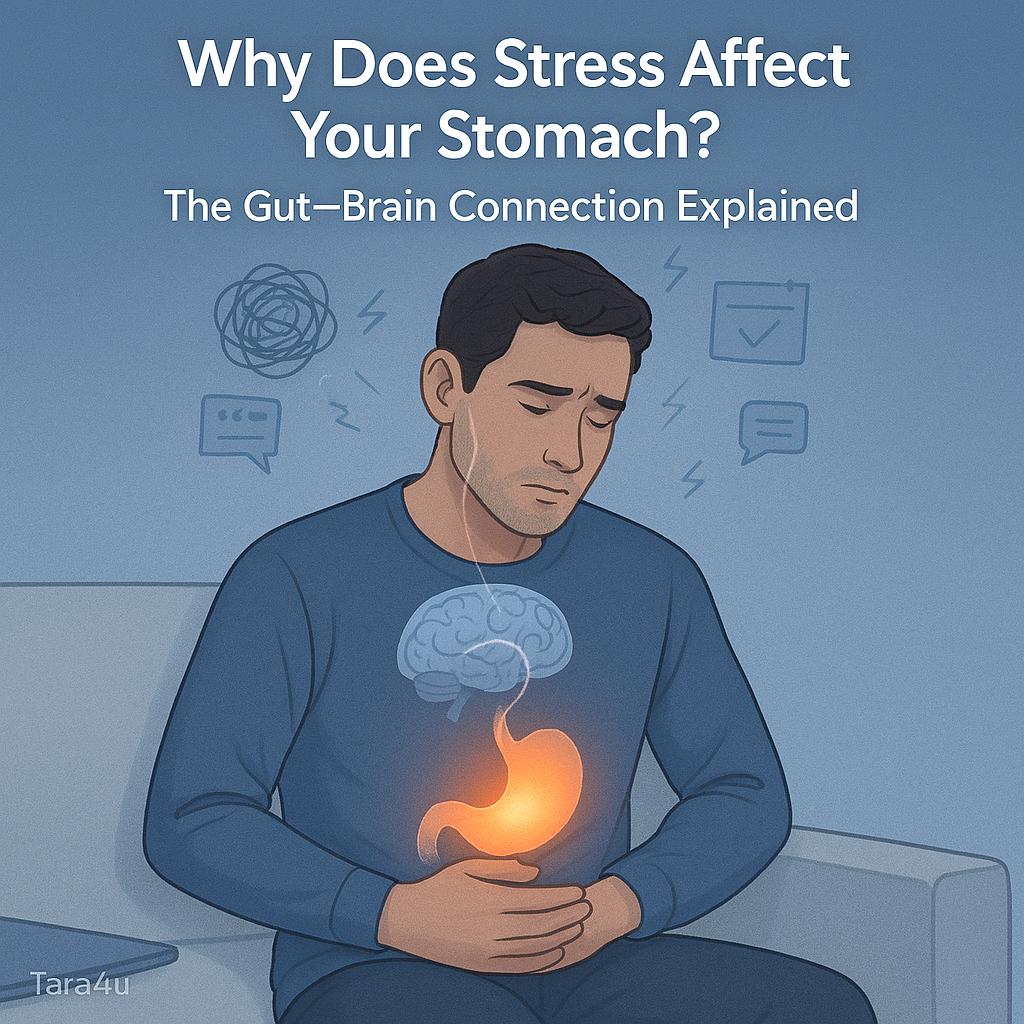
Stress doesn’t just live in your mind — it can show up in your body too. The gut and brain are deeply connected, which is why tension, deadlines, and constant pressure can trigger stomach discomfort. This illustration highlights the gut–brain connection, showing how stress signals can influence digestion and cause real, physical symptoms.
Have you ever noticed your stomach tightening before an exam, a big presentation, or after an argument? Maybe you feel cramps, nausea, or a strange “knot” in your belly. And you find yourself wondering, why does my stomach hurt when I’m stressed?
You’re not imagining it. And you’re definitely not alone.
Your body and mind are deeply connected. When emotions build up — fear, worry, pressure, overthinking — your stomach often reacts first. This is because of something called the gut-brain connection, a powerful communication system between your brain and digestive system.
Stress doesn’t just stay in your thoughts. It shows up physically. And one of the most common places it appears is your stomach.
Let’s gently unpack why this happens.
The Gut-Brain Connection Explained
Your brain and stomach are in constant conversation.
In fact, your gut contains millions of nerve cells. It’s sometimes called the “second brain.” Through the nervous system — especially the vagus nerve — your brain and digestive system send signals back and forth all day.
When you’re calm, your digestive system works smoothly.
But when you’re stressed, your body activates the fight or flight response. This is a survival mechanism designed to protect you from danger. Even if the “danger” is just an upcoming meeting or emotional conflict, your body reacts the same way.
Stress hormones like cortisol and adrenaline increase. Blood flow shifts away from digestion and toward muscles. Your digestive system slows down or becomes irregular.
This is the gut and stress connection in action.
And that’s when stomach pain begins.
Why Does My Stomach Hurt When I’m Stressed?
There are several physical reasons behind stress and stomach pain.
Stress Hormones and Cortisol
When you’re anxious or overwhelmed, your body releases cortisol.
Cortisol changes how your digestive system functions. It can increase stomach acid, disrupt gut bacteria balance, and make your intestines more sensitive. This sensitivity can lead to stress related abdominal pain, nausea, or burning sensations.
That’s one reason anxiety stomach pain feels so real — because it is.
Muscle Tension in the Abdomen
Stress doesn’t only live in your thoughts. It tightens your muscles.
Your abdominal muscles contract when you’re anxious. Over time, this tension can create cramps or a persistent ache. If you’ve ever felt your stomach “in knots,” that’s muscle tension reacting to emotional stress.
Yes, stress can cause stomach cramps — especially during high-pressure moments.
Changes in Digestion
Stress directly impacts your digestive system.
It can:
- Slow digestion (causing bloating and heaviness)
- Speed up digestion (leading to diarrhea)
- Increase acid production (causing reflux)
If you’ve ever asked, can stress cause digestive problems? — the answer is absolutely yes.
Your body prioritizes survival over digestion during stress. So normal digestive processes get disrupted.
Anxiety and “Nervous Stomach”
A nervous stomach is common before interviews, social events, or difficult conversations.
You might feel butterflies, nausea, or urgency to use the bathroom. This happens because anxiety heightens gut sensitivity. The gut becomes more reactive to even small changes.
That’s why anxiety causes stomach issues so frequently. Emotional stress physical symptoms often show up in the belly first.
If this sounds familiar, you may want to explore how Overthinking and Anxiety can amplify these physical sensations.
Common Stress-Related Stomach Symptoms
Stress and stomach pain can show up in many ways:
- Cramps
- Bloating
- Nausea
- Diarrhea
- Acid reflux
- Loss of appetite
- Tightness in the abdomen
These are common stress symptoms in the body. They often flare up during emotional triggers or intense pressure.
Understanding these reactions is part of recognizing your own Body Signals & Emotional Symptoms — your body’s way of communicating.
When Is It Emotional vs Medical?
It’s important to approach this gently.
Stress-related stomach pain often:
- Appears during or after emotional events
- Improves when you relax
- Comes and goes with anxiety levels
However, if the pain is severe, persistent, or accompanied by fever, vomiting, or weight loss, it’s important to seek professional medical guidance.
Listening to your body doesn’t mean ignoring medical care. It means becoming aware of patterns.
Sometimes the question isn’t just “Why does my stomach hurt when I’m stressed?” but also “What is my body trying to tell me?”
How to Relieve Stress Stomach Pain
If you’re wondering how to relieve stress stomach pain, start with calming your nervous system.
Here are gentle, practical tools:
1. Deep Breathing (4-7-8 Technique)
- Inhale for 4 seconds
- Hold for 7 seconds
- Exhale slowly for 8 seconds
This helps deactivate the fight or flight response.
2. Grounding Exercises
Notice 5 things you can see.
4 things you can touch.
3 things you can hear.
Grounding shifts attention away from anxious spirals.
3. Light Movement
A short walk relaxes abdominal tension and improves digestion.
4. Warm Compress
Placing warmth on your stomach relaxes tight muscles and soothes cramps.
5. Journaling
Write down what you’re feeling. Often, stress related abdominal pain eases when emotions are expressed instead of suppressed.
You can also explore coping tools in Stress, Burnout & Work Pressure to better manage daily stressors.
6. Mindful Eating
Eat slowly. Avoid rushing meals during anxiety spikes. A calm eating environment supports your digestive system.
How Emotional Awareness Helps
Your stomach isn’t betraying you.
It’s communicating.
When you build Emotional Awareness, you begin to notice patterns:
- Does your stomach hurt before conflict?
- During overthinking at night?
- Before important deadlines?
Recognizing emotional triggers reduces fear around symptoms. Instead of panicking about anxiety stomach pain, you respond with curiosity and care.
Your body gives signals long before burnout or emotional overwhelm becomes intense.
Learning to understand those signals is powerful healing.
Conclusion
If you’ve been asking yourself, why does my stomach hurt when I’m stressed?, now you know: it’s your nervous system, hormones, and digestive system working together in response to emotional pressure.
Your body isn’t weak. It’s responsive.
Stress and stomach pain are deeply connected through the gut-brain relationship. And the good news? When you calm your mind, your stomach often follows.
Start small. Breathe deeper. Notice patterns. Be gentle with yourself.
Your stomach may not just be hurting — it may be asking for rest, expression, or emotional safety.
Listening to your body is not overreacting.
It’s self-understanding.