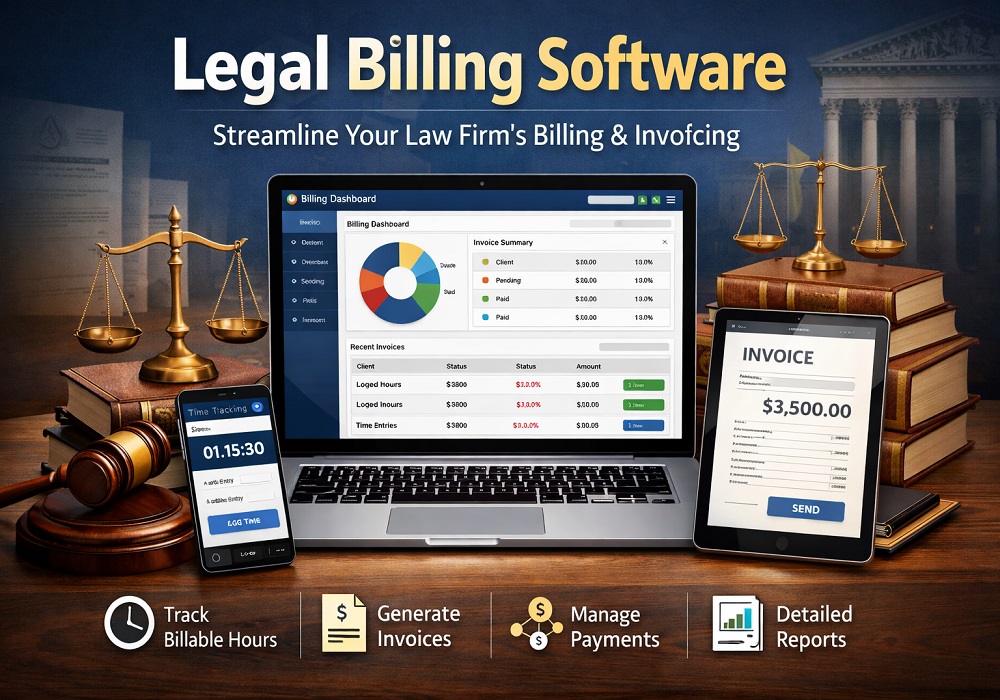
Legal billing is one of the most critical—and complex—functions in a modern law firm. Accurate invoices directly impact cash flow, client trust, and regulatory compliance. Yet many firms still struggle with outdated processes that create inefficiencies and frustration for both attorneys and clients.
This article explores the key challenges in legal billing and how legal billing software offers practical, technology-driven solutions to overcome them.
The Growing Complexity of Legal Billing
Legal services are no longer billed in a one-size-fits-all model. Firms juggle hourly rates, alternative fee arrangements, client-specific billing rules, and strict compliance standards. At the same time, clients demand greater transparency, faster invoicing, and error-free bills.
Without the right tools, these demands can overwhelm billing teams and attorneys alike.
Common Challenges in Legal Billing
1. Time Tracking Errors and Incomplete Records
Accurate time tracking is the foundation of legal billing. However, manual entry or delayed time capture often leads to:
-
Missed billable hours
-
Inaccurate descriptions
-
Disputes with clients
Real-world example: Attorneys reconstructing time entries days later often underestimate actual billable work, directly impacting firm revenue.
Solution: Legal billing software enables real-time time tracking, mobile entry, and automated reminders—ensuring every billable minute is captured accurately.
2. Billing Errors and Invoice Disputes
Manual billing processes increase the risk of duplicate entries, incorrect rates, or non-compliant invoices. Even small errors can erode client confidence and delay payments.
Actionable tip: Use billing rules engines within legal billing software to automatically apply client-specific guidelines and rate structures before invoices are sent.
3. Delayed Invoicing and Cash Flow Issues
When billing cycles are slow, payments are slower. Firms relying on spreadsheets or disconnected systems often struggle to generate invoices on time.
Impact: Delayed invoicing can significantly disrupt cash flow, especially for small and mid-sized firms.
Solution: Automated invoice generation within legal billing software allows firms to bill promptly, schedule recurring invoices, and reduce administrative bottlenecks.
4. Compliance and Audit Risks
Legal billing must comply with client agreements, ethical guidelines, and—in many cases—e-billing standards set by corporate clients. Failing to meet these requirements can result in rejected invoices or compliance penalties.
How technology helps: Modern legal billing software includes built-in compliance checks, audit trails, and standardized billing formats that reduce risk and improve accountability.
5. Lack of Transparency for Clients
Clients increasingly expect detailed, easy-to-understand invoices that clearly show the value of legal services provided. Vague or inconsistent billing descriptions often lead to disputes.
Best practice: Use software that supports standardized task codes, detailed narratives, and client portals—making invoices more transparent and defensible.
Technological Solutions Transforming Legal Billing
Automated Time Capture and Billing Workflows
Advanced legal billing software integrates time tracking, matter management, and billing into a single platform. Automation reduces manual effort while improving accuracy and consistency.
Data-Driven Insights and Reporting
Technology doesn’t just process bills—it provides insights. Firms can analyze:
-
Billing realization rates
-
Client profitability
-
Attorney utilization
These insights support better pricing strategies and smarter business decisions.
Secure, Cloud-Based Access
Cloud-based legal billing software enables secure access from anywhere, supporting remote work while maintaining data protection and confidentiality—an essential trust factor for clients.
How to Choose the Right Legal Billing Software
When evaluating solutions, firms should look for:
-
Customizable billing rules
-
Strong compliance and audit features
-
Integration with accounting and practice management systems
-
Intuitive interfaces for attorneys and billing staff
Investing in the right technology is not just an operational decision—it’s a strategic one that affects revenue, client relationships, and long-term growth.
Final Thoughts
Legal billing challenges are inevitable, but inefficiency doesn’t have to be. By adopting modern legal billing software, firms can reduce errors, improve cash flow, strengthen compliance, and deliver a better client experience.
In an industry built on trust and precision, the right technology transforms billing from a pain point into a competitive advantage.