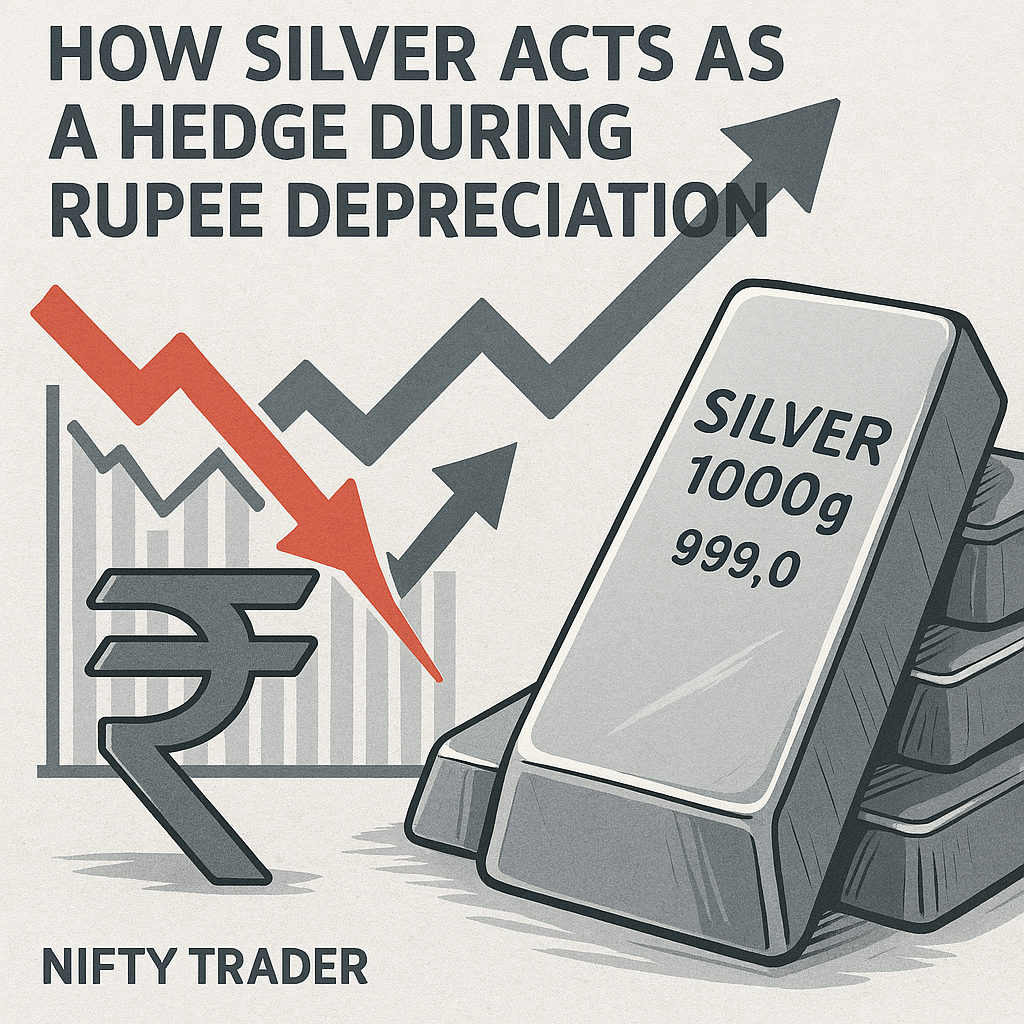
Silver vs. Rupee: When the rupee weakens, silver often strengthens — acting as a hedge against currency depreciation. This visual captures the inverse relationship with bold symbolism and data-driven design.
1️⃣ Introduction
Rupee depreciation is a common economic event that affects import costs, inflation, and investment returns in India. When the Indian Rupee weakens against the US dollar, imported commodities become more expensive. Since silver is globally traded in US dollars, a falling rupee directly influences domestic silver pricing.
This is where the concept of a silver hedge against rupee depreciation becomes important. Many Indian investors consider silver not just as a precious metal but also as a potential protective asset during currency weakness and rising inflation.
In this article, we will explore how silver works as a hedge, how currency movements impact silver prices in India, and whether it fits into a practical long-term investment strategy.
2️⃣ What Is Rupee Depreciation?
Rupee depreciation means a decline in the value of the Indian Rupee (INR) compared to another currency, usually the US Dollar (USD).
For example:
- If USD-INR moves from ₹75 to ₹85
- It means the rupee has weakened
This shift in the USD-INR exchange rate directly affects imported goods because India needs more rupees to buy the same dollar-priced product.
Why Does the Rupee Depreciate?
Several factors influence currency depreciation:
- Trade deficit (India imports more than it exports)
- Rising inflation
- Higher crude oil imports
- Global economic uncertainty
- Stronger US dollar due to Federal Reserve rate hikes
When the rupee weakens, it increases the cost of imports — including crude oil, electronics, and precious metals like silver.
3️⃣ Why Silver Prices Rise During Rupee Depreciation
Silver is traded internationally in US dollars. India imports a large portion of its silver requirement.
So even if global silver prices remain stable, Indian silver prices may rise if the rupee falls.
Rupee Depreciation Impact on Silver
Let’s simplify:
- Global silver price = $25 per ounce
- USD-INR = ₹75 → Indian price lower
- USD-INR = ₹85 → Indian price higher
Even without any change in global price, the rupee depreciation impact on silver increases domestic pricing.
That is why silver prices in India often rise when the rupee weakens against the dollar.
This relationship makes silver a potential hedge during currency depreciation.
4️⃣ Silver as a Hedge Against Currency Risk
A hedge is an asset that helps reduce financial risk during uncertain times.
Precious metals like gold and silver are considered traditional hedges because:
- They are globally valued
- They are not directly controlled by any government
- They often rise during inflation and economic uncertainty
Silver Hedge Against Rupee Depreciation
When currency value falls, physical assets tend to retain purchasing power better than cash. Silver, being priced globally in USD, may adjust upward in INR terms when the rupee weakens.
This makes silver a precious metals hedge and sometimes an inflation hedge as well.
However, silver behaves slightly differently from gold because it has strong industrial demand (solar panels, electronics, EV components). That adds both opportunity and volatility.
5️⃣ Historical Behavior of Silver During Rupee Weakness
India has experienced multiple phases of rupee depreciation during global crises, oil price shocks, and periods of economic stress.
During such periods:
- USD strengthens globally
- INR weakens
- Silver prices in India move upward
While global silver prices fluctuate due to demand-supply factors, currency depreciation amplifies price movement domestically.
There is often a visible correlation between the USD-INR exchange rate and Indian silver pricing. A rising dollar typically results in higher domestic silver rates.
However, this correlation is not perfect and can be influenced by global industrial demand and investor sentiment.
6️⃣ City-Wise Impact of Rupee Depreciation on Silver Prices
Although silver prices follow national and global trends, small variations exist across Indian cities due to:
- Transportation costs
- Local taxes
- Demand conditions
- Dealer margins
Investors often monitor local price updates such as Silver Rate Today in Ahmedabad, Silver Rate Today in Bangalore, Silver Rate Today in Delhi, and Silver Rate Today in Hyderabad to track how currency fluctuations are impacting their local markets.
For example:
- Delhi may reflect faster price transmission due to higher trading activity.
- Bangalore prices may be influenced by industrial and tech-driven demand.
- Ahmedabad may show variations based on bullion trade activity.
- Hyderabad may see fluctuations based on jewelry demand.
These differences are usually minor but important for short-term buyers.
7️⃣ Silver vs Gold During Rupee Depreciation
Both gold and silver are considered currency hedges, but they behave differently.
| Factor | Silver | Gold |
| Volatility | High | Moderate |
| Industrial Demand | High | Low |
| Hedge Strength | Medium | Strong |
| Affordability | High | Lower |
Key Differences
- Gold is a stronger traditional hedge during economic crises.
- Silver is more volatile due to industrial demand.
- Silver offers affordability, making it accessible for retail investors.
- Gold is often preferred during severe financial uncertainty.
A diversified precious metals hedge may include both gold and silver to balance volatility and stability.
8️⃣ Risks of Relying Only on Silver
While silver can act as a hedge, it is not risk-free.
1. High Volatility
Silver prices fluctuate more than gold.
2. Industrial Demand Dependency
Since silver is used in electronics, solar panels, and EV manufacturing, a slowdown in global growth may reduce demand.
3. Global Recession Impact
During recessions, industrial commodities may decline temporarily.
4. Dollar Strength Movements
If the US dollar strengthens sharply while global silver demand weakens, price movements can become unpredictable.
Therefore, relying only on silver for inflation protection may increase portfolio risk.
9️⃣ Silver Investment Strategy During Currency Weakness
A practical silver investment strategy during currency depreciation should focus on balance rather than speculation.
1. Gradual Accumulation
Avoid lump-sum investing at market peaks. Systematic buying can reduce timing risk.
2. Diversification
Combine silver with gold, equity, and debt instruments.
3. Choose the Right Form
- Physical silver (coins, bars)
- Silver ETFs
- Digital silver platforms
Each has pros and cons related to storage, liquidity, and purity.
4. Avoid Emotional Timing
Trying to perfectly predict currency depreciation cycles is difficult. Instead, focus on long-term allocation.
A structured silver investment strategy helps manage volatility while benefiting from potential currency-related price movements.
🔟 2026 Outlook: Rupee & Silver Trend
Looking ahead to 2026, several factors may influence silver prices in India:
1. Inflation Trends
If inflation remains elevated, demand for precious metals may increase.
2. Global Interest Rates
Higher US rates strengthen the dollar, which can pressure the rupee.
3. India’s Import Dependency
India’s reliance on oil and precious metal imports makes currency stability crucial.
4. EV & Solar Demand
Silver plays a major role in solar panels and electric vehicles. Rising green energy adoption may support long-term demand.
However, price trends will depend on global economic conditions, currency stability, and industrial growth. No asset moves in a straight line.
1️⃣1️⃣ FAQs
1. How does rupee depreciation affect silver prices in India?
When the rupee weakens against the dollar, import costs rise. Since silver is priced in USD, domestic prices increase even if global prices stay stable.
2. Is silver a good hedge against currency depreciation?
Silver can act as a hedge because it is globally valued and adjusts upward in INR terms during currency weakness. However, it is more volatile than gold.
3. Why do silver prices rise when rupee falls?
A weaker rupee means more INR is needed to buy dollar-priced silver. This pushes up silver prices in India.
4. Is silver better than gold during rupee weakness?
Gold is generally considered a stronger hedge. Silver may offer higher upside but also carries higher volatility.
5. Should I invest in silver during currency volatility?
Silver can be part of a diversified strategy, but investors should avoid concentrating only on one asset.
Conclusion
Silver plays an important role in protecting purchasing power during economic uncertainty. Because it is globally priced in US dollars, rupee depreciation impact on silver often results in higher domestic pricing.
While silver hedge against rupee depreciation can help manage currency risk, it should be used thoughtfully within a diversified portfolio. Understanding the relationship between the USD-INR exchange rate, inflation, and silver prices in India allows investors to make informed, balanced decisions rather than emotional ones.
In uncertain currency environments, knowledge and discipline remain more important than speculation.