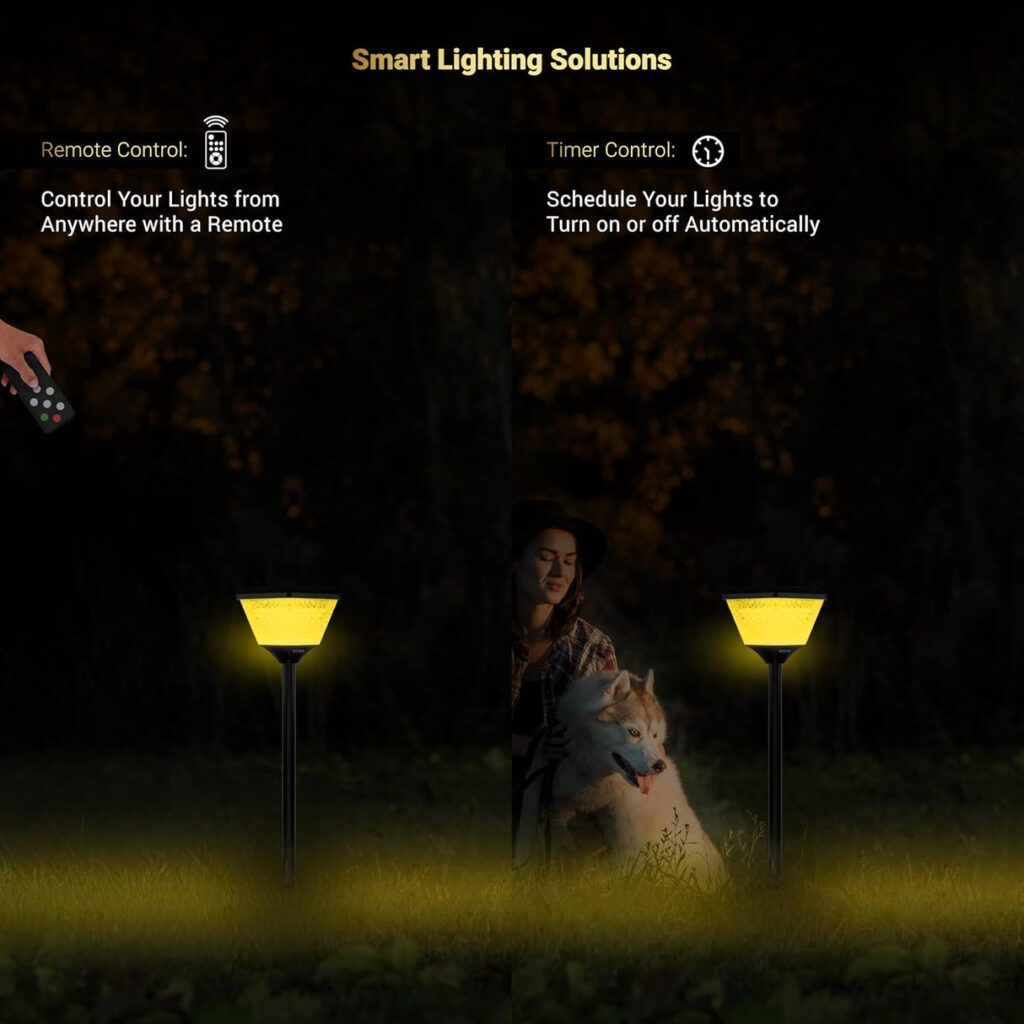
Solar Garden Lights
Solar garden lights are everywhere these days: lining pathways, dotting flower beds, and hanging from pergolas. Before you buy a dozen stakes or an elegant string of globes, it helps to understand the real costs, how well they perform, and whether they pay off over time. This guide breaks things down in simple, professional terms so you can decide with confidence.
Upfront cost — what you’ll pay at the start
Solar garden lights come in a wide price range. You can pick up basic stake lights in multi-packs for just a few dollars per unit, or spend considerably more on high-end fixtures and integrated post lights. Online marketplaces and stores show that packs and budget options are commonly priced very low, while premium units aimed at durability or higher brightness cost noticeably more.
When you plan a purchase, think about the number of lights you need and the quality you want. Cheap lights are tempting for quick decoration, but they often use lower-quality batteries and plastic housings. Higher initial cost often buys longer life, stronger housings (better weather resistance), and brighter, more consistent light.
Efficiency and brightness — how much light do they actually give?
Modern solar garden lights use LED bulbs, which are highly efficient. LED technology produces far more lumens per watt than old incandescent bulbs, so small solar LED fixtures can appear bright relative to their tiny panels and batteries. For basic pathway lighting, fixtures in the 100–400 lumen range are typical; brighter models exist for security or large-area lighting. Understanding lumens (brightness) is more useful than looking at “wattage” for LEDs.
Keep in mind that solar lights depend on sunlight for charging. In shady yards or in long cloudy seasons, they will run shorter hours or at lower brightness. Placement matters: a panel that receives direct sun for several hours will perform far better than one tucked under tree cover.
Batteries & lifespan — the hidden cost
The batteries in solar garden lights are their most common failure point. Lower-cost models often use nickel-based rechargeable batteries that tend to wear out in 1–3 years. Better lights use modern lithium-based cells (including lithium-iron-phosphate) that can last many years and tolerate heat and cold better. If you choose higher-quality batteries up front, you reduce replacement frequency and waste.
Beyond batteries, expect good LED fixtures to last 3–10 years or more if built well, while cheap housings and seals may fail sooner. Look at IP (ingress protection) ratings for water resistance and check whether replacement batteries are available for the model you like.
Maintenance & reliability
One big advantage of solar garden lights is low maintenance — there’s no wiring, trenching, or electrician required. Typical maintenance tasks are cleaning the solar panel so it charges efficiently, replacing batteries occasionally, and straightening or replacing stakes that get knocked over.
However, you should plan for occasional upkeep. In harsh climates, freeze–thaw cycles, heavy rain, or prolonged cloudy months can accelerate wear. If reliability is critical (for example, security lighting), consider hybrid fixtures that can be hard-wired or have rechargeable cells of proven quality.
Long-term savings — do solar lights pay for themselves?
Solar garden lights save electricity because they don’t draw power from the grid. If your goal is to reduce household lighting energy use, replacing wired outdoor lamps with solar fixtures will lower meter usage for those lights. For context, switching to efficient outdoor lighting is one of the ways households reduce lighting energy use significantly. The exact dollar savings depend on local electricity rates and how many wired lights you replace, but solar lights eliminate those operating costs entirely.
That said, the payback period (the time it takes for energy savings to cover the purchase cost) is often long for low-cost decorative solar lights because each unit costs little to begin with and the electricity saved per fixture is small. Where solar lights shine in value is when they replace installations that would otherwise require wiring, conduit, and professional labor — for those projects the savings can be immediate and substantial.
Environmental impact
Solar lights reduce grid electricity consumption and associated emissions, especially when they replace wired lights powered by fossil-fuel-heavy grids. Choosing fixtures with recyclable batteries and durable housings improves environmental benefit by reducing waste and replacement frequency.
- Are they worth it? Practical verdict
Short answer: yes — in many common uses. Solar garden lights are worth buying when:
- You want quick, no-wires installation for decorative pathway or accent lighting.
- You’re lighting areas where running wiring would be costly or difficult.
- You prioritize lower operating costs and simpler installation over perfect night-long brightness.
They are less worth it when:
- You need bright, continuous security lighting every night with guaranteed hours and intensity (wired LED floodlights or hybrid solar systems are better).
- Your site gets very little sun and battery replacements become frequent.
How to get the best value — quick tips
- Buy quality where it matters: pay a little more for sealed housings, stronger stakes/post options, and lithium batteries if you expect heavy use.
- Match lumen output to purpose: low lumens for ambiance, higher lumens for pathways and task lighting.
- Check replaceable batteries: models that allow battery replacement extend usable life and reduce long-term cost.
- Place panels for maximum sun: avoid shade and point panels toward the sun for reliable night operation.
- Consider packs vs single premium units: bulk packs are good for temporary or decorative lighting; invest in premium fixtures for permanent landscape features.
Final thought
Solar garden lights are a practical, eco-friendly option for most residential outdoor lighting needs. They offer fast installation, no ongoing electricity cost, and attractive choices for decoration and soft pathway lighting. If you prioritize dependable, bright, nightly security lighting, plan for higher-quality solar systems or wired options. But for ambiance, easy installation, and low running costs, solar garden lights are often a smart purchase that pays off in convenience and reduced energy use.
Would you like a short comparison table (cheap pack vs premium stake vs wired) or recommendations for models available in your region?