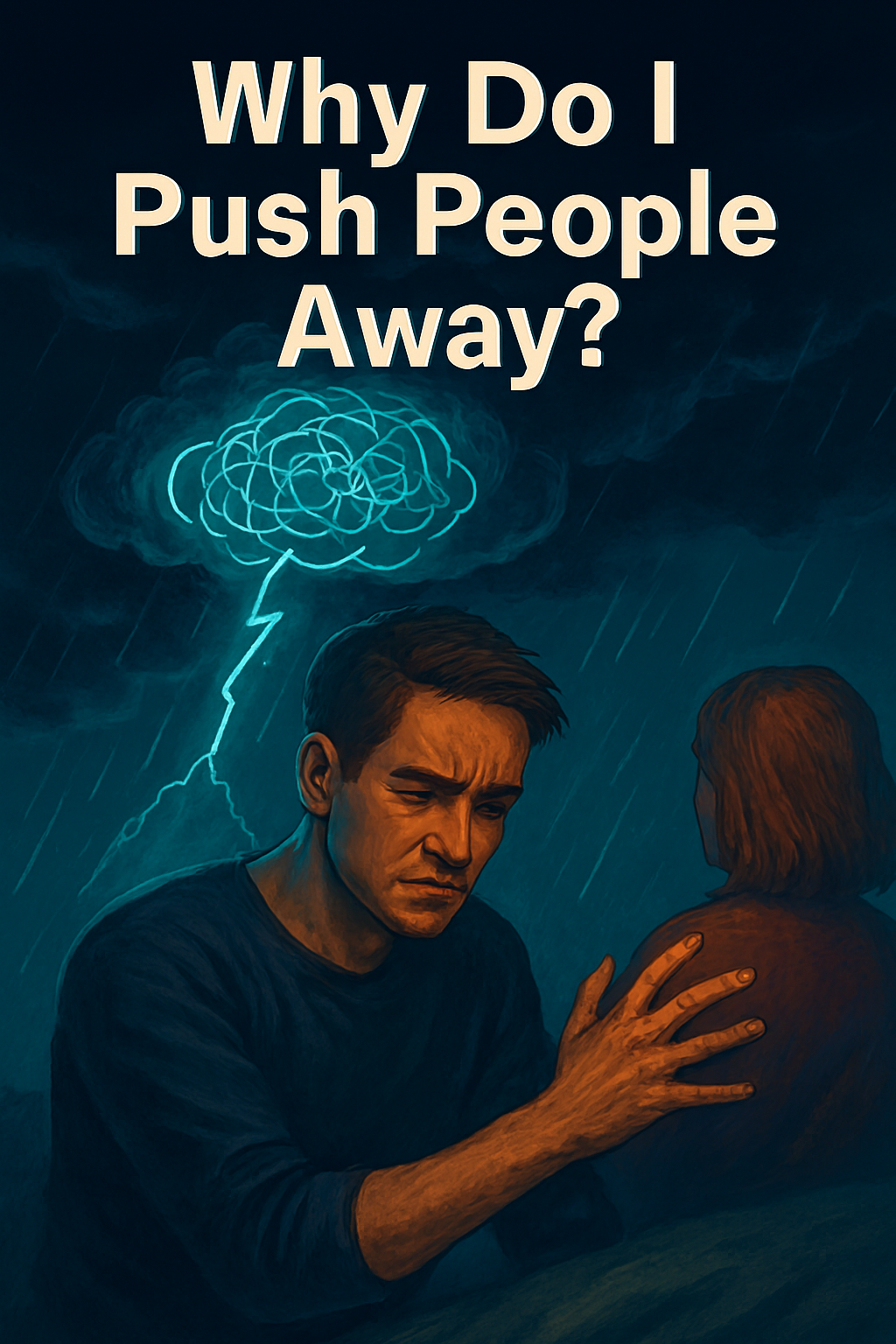
When pain turns inward, connection feels risky. This visual captures the emotional storm behind distancing behavior — vulnerability, fear, and the silent cry for understanding.
You want connection. You crave closeness. Yet somehow, when someone gets too close, you pull back. You cancel plans. You become distant. You find faults. And later, you sit alone wondering, why do I push people away?
It can feel confusing — even painful. You desire love, but your actions create distance. You long for understanding, yet you build walls. This internal contradiction often leaves people asking themselves, why do I push away people I love?
The truth is, pushing people away is rarely intentional cruelty. More often, it’s an emotional defense mechanism — a subconscious attempt to protect yourself from rejection, abandonment, or hurt. When closeness feels risky, distance feels safer.
If you’ve ever questioned why do I push people away even when I care deeply, you’re not broken. You’re likely protecting something tender inside you.
Let’s explore what’s really happening beneath the surface.
What Does It Mean to Push People Away?
Pushing people away doesn’t always look dramatic. Sometimes it’s subtle.
It can show up as:
- Becoming emotionally distant
- Avoiding difficult conversations
- Ending relationships abruptly
- Minimizing your feelings
- Acting indifferent when you’re not
From a psychological perspective, pushing people away psychology is closely tied to emotional avoidance. When emotions feel overwhelming, unsafe, or unfamiliar, the mind creates distance to reduce perceived threat.
You may appear independent or “low-maintenance,” but internally you might struggle with vulnerability.
In many cases, this pattern connects to emotional unavailability — not because you don’t care, but because closeness activates fear.
Why Do I Push People Away?
There isn’t one simple answer. The reasons are often layered and deeply personal.
Fear of Intimacy
Intimacy requires openness. And openness requires risk.
If you have a fear of intimacy, emotional closeness can feel overwhelming. You might worry:
- “What if they see the real me and leave?”
- “What if I depend on them too much?”
- “What if I get hurt?”
So instead of risking rejection, you reject first.
This is a protective instinct. Your mind thinks distance equals safety.
Past Trauma and Attachment Issues
Trauma and pushing people away are often connected. If you experienced neglect, emotional inconsistency, or betrayal earlier in life, your nervous system may associate closeness with instability.
Attachment issues form when caregivers were unpredictable, critical, or emotionally unavailable. As an adult, you might:
- Crave connection intensely
- Panic when someone pulls away
- Push them away before they leave
This cycle creates confusion — especially in romantic relationships.
Understanding your attachment style is a powerful step toward emotional awareness. Many people use a trusted mental health app to explore patterns like attachment anxiety and emotional avoidance in a safe, guided way.
Low Self-Worth and Self-Sabotage
Sometimes the question isn’t just why do I push people away — it’s why do I feel unworthy of being loved?
If deep down you believe:
- “I’m not good enough.”
- “They’ll leave eventually.”
- “I don’t deserve happiness.”
You may begin self-sabotaging relationships.
You might pick fights. Withdraw affection. Test their loyalty. Or emotionally shut down.
This isn’t manipulation. It’s fear wearing armor.
Self-sabotaging relationships often stem from negative core beliefs formed years ago. Challenging these beliefs is essential for long-term emotional wellness.
Fear of Vulnerability
Vulnerability means being seen — flaws, fears, insecurities and all.
For many, fear of vulnerability in relationships feels almost unbearable. You may struggle to express needs or admit when you’re hurt.
Instead, you distance yourself emotionally.
If you’ve ever asked, why do I distance myself emotionally? — the answer might be simple: vulnerability feels unsafe.
Learning to tolerate vulnerability takes time. Many individuals explore these fears through guided AI therapy, which allows them to reflect on emotions privately before opening up to others.
Relationship Anxiety
Relationship anxiety can make even healthy love feel threatening.
You may constantly overthink:
- “Do they still like me?”
- “Did I say something wrong?”
- “Are they losing interest?”
This hyper-awareness can become exhausting. To reduce anxiety, your mind may choose distance instead.
It’s easier to disconnect than to sit with uncertainty.
Understanding patterns related to Relationships & Emotional Connection can help you recognize when anxiety — not reality — is driving your behavior.
Signs You Might Be Pushing People Away
Sometimes we don’t notice the pattern until it repeats.
Here are common signs you are emotionally unavailable or distancing yourself:
- You withdraw when someone expresses deep feelings
- You avoid serious relationship conversations
- You focus on flaws to justify distancing
- You feel suffocated by closeness
- You sabotage relationships when things get stable
- You struggle to say “I need you”
- You prefer isolation when emotionally overwhelmed
If you resonate with several of these, you’re not alone. Many people develop these patterns without realizing it.
Exploring topics like Overthinking and Anxiety can also uncover hidden fears that fuel emotional avoidance.
How to Stop Pushing People Away
Healing is possible. Awareness is the first step.
1. Build Emotional Awareness
Start noticing your triggers.
When do you feel the urge to pull away? After conflict? After intimacy? After praise?
Practicing daily reflection through a structured mindfulness app can help you observe emotions without reacting impulsively.
Awareness reduces automatic defense responses.
2. Practice Vulnerability Slowly
You don’t need to share everything at once.
Start small:
- Express one honest feeling.
- Share one fear.
- Admit when you’re hurt.
Safe vulnerability builds trust — both in others and in yourself.
3. Challenge Negative Core Beliefs
If you believe you are unlovable, ask yourself:
- What evidence supports this?
- What evidence contradicts it?
Often, these beliefs are old survival stories — not present-day truths.
Building long-term emotional wellness requires gently rewriting those stories.
4. Improve Communication
Instead of withdrawing, try expressing what’s happening:
- “I feel overwhelmed and need a moment.”
- “Closeness scares me sometimes.”
- “I’m afraid of losing you.”
Clear communication prevents misunderstandings and reduces relationship anxiety.
5. Seek Professional Support
Sometimes patterns are deeply rooted in trauma and attachment wounds.
Talking to a therapist can help unpack these layers safely. If in-person therapy feels intimidating, digital platforms offering guided support through a mental health app or structured AI-based reflection tools can be a helpful starting point.
You don’t have to navigate this alone.
Conclusion
If you’ve been asking yourself, why do I push people away? — know this: your behavior likely developed as protection, not sabotage.
You learned to survive in the best way you knew how.
But survival patterns don’t always serve connection.
By building emotional awareness, practicing vulnerability, and challenging fear-driven beliefs, you can begin to create relationships rooted in safety rather than defense.
You are not “too much.”
You are not “broken.”
You are learning.
And the fact that you’re asking why do I push people away means you’re already ready for change.
Connection is possible. Healing is possible. And you deserve relationships where you don’t have to run to feel safe