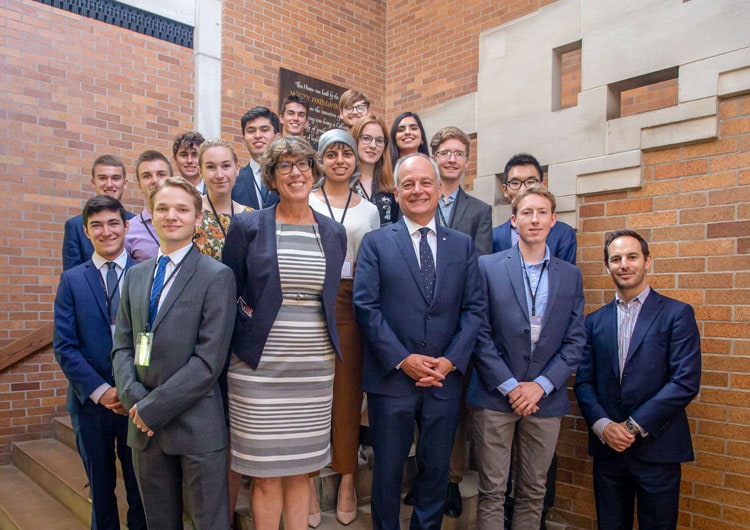
In the modern world of finance and philanthropy, few individuals have managed to leave a lasting mark across business, education, and society quite like Seymour Schulich. Known not only for his extraordinary investment success but also for reshaping higher education through transformative donations, Schulich represents a powerful example of how wealth can be leveraged to create long-term societal impact.
This article explores how Seymour Schulich built his fortune, why his philanthropic philosophy stands apart, and what his legacy reveals about the future of education, innovation, and responsible capitalism.
Early Life and Academic Foundations
Every remarkable journey begins with preparation, and Schulich’s story is no exception. Born in Montreal, Canada, Seymour Schulich demonstrated early intellectual curiosity and ambition. He pursued undergraduate studies at McGill University before earning an MBA from Harvard Business School.
These institutions exposed him to both rigorous analytical thinking and global economic perspectives. More importantly, they helped shape his belief that education is the most powerful engine of opportunity—a conviction that would later define his philanthropic mission.
While many graduates follow traditional corporate paths, Schulich chose a more entrepreneurial route, entering the investment world with a sharp eye for undervalued opportunities.
Building Wealth Through Strategic Investing
Seymour Schulich rose to prominence through his expertise in resource investing, particularly in precious metals and mining finance. His career accelerated when he became involved with companies focused on gold investments during periods when markets underestimated their potential.
One of his most significant achievements was co-founding Franco-Nevada Corporation. Rather than operating mines directly, Franco-Nevada pioneered a royalty-based business model—earning revenue from mining output without assuming operational risks.
This innovative approach changed how mining investments were structured worldwide. The company’s success generated enormous returns and cemented Schulich’s reputation as a visionary investor capable of identifying sustainable, scalable financial models.
Consequently, Schulich accumulated immense wealth—but unlike many billionaires, his next move would redefine how financial success could serve society.
A Philanthropist with a Strategic Vision
Philanthropy often focuses on charity or short-term relief. Seymour Schulich took a fundamentally different approach.
Instead of dispersing funds across countless causes, he concentrated on education and talent development, believing that empowering individuals produces exponential societal benefits. His philosophy was simple yet profound:
Invest in people, and they will solve tomorrow’s problems.
This strategy led to some of the largest educational donations in Canadian history.
Transforming Business Education
Perhaps Schulich’s most widely recognized contribution is his transformative support of Schulich School of Business at York University.
His landmark donation reshaped the institution into one of the world’s leading business schools. Today, the Schulich School of Business is internationally recognized for finance, management, and global leadership programs.
What makes this contribution unique is not merely the financial scale—it is the intent behind it. Schulich aimed to cultivate ethical business leaders capable of balancing profit with responsibility.
As global markets increasingly demand sustainability and transparency, this vision appears strikingly forward-thinking.
Engineering the Future: Supporting Innovation
Schulich’s philanthropy extends well beyond business education. Recognizing the growing importance of science and engineering, he funded major initiatives supporting technological advancement.
One standout example is the Lassonde School of Engineering, which benefits from his commitment to interdisciplinary innovation. Additionally, he has supported engineering programs at institutions such as the University of Calgary.
Through the prestigious Schulich Leader Scholarships, thousands of students pursuing STEM fields—science, technology, engineering, and mathematics—receive financial support.
These scholarships target future innovators, entrepreneurs, and researchers who might otherwise lack access to elite education. In doing so, Schulich addresses a critical global challenge: the shortage of highly trained scientific talent.
The Schulich Leader Scholarships: Investing in Human Potential
The Schulich Leader Scholarships program represents one of Canada’s most ambitious education initiatives. Each year, outstanding students across Canada and Israel receive substantial funding to pursue STEM degrees.
Unlike traditional scholarships based solely on grades, Schulich’s program emphasizes leadership, creativity, and entrepreneurial thinking.
This reflects his broader worldview: economic growth increasingly depends on innovators capable of solving complex global issues—from climate change to artificial intelligence.
By supporting these students early, Schulich effectively invests in solutions that may not yet exist.
A Different Kind of Billionaire Legacy
In an era when wealth inequality dominates public discourse, Seymour Schulich’s model offers an alternative narrative.
Rather than focusing on prestige projects or personal branding, his philanthropy seeks measurable, long-term outcomes:
- Educated leaders
- Scientific breakthroughs
- Economic innovation
- Social mobility
Importantly, Schulich often advocates for merit-based opportunity, arguing that talent exists everywhere but opportunity does not.
This belief resonates strongly in today’s rapidly evolving global economy, where access to education increasingly determines future success.
Lessons from Seymour Schulich’s Success
Schulich’s career provides several valuable lessons for entrepreneurs, investors, and policymakers alike:
1. Innovation Matters More Than Size
Franco-Nevada succeeded not by being the largest company, but by rethinking industry structure.
2. Education Is the Ultimate Investment
Financial markets fluctuate, but human capital compounds over generations.
3. Strategic Giving Creates Lasting Impact
Focused philanthropy often produces deeper societal change than scattered donations.
4. Long-Term Thinking Wins
Both his investments and charitable initiatives prioritize decades—not quarters.
Together, these principles demonstrate how financial success and social responsibility can reinforce one another rather than conflict.
The Broader Impact on Global Education
Seymour Schulich’s influence extends beyond Canada. His model is increasingly studied by universities and philanthropic organizations worldwide seeking sustainable funding approaches.
As governments struggle with rising education costs and technological disruption reshaping labor markets, private philanthropy like Schulich’s may play a growing role in shaping academic ecosystems.
His work raises an important question:
Should more business leaders view education as infrastructure rather than charity?
If adopted broadly, this philosophy could redefine how societies prepare future generations for economic uncertainty.
Looking Ahead: The Future Shaped by Visionary Giving
Seymour Schulich’s story ultimately transcends wealth accumulation. It illustrates how strategic thinking—applied not only to investments but also to philanthropy—can influence generations.
As artificial intelligence, climate challenges, and technological disruption reshape the global economy, societies will increasingly depend on educated, innovative leaders capable of navigating complexity.
Schulich’s legacy suggests that the most powerful investment is not in markets or commodities, but in human potential itself.
The forward-looking question now becomes clear:
If more investors followed Seymour Schulich’s model—prioritizing education, innovation, and opportunity—how differently might the future unfold?
Perhaps the next global breakthrough, transformative company, or life-changing discovery will come from a student whose opportunity began with one visionary decision to invest in people.