Industrial machinery operates under extreme pressure, heavy loads, and continuous motion. Whether it is mining equipment, manufacturing machinery, or construction gear systems, proper lubrication is essential for maintaining efficiency and preventing costly downtime. One of the most important aspects of lubrication is selecting the correct gear oil grade. Gear oils are specially designed lubricants that protect gear systems from wear, friction, and overheating.
Understanding gear oil grades and their role in heavy-duty applications helps businesses extend equipment life, improve performance, and reduce maintenance costs.
What Are Gear Oil Grades?
Gear oil grades refer to the classification of gear lubricants based on their viscosity and performance characteristics. These grades help users choose the right lubricant depending on the operating conditions of their equipment.
Most industrial gear oils are classified using the ISO viscosity grading system (ISO VG). Each industrial gear oil grades represents a specific viscosity range measured at 40°C. Common gear oil grades include ISO VG 68, 100, 150, 220, 320, 460, and 680.
Lower ISO grades are thinner and flow more easily, making them suitable for high-speed gears. Higher ISO grades are thicker and designed for systems operating under heavy loads or high temperatures. Choosing the correct grade ensures proper lubrication and efficient gear operation.
Why Viscosity Matters
Viscosity is one of the most critical properties of any lubricant. It refers to the oil’s resistance to flow and determines how well the lubricant forms a protective film between moving gear surfaces.
If the viscosity is too low, the lubricant film may break down under pressure, leading to metal-to-metal contact and accelerated wear. On the other hand, if the viscosity is too high, the oil may create excessive resistance, reducing system efficiency and increasing energy consumption.
Proper viscosity ensures that the lubricant forms a stable film between gear teeth, preventing friction and reducing heat generation. In heavy-duty gear systems, the right viscosity helps maintain consistent performance even under high load conditions.
How ISO Grades Relate to Load Capacity
ISO viscosity grades are closely related to the load-bearing capability of a gear oil. As the load on a gear system increases, the lubricant must be thick enough to maintain a protective film between the gear teeth.
For example, light-duty applications such as conveyors or small industrial gearboxes may use lower viscosity oils like ISO VG 68 or 100. Heavy-duty applications such as mining equipment, steel mills, or large gearboxes typically require higher viscosity grades such as ISO VG 320, 460, or even 680.
The correct ISO grade ensures that the oil can withstand extreme pressure and maintain lubrication even during peak operational stress.
Temperature Stability — The Silent Performance Factor
Temperature plays a major role in the performance of gear oils. As temperature rises, the viscosity of oil decreases, which can reduce its ability to protect gear surfaces. Conversely, extremely low temperatures can cause the oil to thicken, restricting flow and reducing lubrication efficiency.
High-quality gear oils are formulated with a strong viscosity index, allowing them to maintain consistent viscosity across a wide temperature range. This stability ensures reliable lubrication whether the machinery operates in hot industrial environments or colder climates.
Temperature stability also prevents oil oxidation and thermal breakdown, which can lead to sludge formation and reduced lubricant performance.
The Role of Additives in Gear Oil Performance
Modern gear oils contain specialized additives that enhance performance and protection. These additives improve the oil’s ability to withstand harsh operating conditions.
Some of the most important additives include:
Extreme Pressure (EP) Additives – Protect gears under heavy load by preventing surface damage.
Anti-Wear Additives – Reduce friction and prevent premature gear wear.
Rust and Corrosion Inhibitors – Protect metal components from moisture and oxidation.
Anti-Foaming Agents – Prevent foam formation that could reduce lubrication efficiency.
Oxidation Inhibitors – Extend the oil’s lifespan by preventing chemical breakdown.
These additives allow gear oils to perform effectively in demanding industrial environments.
Choosing the Right Gear Oil for Heavy-Duty Machinery
Selecting the correct gear oil involves evaluating several operational factors.
1. Operating Load
Heavy loads require higher viscosity oils with strong extreme pressure protection. Machinery operating under intense stress needs lubricants that maintain a stable protective film.
2. Gear Speed
High-speed gear systems typically require lower viscosity oils to reduce friction and allow smooth operation. Low-speed gears with heavy loads may require thicker lubricants.
3. Temperature Range
Machinery operating in high-temperature environments requires gear oils with excellent thermal stability and oxidation resistance.
4. Gear Type
Different gear designs such as spur gears, helical gears, or worm gears may require specific lubricant formulations for optimal performance.
5. OEM Specifications
Always follow the recommendations provided by the equipment manufacturer. OEM guidelines ensure compatibility with the gear system and help maintain warranty compliance.
Maintenance Intervals and Monitoring
Proper maintenance is just as important as selecting the correct gear oil. Regular monitoring ensures that the lubricant continues to perform effectively throughout its service life.
Key maintenance practices include:
-
Routine oil analysis to detect contamination or degradation
-
Monitoring operating temperatures
-
Checking oil levels and replenishing when necessary
-
Replacing gear oil according to recommended service intervals
Regular maintenance helps prevent unexpected equipment failure and ensures consistent machine performance.
Why MAGNUM Gear Oils Stand Out
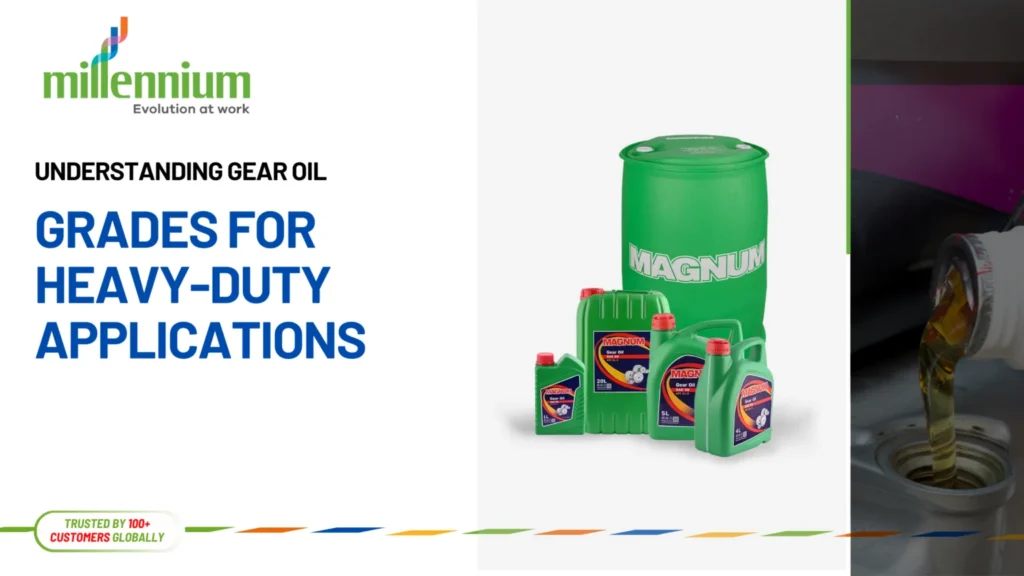
High-performance lubricants such as MAGNUM Gear Oils are designed to meet the demanding requirements of heavy-duty industrial applications. These lubricants are formulated using high-quality base oils and advanced additive technology to provide exceptional protection and durability.
MAGNUM Gear Oils offer excellent load-carrying capacity, strong thermal stability, and superior resistance to wear and oxidation. Their reliable performance helps reduce maintenance costs and extend the service life of industrial gear systems.
Final Thoughts
Gear oils play a crucial role in protecting industrial machinery from wear, heat, and mechanical stress. Understanding gear oil grades, viscosity characteristics, and additive technology allows businesses to choose the right lubricant for their equipment.
By selecting the correct gear oil and following proper maintenance practices, industries can improve operational efficiency, minimize downtime, and extend the lifespan of critical gear systems. In heavy-duty applications, the right gear oil is not just a lubricant—it is a key factor in long-term machinery performance and reliability.