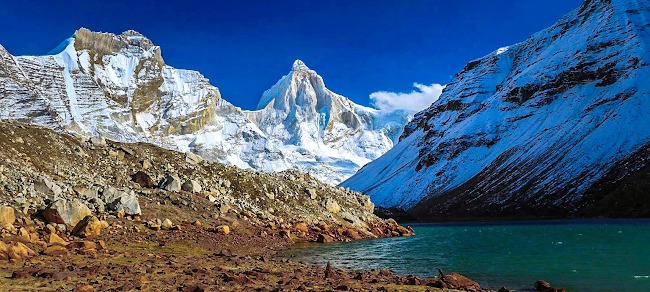
The Kedartal Trek is one of the toughest and most serious high-altitude treks in Uttarakhand. Located above Gangotri at around 4,750 meters, this trek is known for steep ascents, boulder sections, glacier crossings, and the beautiful emerald Kedartal Lake beneath Mt. Thalay Sagar.
This is not a beginner-friendly trek. Because of its exposed terrain and altitude, choosing the Kedartal Trek best time is extremely important. Unlike easier Himalayan trails, Kedartal is open only for a short window every year.
Let’s understand the best season in detail.
Best Time to Do Kedartal Trek (Quick Answer)
The Kedartal Trek best time is:
- Mid-May to June (Pre-monsoon)
- Mid-September to Early October (Post-monsoon)
These months offer stable weather, safer trail access, and manageable snow conditions.
Kedartal Trek in Pre-Monsoon (May to June)
This is considered the most preferred season.
Weather Conditions
- Day temperature: 5°C to 12°C
- Night temperature: -2°C to -6°C
- Snow present in higher sections
In May, snow patches remain beyond Bhoj Kharak. By June, snow reduces but glacier sections remain challenging.
Compared to beginner treks like Kedarkantha, Kedartal requires strong endurance and prior high-altitude exposure.
Why Pre-Monsoon Is Ideal
- Clear mountain views
- Safer river crossings
- Stable weather
- Balanced snow and rock sections
For experienced trekkers, this is the most rewarding time.
Kedartal Trek During Monsoon (July to August)
Monsoon is not recommended for Kedartal.
Why It’s Unsafe
- Heavy rainfall in Gangotri region
- Landslides on approach roads
- Slippery boulder sections
- Unstable glacier streams
Most operators suspend departures during this period.
If someone wants to trek in monsoon, safer routes like Valley of Flowers are better suited.
Kedartal Trek in Post-Monsoon (September to Early October)
This is the second-best window.
Weather & Trail
- Day temperature: 4°C to 10°C
- Night temperature: -5°C to -10°C
- Trails mostly dry and rocky
- Very clear mountain visibility
September offers stable conditions. October becomes colder and may receive early snowfall.
Trekkers who have completed challenging routes like Gaumukh Tapovan generally manage Kedartal well in autumn.
Why Autumn Works
- Crisp, clear views
- Less crowd
- Drier trail
- Stable climate
Kedartal Trek in Winter (November to April)
The trek remains closed.
Reasons
- Heavy snowfall
- Temperatures below -15°C
- Avalanche-prone zones
- Blocked access routes
Unlike winter treks such as Kedarkantha, Kedartal is too exposed and technical for winter trekking.
Month-by-Month Quick Guide
|
Month |
Suitability | Conditions |
|
April |
❌ Closed | Snowbound |
| May | ✅ Excellent |
Snow + clear weather |
|
June |
✅ Excellent |
Stable conditions |
|
July |
❌ Unsafe | Heavy rainfall |
| August | ❌ Unsafe |
Landslides |
|
September |
✅ Very Good | Dry & clear |
| October | ⚠️ Limited |
Cold, early snow |
| Nov–Mar | ❌ Closed |
Extreme winter |
Snow Conditions on Kedartal Trek
Snow here is not playful or easy. It can be technical.
- May–Early June: Snowfields and icy sections
- Late June: Mixed snow and rock
- September: Mostly snow-free
- October: Fresh snowfall possible
Trekkers with snow experience from routes like Bali Pass are better prepared for Kedartal.
Final Verdict: Kedartal Trek Best Time
If you are serious about this trek:
- Choose May or June for snow experience
- Choose September for dry and stable conditions
- Avoid monsoon and winter completely
The Kedartal Trek best time is limited, and planning correctly makes all the difference.
For those planning this challenging expedition with proper acclimatization and safety measures, Himalayan Daredevils offers detailed Kedartal Trek itineraries designed specifically for experienced trekkers in the Garhwal Himalayas.
Source URL: https://himalayandaredevils.blogspot.com/2026/03/kedartal-trek-best-time-complete.html