Comparing Jelly Candy Making Machines for Small vs Large Factories
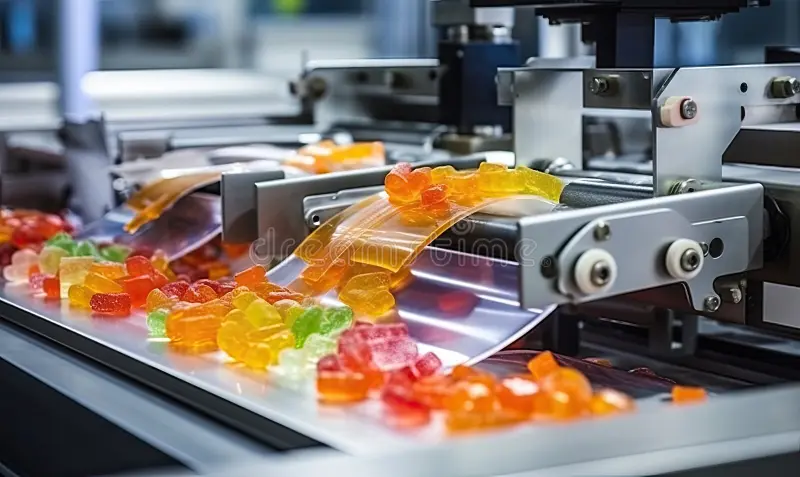
Selecting the right candy production equipment is a critical decision for confectionery manufacturers. Whether a business is just starting or operating at an industrial scale, understanding the differences between machines designed for small and large factories can influence production efficiency, quality consistency, and overall operational costs. A Jelly Candy Making Machine plays an essential role in transforming raw ingredients into finished candies by automating mixing, cooking, depositing, and cooling processes. The key lies in choosing machinery that aligns with a factory’s production capacity, budget, and future growth plans.
A well‑designed Jelly Candy Making Machine can automate significant portions of the production process, reduce labor requirements, and ensure consistent output. For small businesses, compact and semi‑automated machines offer flexibility and lower upfront costs, while large factories benefit from fully automated, high‑capacity systems capable of producing thousands of candies per hour. Investing in the right type of machine improves productivity and product quality, whether the goal is niche artisanal candies or high‑volume commercial products.
Production Capacity
The primary distinction between jelly candy machines for small and large factories is production capacity.
Small Factory Machines
Machines designed for small operations typically handle lower batch volumes. These systems often feature semi‑automation, allowing operators to oversee multiple tasks while maintaining control over the process. Small‑scale machines are ideal for businesses producing limited quantities, seasonal products, or specialty candies. Their capacity generally ranges from a few kilograms to several dozen kilograms per hour.
Large Factory Machines
Large factories require machines with high throughput capabilities. Fully automated lines designed for industrial production can process hundreds to thousands of kilograms per hour. These systems integrate continuous mixing, automated depositing, and extended cooling tunnels to support round‑the‑clock production. High capacity reduces lead time and meets large orders more efficiently, which is crucial for businesses supplying retail chains or distributors.
Automation Level
The level of automation significantly impacts how machines operate and the workforce required.
Small Factory Machines
Semi‑automatic machines are common for small factories. These systems may require manual input for certain stages, such as mold loading, ingredient addition, or portion control. While semi‑automation reduces labor compared to manual methods, operators still play a hands‑on role in managing the process. This setup offers flexibility in recipe experimentation and customization.
Large Factory Machines
Large factories benefit from fully automated jelly candy making systems. These machines integrate programmable logic controllers (PLCs), automated dosing, real‑time temperature monitoring, and continuous operation capabilities. Fully automated systems minimize human intervention, reduce error rates, and maximize consistency. They are ideal for high‑volume production with standardized recipes and minimal variation.
Space and Installation Requirements
The physical footprint of the machinery and associated infrastructure differs substantially between small and large setups.
Small Factory Machines
Compact machines are designed to fit in limited factory spaces. They are suitable for startups or small businesses operating in rented or shared facilities. Installation is generally straightforward, and these machines can often be moved or reconfigured as needed. Small factory machines require minimal auxiliary equipment.
Large Factory Machines
Industrial‑grade systems require substantial floor space due to their size and the inclusion of multiple interconnected modules, such as mixing tanks, depositors, cooling tunnels, and packaging lines. Large setups may involve customized facility layouts to accommodate product flow and safety standards. Proper installation planning ensures efficiency and minimizes production disruptions.
Cost Considerations
Budget constraints often guide equipment selection, especially for small businesses.
Small Factory Machines
Smaller jelly candy making machines have a lower initial cost, making them accessible to startups and small manufacturers. The reduced investment makes it easier for businesses to test product ideas and enter the market without significant financial risk. However, production speeds and automation capabilities are limited, which can impede rapid scaling.
Large Factory Machines
Industrial systems require higher upfront capital due to advanced automation, larger capacity, and integration with packaging and quality control systems. Despite the higher initial cost, these machines deliver long‑term value through reduced labor costs, higher output, and lower per‑unit production expenses. Large manufacturers often achieve a faster return on investment due to volume efficiencies.
Maintenance and Technical Support
Maintenance needs vary depending on machine complexity and usage.
Small Factory Machines
Semi‑automatic machines are typically easier to maintain because of their simpler design and fewer integrated components. Basic mechanical knowledge enables on‑site troubleshooting, and replacement parts are often affordable and readily available.
Large Factory Machines
Fully automated systems incorporate advanced electronics, sensors, and integrated controls, increasing the need for specialized maintenance. Manufacturers may require ongoing technical support, training, and periodic calibration to maintain optimal performance. However, proactive maintenance routines and support plans prolong equipment life and minimize unexpected downtime.
Flexibility and Customization
The ability to adapt production for different products is another important factor.
Small Factory Machines
These machines offer greater flexibility for experimenting with new flavors, shapes, and recipes. Small batches allow manufacturers to test market responses and innovate without committing to large production runs.
Large Factory Machines
While large systems are designed for consistent high‑volume output, they can also offer customization through interchangeable molds and adjustable settings. However, recipe changes often require reprogramming and recalibration, which may introduce downtime.
Conclusion
Choosing the right jelly candy making machine depends on a factory’s production goals, budget, space, and workforce. Small factories benefit from compact, semi‑automated machines that offer flexibility and lower initial costs. In contrast, large factories require fully automated, high‑capacity systems that deliver consistent quality and maximize output.
Understanding the differences in production capacity, automation, installation requirements, cost, maintenance, and flexibility helps manufacturers make informed decisions. Whether launching a niche candy brand or scaling a major confectionery product line, selecting the appropriate equipment ensures efficient, safe, and cost‑effective jelly candy production.