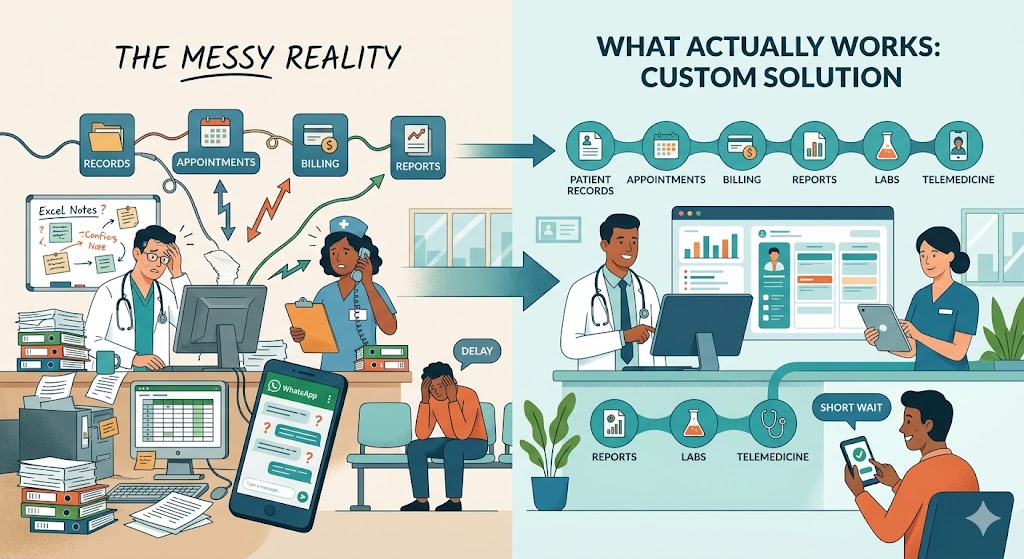
Healthcare organizations today deal with more data and responsibilities than ever before. From patient records and appointment scheduling to billing and communication, everything needs to be managed quickly and accurately.
However, many hospitals and clinics still rely on outdated systems or multiple tools that do not work well together. This often leads to delays, errors, and extra workload for staff.
This is where healthcare software development services play an important role. Instead of adjusting to generic tools, healthcare providers can use custom-built solutions designed specifically for their needs. These systems help simplify daily operations and improve the overall quality of care.
Understanding the Need for Healthcare Software Development
In a busy healthcare environment, even small inefficiencies can create bigger problems. When patient information is stored in different places or managed manually, it becomes difficult to access and update data quickly.
For example, a doctor may need to check a patient’s previous reports, but if the system is slow or not connected, it wastes valuable time. Similarly, administrative staff may struggle with appointment scheduling or billing when systems are not streamlined.
Healthcare software development helps solve these challenges by creating a centralized system where everything is connected. It reduces dependency on paperwork and improves how information flows across departments.
What Are Healthcare Software Development Services?
Healthcare software development services involve designing, building, and maintaining digital solutions tailored specifically for healthcare organizations.
These services focus on understanding how hospitals, clinics, and healthcare providers operate. Based on this, developers create software that supports real workflows instead of forcing staff to adapt to generic systems.
The goal is simple — make healthcare operations smoother, faster, and more reliable while ensuring patient data remains secure.
Key Solutions Offered in Healthcare Software Development
Electronic Health Record (EHR) Systems
EHR systems allow healthcare providers to store patient information digitally. This includes medical history, prescriptions, test results, and treatment plans.
With all data available in one place, doctors can make quicker and more informed decisions. It also reduces the risk of losing important patient information.
Hospital Management Systems (HMS)
Hospitals manage multiple departments such as registration, billing, laboratory, and pharmacy. A hospital management system connects all these departments into one platform.
This ensures smooth coordination and reduces the need for repeating tasks. It also helps in tracking operations more effectively.
Telemedicine Applications
Telemedicine has become an important part of modern healthcare. These applications allow patients to consult doctors through video calls or online messaging.
It is especially helpful for patients in remote areas or those who prefer not to visit hospitals for minor consultations.
Patient Portals
Patient portals give individuals access to their healthcare information. They can book appointments, view reports, and communicate with doctors.
This improves transparency and helps patients stay involved in their own healthcare journey.
Mobile Health Applications
Mobile apps make healthcare services more accessible. Features like appointment reminders, medication alerts, and health tracking help patients manage their health more easily.
These apps also improve communication between patients and healthcare providers.
Benefits of Custom Healthcare Software
Improved Efficiency
Automation reduces manual work and helps staff complete tasks faster.
Better Patient Care
Doctors can access accurate information quickly, leading to better diagnosis and treatment.
Data Security
Custom software is built with strong security measures to protect sensitive patient data.
Easy Integration
Healthcare systems can connect with labs, pharmacies, and other tools without issues.
Scalability
As the organization grows, the software can be updated with new features.
Important Features to Consider
Healthcare software must be designed carefully to meet industry requirements. Some important features include:
- Secure data storage and access control
- User-friendly interface for medical staff
- Fast and reliable performance
- Integration with existing systems
- Compliance with healthcare regulations
These features ensure the system works efficiently in real-world healthcare environments.
Choosing the Right Healthcare Software Development Company
Selecting the right development partner is a crucial step. Healthcare software requires both technical expertise and an understanding of medical workflows.
A good development company will first analyze your current system and identify areas for improvement. They will then design a solution that fits your specific needs.
Testing is also an important part of the process to ensure everything works correctly before launch. After deployment, ongoing support and updates help maintain system performance.
Future Trends in Healthcare Software Development
Technology continues to shape the future of healthcare. Some emerging trends include:
- Artificial intelligence for faster diagnosis
- Remote patient monitoring systems
- Wearable health devices integration
- Cloud-based healthcare solutions
Healthcare providers need flexible systems that can adapt to these advancements.
Conclusion
Healthcare software has become an essential part of modern medical services. It helps organizations manage operations efficiently, reduce manual work, and improve patient care.
With the help of healthcare software development services, hospitals and clinics can build systems that truly support their needs. Custom solutions not only improve daily workflows but also prepare organizations for future growth.
Investing in the right technology today ensures better healthcare services tomorrow.