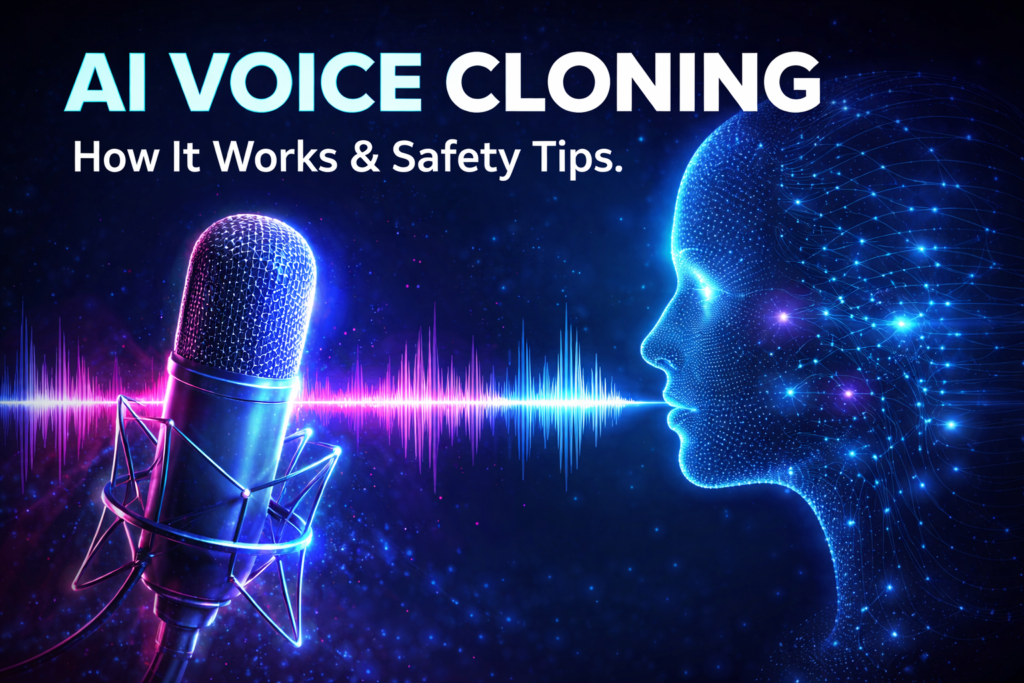
The rapid growth of artificial intelligence has introduced tools that can replicate human speech with remarkable accuracy. Among these advancements, AI Voice Cloning has become one of the most talked-about technologies.
It allows machines to mimic a person’s voice, capturing tone, pitch, and speaking style in a way that feels natural and realistic. While the possibilities are impressive, understanding how it works and how to use it responsibly is essential.
What Is AI Voice Cloning?
AI voice cloning refers to the process of using machine learning models to create a digital replica of a human voice. These systems analyze audio samples and learn patterns such as pronunciation, rhythm, and emotional tone.
Technologies like Deep Learning play a central role in this process. By training on large datasets, the model becomes capable of generating speech that closely resembles the original speaker. The more high-quality audio data provided, the more accurate the cloned voice becomes.
How the Technology Works
The process typically begins with collecting voice recordings. These recordings are then processed by AI models that break down speech into smaller components. The system learns how sounds are formed and how they flow together.
Once trained, the model can generate new speech in the same voice, even if the original speaker never said those exact words. This is what makes the technology so powerful—and also why it requires careful handling.
Speech synthesis techniques, such as Text-to-Speech systems, are often combined with voice cloning to produce fluid and natural audio output.
Practical Applications
AI voice cloning has a wide range of applications across industries. In media and entertainment, it can be used for dubbing, narration, or recreating voices for creative projects. It also plays a role in accessibility, helping individuals who have lost their voice communicate again using a digital version of their own speech.
Businesses may use it for customer service automation or personalized audio experiences. In education, it can support language learning and interactive content.
Despite these benefits, the technology must be used with caution to avoid misuse.
Ethical Considerations
One of the biggest concerns surrounding voice cloning is consent. Using someone’s voice without their permission raises serious ethical and legal issues. A person’s voice is a unique part of their identity, and replicating it without approval can lead to misuse.
There is also the risk of deception. Cloned voices can potentially be used to impersonate individuals, which may result in fraud or misinformation. This makes transparency and accountability critical when working with such technology.
Legal Aspects to Keep in Mind
Laws related to voice cloning are still evolving, but many regions treat voice as a form of personal data or intellectual property. This means that explicit permission is often required before cloning or using someone’s voice.
In some cases, unauthorized use can lead to legal consequences, especially if it causes harm or misrepresentation. Understanding local regulations and ensuring compliance is an important step before using AI Voice Cloning in any project.
Safe and Responsible Usage
Using voice cloning responsibly starts with obtaining clear consent from the individual whose voice is being used. This includes informing them about how their voice will be recorded, processed, and applied.
It is also important to maintain transparency with audiences. If a voice has been generated or modified using AI, disclosing this information helps build trust and prevents confusion.
Data security is another key factor. Voice recordings should be stored and handled carefully to prevent unauthorized access or misuse.
Limitations of the Technology
While AI voice cloning is highly advanced, it is not perfect. Subtle emotional nuances and spontaneous speech variations can still be challenging to replicate fully.
Additionally, the quality of the output depends heavily on the input data. Poor recordings or limited samples may result in less accurate voice reproduction.
Recognizing these limitations helps set realistic expectations and encourages thoughtful use of the technology.
Final Thoughts
AI voice cloning represents a significant step forward in how machines interact with human communication. It offers exciting possibilities across various fields, from creativity to accessibility.
However, with this capability comes responsibility. By focusing on ethical practices, legal compliance, and transparency, it is possible to harness AI Voice Cloning in a way that benefits users while respecting individual rights.