Why Plate Designs Get So Much Attention Lately
Plate heat exchanger systems have been getting a lot of attention in Houston plants, and not without reason. When they’re applied correctly, they offer tight temperature approaches and a compact footprint that’s hard to beat. That matters when space is already spoken for and you’re trying to squeeze performance out of an existing unit.
But attention doesn’t always equal understanding.
What You’re Really Getting With Plate Construction
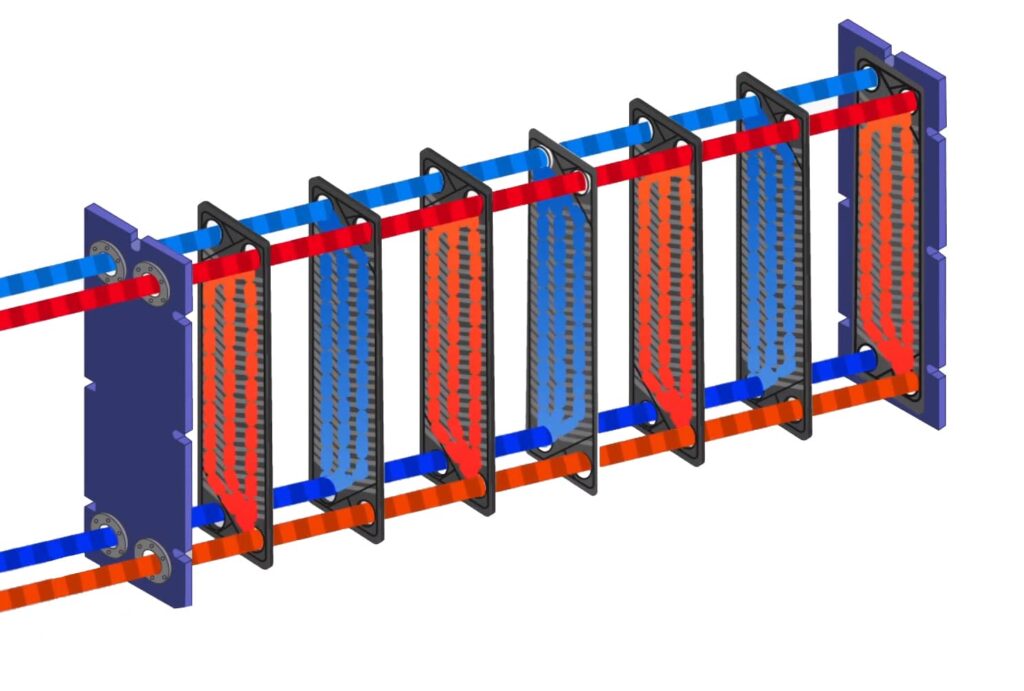
At the core, you’re dealing with a series of thin plates stacked together, creating alternating flow channels for hot and cold fluids. That design increases surface area and turbulence, which improves heat transfer efficiency compared to bulkier equipment.
Sounds ideal. And sometimes it is.
Where Plate Units Actually Shine in the Field
You’ll see these units perform well in clean service—cooling water loops, light hydrocarbons, certain chemical processes where fouling is predictable and manageable. Plate and frame heat exchangers especially give you flexibility, since you can add or remove plates to adjust capacity without replacing the whole unit.
That adjustability is a real advantage when process conditions shift over time.
And Where They Start Causing Trouble
Here’s the part that doesn’t make it into sales conversations. Plate units don’t love dirty service. High solids, scaling fluids, or anything prone to fouling can turn those narrow channels into maintenance headaches faster than expected.
Cleaning frequency goes up. Downtime follows.
And if you’re not set up for it, that’s where the frustration starts.
The Gasket Conversation Nobody Wants to Have
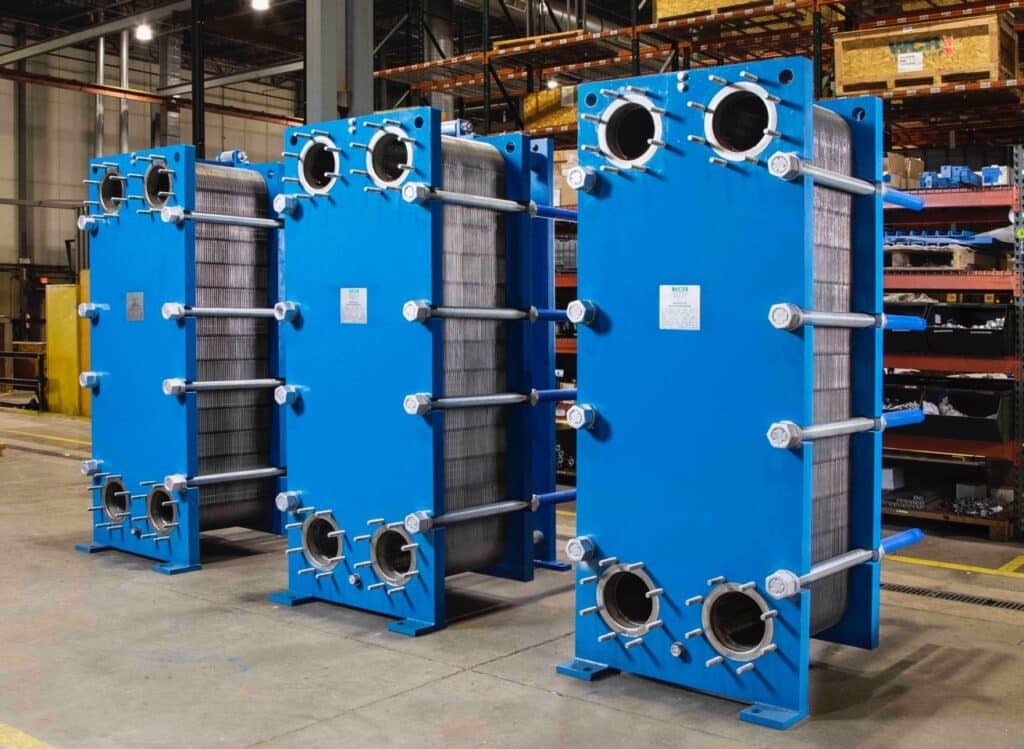
Gaskets are part of the deal with plate and frame designs. They seal the plates, direct flow paths, and handle temperature and chemical exposure. Over time, they degrade. That’s normal.
But replacement isn’t always quick or simple, especially if you didn’t plan for access or spare parts availability ahead of time.
Most distributors won’t say that upfront.
Inventory vs Lead Time—This Is Where It Gets Real
You can spec the perfect unit on paper and still lose weeks waiting for delivery. That’s the gap a lot of facilities underestimate. Kinetic Engineering Corporation built their entire model around closing that gap—stocking a wide range of Houston heat exchangers instead of relying on factory lead times.
Since 1969, they’ve been operating out of Houston with inventory depth that lets them respond when a plant can’t wait.
That’s not marketing. That’s operational reality.

Mid-Project Adjustments Happen More Than You Think
You start with one set of process conditions, then operations tweaks something upstream and suddenly your duty changes. It happens all the time. Now your selected equipment is borderline.
So what do you do then?
If you’ve got access to multiple equipment types—shell and tube heat exchangers, air cooled heat exchangers, even double pipe—you’ve got options. If not, you’re stuck forcing a solution that may not hold up long term.
One Sentence You Don’t Want to Hear During Startup
“It’s not hitting temperature.”
Why Flexibility Matters More Than Efficiency on Paper
On paper, a plate heat exchanger can outperform other designs in certain scenarios. Higher efficiency, tighter approach temperatures, smaller footprint. All true.
But plants don’t run on paper.
They run on uptime, maintenance cycles, and how forgiving the equipment is when conditions drift from design. That’s where shell and tube designs still dominate a lot of refinery and petrochemical services—they give you breathing room when things aren’t perfect.
Matching Equipment to Houston Operating Conditions
Houston industrial equipment doesn’t operate in a vacuum. You’ve got high humidity, temperature swings, and process variability that isn’t always reflected in initial specs. Kinetic’s advantage comes from working in that environment for over five decades—they’re not guessing how equipment will behave here.
They’ve seen it play out.
Serving the Gulf Coast corridor, they’ve supported everything from refinery turnarounds to chemical plant expansions, where timing and reliability matter more than theoretical performance curves.
The Second Keyword Moment—What Actually Delivers
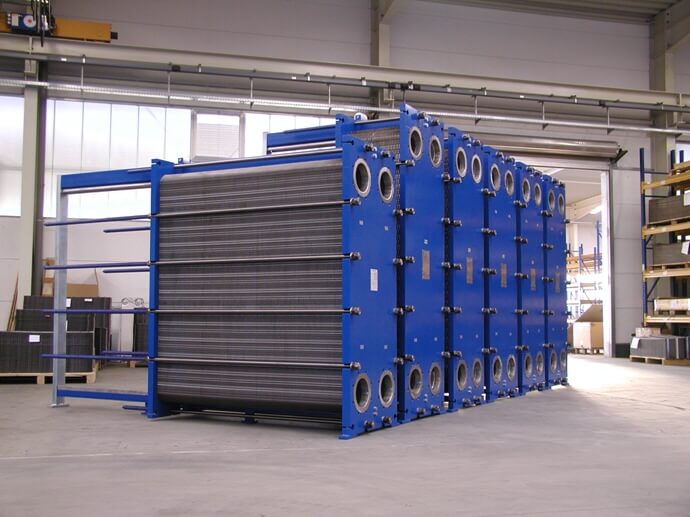
At some point, every facility needs a heat exchanger that works under real conditions, not ideal ones. That’s where experience shows up in ways you can’t always quantify on a datasheet.
Because knowing when not to use a plate design can be just as important as knowing when to use one.
Why Engineers Stick With Proven Suppliers
There’s a reason experienced engineers don’t jump suppliers every project. It’s not habit. It’s risk management. When you’ve got a distributor who understands process equipment Houston facilities rely on—and who actually has inventory—you reduce uncertainty.
And uncertainty is what causes most problems in the field.
The Right Move When It Actually Matters
If you’re evaluating plate heat exchangers or comparing them against other options, don’t make the decision in isolation. Talk to Kinetic Engineering Corporation. They’ve been doing this since 1969, they stock what others have to order, and they’ll tell you straight whether a plate unit fits your service—or if something else will keep your operation running longer with fewer headaches.
FAQs
When should I choose a plate heat exchanger over shell and tube?
If you need high efficiency, tight temperature approaches, and have relatively clean fluids, plate units are a strong option.
How often do plate heat exchangers need maintenance?
Depends heavily on your fluid. Clean service can run long intervals. Fouling service might require frequent cleaning and gasket checks.
Are plate heat exchangers suitable for refinery applications?
Some are, especially in clean or controlled streams. But many refinery services still favor shell and tube for durability.
Why does inventory matter when selecting a supplier?
Because lead times don’t stop your process from needing equipment. Stock availability can be the difference between a short outage and a long one.