What does a plumbing inspection do for your home?
A plumbing inspection identifies system risks in water supply lines, drainage networks, fixtures, and hidden pipe infrastructure. A licensed plumber evaluates leaks, corrosion, pressure imbalance, and material degradation using diagnostic tools and visual checks.
Plumbing inspections operate as a preventive system control. The plumber applies testing methods, observes flow behavior, and detects early failure indicators. These actions connect directly to cost reduction because early detection prevents structural damage and emergency repair escalation.
Core inspection objectives include:
- Detecting hidden leaks in walls, ceilings, and slabs
- Evaluating pipe corrosion and material fatigue
- Measuring water pressure stability across fixtures
- Identifying drainage restrictions and blockage formation
- Checking water heater efficiency and safety condition
Plumbing inspection functions as a diagnostic layer that connects system behavior with repair prevention.
How do plumbing inspections prevent expensive home damage?
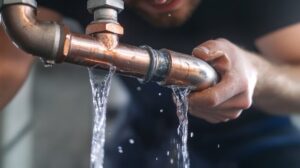
Plumbing inspections prevent expensive home damage by identifying failure points before water spread occurs. Water damage escalates costs through structural repair, mold remediation, and flooring replacement.
Plumbing systems degrade through predictable patterns:
- Pipe joints loosen under pressure cycles
- Corrosion develops in metallic piping systems
- Small leaks expand under continuous water flow
- Drain blockages increase internal pressure
A plumber evaluates these patterns and interrupts failure progression. Early sealing of leaks reduces wall saturation. Pressure correction protects fixtures and pipes from burst events. Drain clearing prevents backflow contamination.
Cost escalation usually follows a chain:
Pipe defect → unnoticed leak → structural absorption → material breakdown → full system repair demand
Inspection breaks this chain at the earliest stage.
What plumbing problems get detected during inspections?
Plumbing inspections detect both visible and hidden system defects across residential infrastructure. Each defect type links directly to potential repair cost escalation if ignored.
Common detected issues include:
- Slab leaks under concrete foundations
- Pipe corrosion inside galvanized or copper systems
- Drain buildup from grease, soap, and debris
- Faulty water heaters with pressure imbalance
- Running toilets and internal tank leakage
- Backflow risks in drainage systems
Inspections also identify performance inefficiencies. Water pressure imbalance signals system strain. Temperature inconsistency indicates heating element failure. Slow drainage signals partial blockage formation.
Each detected issue becomes a controlled repair task instead of a full emergency replacement scenario.
What happens during a professional plumbing inspection?
A professional plumbing inspection follows a structured diagnostic workflow. Each step evaluates a different system layer.
Typical inspection process includes:
- Visual system assessment of exposed pipes and fixtures
- Pressure testing across water supply lines
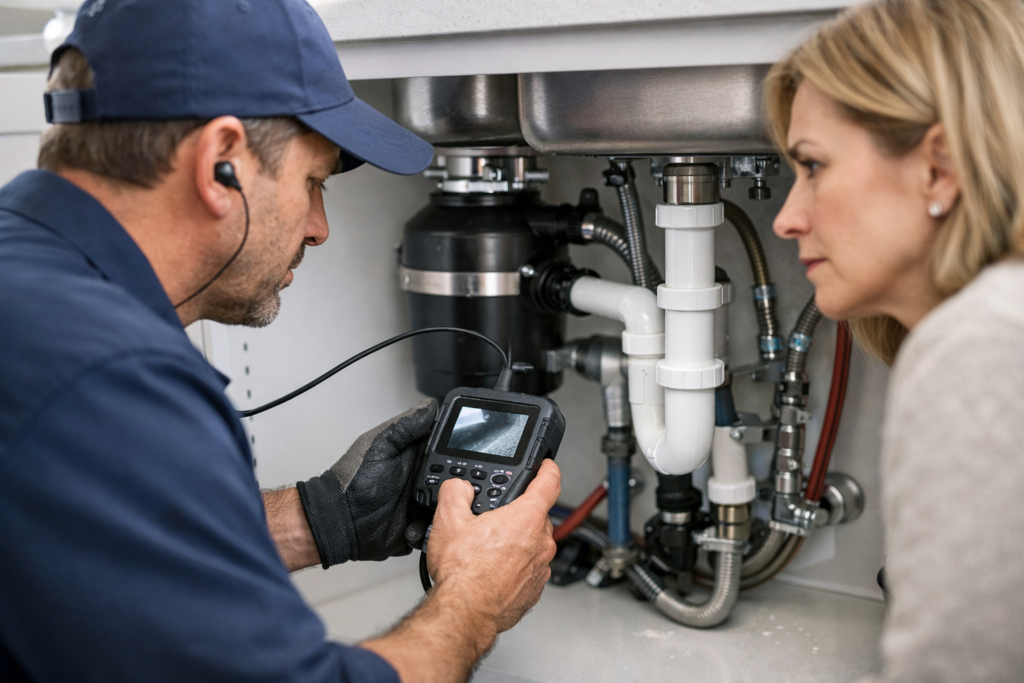
- Leak detection using acoustic or moisture tools
- Drain flow evaluation using controlled water tests
- Water heater performance and safety check
- Fixture inspection for efficiency and sealing integrity
Each step produces measurable system data. The plumber correlates findings with repair priority levels. This prioritization reduces unnecessary replacement costs and focuses only on affected areas.
Inspection output often includes maintenance recommendations and early repair scheduling.
How do plumbing inspections save homeowners money?
Plumbing inspections save homeowners money by converting high-cost emergencies into low-cost preventive maintenance. Water damage repair costs increase when leaks remain undetected for extended periods.
Financial savings occur through three mechanisms:
- Early leak control prevents structural restoration expenses
- Pressure correction avoids pipe burst replacement costs
- Drain maintenance prevents sewer backup remediation
Inspections also extend system lifespan. Pipes operate longer when corrosion is managed early. Fixtures maintain efficiency when scaling and buildup are removed before blockage formation.
Plumbing inspection shifts spending from emergency response to planned maintenance. Planned maintenance always reduces total lifecycle cost of plumbing systems.
Why do homeowners trust Affinity Plumbing for inspections?
Affinity Plumbing operates as a trusted plumber in Shakopee, MN with experience-driven service delivery. The company provides plumbing inspections backed by long-term field expertise and structured repair methodology.
Key operational attributes include:
- Family-owned and locally operated since 2013
- 50+ years combined plumbing expertise
- 10+ service vehicles for rapid response coverage
- 7,000+ customers served across multiple communities
- 5.0 rating supported by 1,000+ reviews
- Financing options for repair accessibility
Affinity Plumbing serves Shakopee, Maple Grove, Plymouth, Burnsville, Lakeville, and surrounding areas. The service model focuses on honest diagnosis, efficient repair execution, and long-term plumbing stability.
Expert general comment
“Plumbing inspections reduce system uncertainty. A structured inspection identifies micro-leaks, pressure inconsistencies, and early corrosion patterns before they evolve into structural damage events. Preventive detection directly lowers total repair exposure.”
— Affinity Plumbing Team, Shakopee MN
When should homeowners schedule plumbing inspections?
Homeowners should schedule plumbing inspections during system risk periods and property transitions. Timing influences detection accuracy and prevention value.
Recommended scheduling triggers include:
- Annual home maintenance cycles
- Purchase of older residential properties
- Visible water pressure changes
- Unexplained increases in water usage
- Drain slowdown across multiple fixtures
- Post-freeze seasonal transitions
Older plumbing systems require more frequent inspection cycles due to material fatigue. New systems benefit from baseline performance documentation.
Inspection timing directly influences repair cost reduction potential.
How do inspection costs compare to emergency plumbing repairs?
| Category | Plumbing Inspection | Emergency Repair Scenario |
|---|---|---|
| Detection method | Planned diagnostics | Reactive failure response |
| Damage level | Low to none | Structural and system damage |
| Repair scope | Targeted correction | Full system restoration |
| Time pressure | Scheduled workflow | Immediate intervention |
| Secondary damage risk | Controlled | High risk of expansion |
Plumbing inspections operate as preventive system management. Emergency repairs operate under damage escalation conditions. Cost difference emerges from damage spread and urgency factors.
Inspection controls variables before they become system-wide failures.
How do inspections improve long-term home plumbing stability?
Plumbing inspections improve system stability by maintaining controlled water flow, balanced pressure, and clean drainage pathways. System stability depends on early correction of small defects.
Stable plumbing systems show:
- Consistent water pressure across fixtures
- Reduced risk of pipe corrosion expansion
- Lower frequency of emergency repairs
- Extended lifespan of water heaters and fixtures
Inspection-driven maintenance creates predictable plumbing performance over time. Predictability reduces household disruption and repair volatility.
Why plumbing inspections function as financial protection systems
Plumbing inspections function as financial protection systems because they reduce exposure to high-impact water damage events. Water damage creates compound repair costs across structure, plumbing, and interior materials.
Inspection converts uncertain system failure into managed maintenance. Managed maintenance controls budget predictability and reduces emergency disruption.
Homeowners benefit from:
- Controlled repair scheduling
- Reduced structural risk exposure
- Extended plumbing asset lifespan
Plumbing inspections create measurable risk reduction across residential water systems.