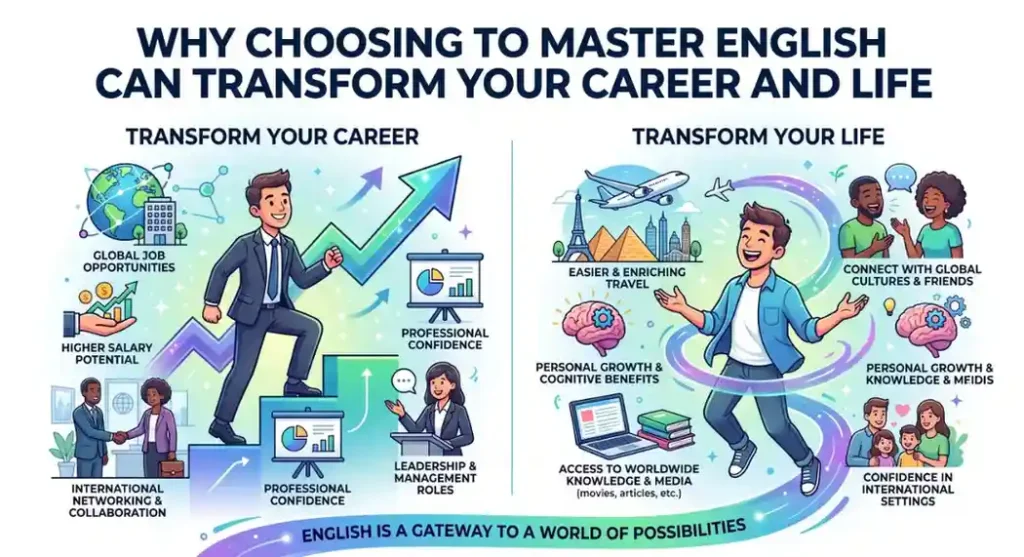
In today’s globalized world, the ability to communicate effectively in English is no longer just a skill — it is a necessity. Whether you’re aspiring to work in multinational corporations, pursue higher education abroad, or simply expand your intellectual horizons, the decision to master English opens doors that few other pursuits can. English is the most widely spoken language internationally, the dominant medium in business, science, diplomacy, and technology. Investing in a formal academic program to develop advanced English proficiency is one of the most impactful decisions a student can make.
The Global Value of English Proficiency
English is spoken by over 1.5 billion people worldwide, either as a first or second language. It is the official language of more than 50 countries and is widely used in international commerce, science, and diplomacy. For Indian students, who already grow up in a multilingual environment, gaining formal training to truly master English — its literature, grammar, writing, and communication — provides a competitive edge in virtually every professional domain.
In industries like IT, finance, law, academia, media, and healthcare, English serves as the bridge language. Professionals who can write reports, deliver presentations, negotiate contracts, and build relationships fluently in English consistently advance faster in their careers. This is not just about accent or fluency; it’s about depth — understanding nuance, tone, cultural context, and rhetoric. A well-structured English Literature or language program cultivates exactly these capabilities.
What Does It Mean to Truly Master English?
Mastering English goes far beyond knowing vocabulary and grammar rules. It involves the ability to critically analyze texts, appreciate literary traditions, write persuasively, and communicate with precision across different contexts — formal and informal, written and spoken. Students who pursue academic programs focused on English language and literature develop:
- Strong analytical thinking and argumentation skills
- Cultural literacy spanning Western and Indian literary traditions
- Academic writing and research capabilities
- Communication skills applicable to journalism, education, law, and more
- Creative writing and storytelling proficiency
These competencies are not just ‘soft skills’ — they are increasingly recognized as core professional tools in the knowledge economy.
Career Opportunities After Mastering English
Students who invest in mastering English through a structured academic program find themselves qualified for a diverse range of careers. Some of the most prominent include:
Content Writing and Digital Marketing: The digital economy runs on content. Businesses need skilled writers who can produce blogs, articles, social media copy, website content, and marketing material. English-trained professionals excel in these roles.
Journalism and Media: Print, broadcast, and digital journalism all require exceptional command of language. English Literature graduates are well-prepared for editorial roles, investigative reporting, and media production.
Education and Academia: Teaching English at schools, colleges, or abroad through IELTS/TOEFL-qualified programs is a stable and respected career. Academic research in English literature is another viable path.
Public Relations and Corporate Communication: Organizations need PR professionals, speechwriters, and communications specialists who can craft compelling narratives. English skills are central to this work.
Law and Civil Services: The UPSC and state civil service examinations reward candidates who can write structured, articulate essays and answer papers. English proficiency significantly improves performance.
Why a Structured Academic Program Matters
While self-study and online courses can improve basic English skills, they rarely build the depth required for professional excellence. A formal undergraduate or postgraduate program in English offers structured curriculum, mentorship from experienced faculty, exposure to classic and contemporary literature, and opportunities for research and creative expression.
Institutions like Amity University, Mohali offer programs that are specifically designed to help students master English through a blend of literature, linguistics, communication training, and practical skill-building. Students benefit from campus resources, peer learning, and industry connections that self-study simply cannot replicate.
The Right Time to Invest in English Mastery
For students in Class 12 or those who have just completed their undergraduate studies, now is the ideal time to consider enrolling in a dedicated English program. The skills you build during these formative years will serve you for the rest of your life — in every job interview, every professional email, every presentation, and every leadership role.
The investment in mastering English through a recognized academic institution is not just about language. It’s about developing the confidence, clarity, and capability to succeed in a world where communication is power.
Conclusion
If you’re serious about building a future that is globally competitive, intellectually rich, and professionally rewarding, then committing to master English through a well-designed academic program is a decision you will never regret. Explore the English Literature program at Amity University, Mohali, and take the first step toward transforming your potential into performance.