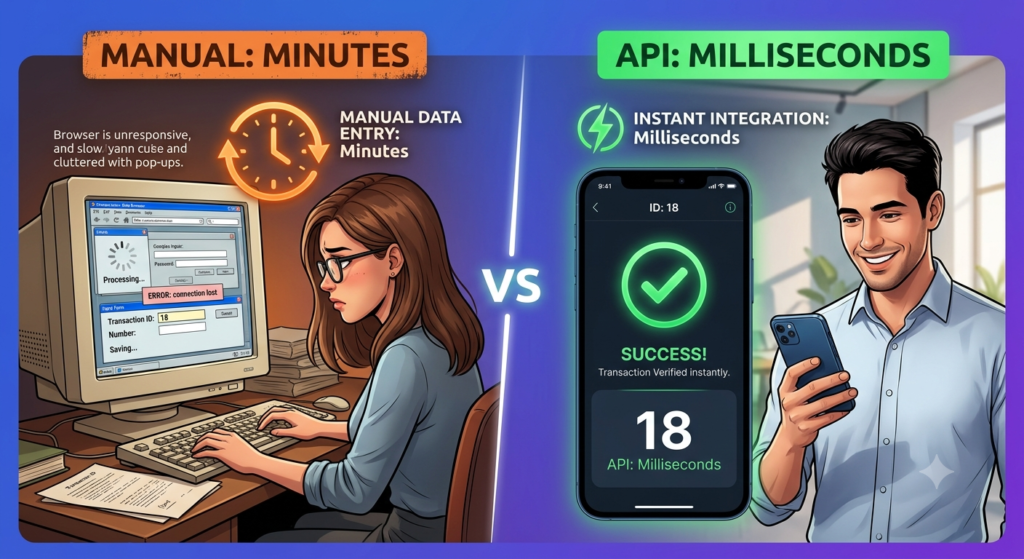
Picture a fintech app onboarding five hundred new users in a single day. Every one of them needs their identity confirmed before they can borrow a digital onboarding systemmoney, open a wallet, or move funds. Doing that by hand — checking each Aadhaar number one at a time on a government website — would grind the entire business to a halt. This is exactly the gap an Aadhaar verification API exists to close, and it’s quietly become one of the most important pieces of infrastructure for any company that deals with identity at scale in India.
What an Aadhaar Verification API Actually Does
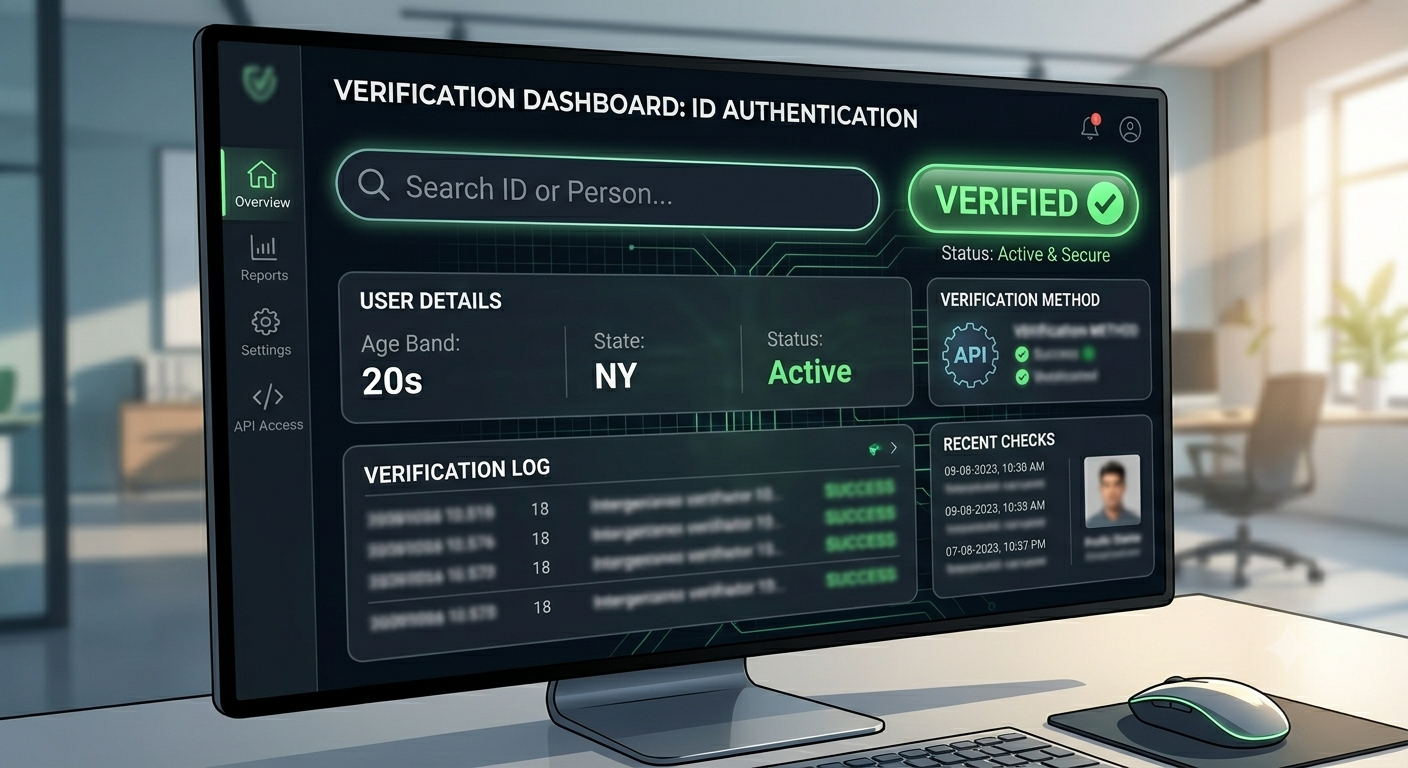
At its core, an Aadhaar verification API is a tool that lets a business’s own software talk directly to a verification system and get back a fast, structured answer about whether an Aadhaar number is genuine. Instead of a person typing a number into a government portal and waiting for a page to load, the business’s app sends the number automatically, and a response comes back — usually in well under a second.
That response typically confirms whether the number is active and valid, and may include a few limited, non-sensitive details like an age range or the state of issuance. It deliberately stops short of revealing a person’s full name, exact birth date, or address, since the point of a basic check is confirming authenticity, not handing over someone’s complete profile.
Why Manual Checks Stopped Being Realistic
There was a time when checking a handful of identities by hand made sense. A small business onboarding a few customers a week could get away with using the public UIDAI portal directly, typing in numbers one at a time.
That approach falls apart the moment volume increases. A lending platform processing hundreds of applications daily, an HR team hiring at scale, or a gig economy platform onboarding delivery partners by the dozen simply cannot rely on a person sitting at a keyboard typing twelve-digit numbers into a website. Beyond the sheer time cost, manual entry invites human error — a single mistyped digit causes a failed check even when the underlying number is completely valid.
An Aadhaar verification API removes that bottleneck entirely. The check happens programmatically, instantly, and without anyone needing to babysit the process.
Where Businesses Actually Use This
The use cases stretch far beyond banking, even though banks and NBFCs were early adopters.
Lending and fintech platforms use it to confirm a borrower’s identity before disbursing a loan, often as one of several checks bundled into a digital onboarding flow.
HR and recruitment teams run it as an early step before a fuller background verification, catching obviously fraudulent applications before investing more time in a candidate.
Gig and logistics platforms verify delivery partners and drivers before handing over a vehicle, a customer’s address, or access to sensitive packages.
Co-working spaces and residential complexes increasingly use Aadhaar-linked checks for visitor management and access control, replacing handwritten registers with something far more reliable.
In each case, the appeal is the same — a fast, consistent, and dependable way to confirm someone is who they claim to be, without slowing down the experience for the person on the other end.
What Actually Happens Behind the Scenes
The flow is simpler than it might sound. A business’s platform — say, a loan application form — collects an Aadhaar number from the user. That number gets sent to the Aadhaar verification API’s endpoint. The service checks it against the relevant database in real time and sends back a structured, machine-readable response confirming validity, often in JSON format.
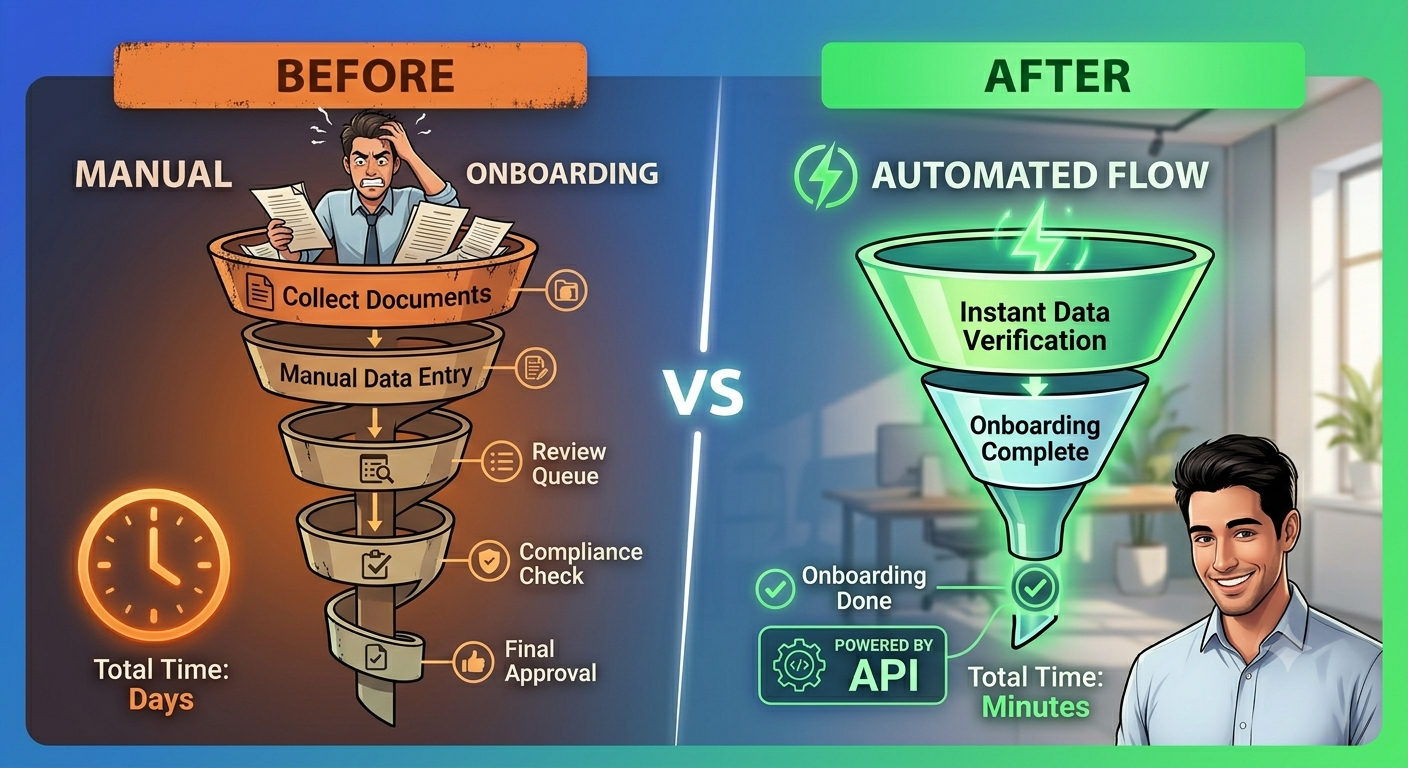
The entire exchange typically completes in under a second, which means the person filling out the form barely notices a pause. From their side, it just looks like the next step in onboarding loaded instantly. From the business’s side, that single API call has just done the work that would have taken a staff member several minutes per check, multiplied across however many people are signing up that day.
The Part Businesses Can’t Afford to Skip
Speed and convenience are the obvious selling points, but there’s a quieter responsibility that comes attached to using any Aadhaar verification API: doing it the compliant way.
Getting explicit consent from the person before running any check isn’t optional — it’s a legal requirement under UIDAI’s rules, and skipping it can create real exposure for a business. Beyond consent, the data itself needs careful handling. Aadhaar numbers shouldn’t be stored longer than necessary, connections need to be encrypted, and access to whoever can trigger these checks should be limited and reviewed regularly.
This is really the deciding factor when picking a provider. A fast API that cuts corners on compliance is a liability waiting to surface later. A provider that takes UIDAI guidelines seriously — encrypting data in transit, building consent capture into the workflow, and avoiding unnecessary data retention — is the one worth building a long-term process around.
The Bigger Picture
What makes this shift interesting isn’t just the technology — it’s what it represents. Indian businesses, regardless of size, are increasingly expected to verify identity instantly, accurately, and at scale, because that’s what customers have come to expect from nearly every digital service they use. An Aadhaar verification API isn’t a luxury reserved for large banks anymore; it’s becoming standard infrastructure for any business that wants to onboard people quickly without compromising on trust.
Companies that get this right end up with faster onboarding, fewer fraudulent signups, and a smoother experience for the people they’re trying to serve. The ones that stick with manual checks aren’t just working harder than they need to — they’re falling behind a standard that’s quickly becoming the baseline expectation across the country.
Frequently Asked Questions
- What is an Aadhaar verification API? An Aadhaar verification API is a software tool that lets businesses confirm whether a 12-digit Aadhaar number is genuine and active by connecting their own platform directly to a verification service, instead of checking it manually on a government website.
- Is it legal for a business to use an Aadhaar verification API? Yes, but only with the explicit consent of the person whose Aadhaar is being checked. Businesses must follow UIDAI’s data handling rules, and skipping consent or storing Aadhaar numbers without a valid reason can lead to serious legal consequences.
- How is an Aadhaar verification API different from full Aadhaar authentication? Verification simply confirms a number is valid and active, often returning limited details like an age range or state. Authentication is a stronger process that confirms the actual person holding the Aadhaar, usually through an OTP or biometric match, and requires special UIDAI authorization to access.
- Does an Aadhaar verification API reveal sensitive personal information? No. A standard verification response is intentionally limited — it confirms a number’s status along with a few non-sensitive details, but never exposes a person’s full name, exact date of birth, mobile number, or address.
- Why do businesses prefer an API over the manual UIDAI portal? Manual checks work fine for the occasional lookup, but they don’t scale. An API allows instant, automated verification across hundreds or thousands of checks a day, removes the risk of manual typing errors, and integrates directly into existing onboarding or hiring workflows.