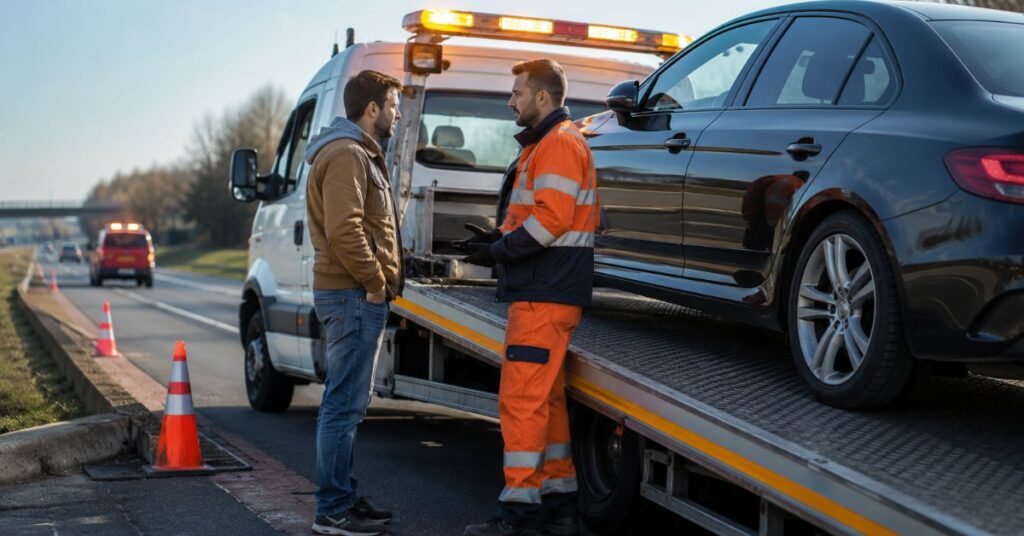
Professional vehicle recovery operator towing a broken-down car while assisting a driver safely on a UK roadside.
Following expert vehicle recovery advice is the best way to keep yourself safe when your car breaks down unexpectedly, yet many motorists make dangerous mistakes that turn a minor mechanical issue into a major emergency.
Knowing how to position your vehicle, warn other road users, and stay clear of traffic while waiting for professional help can mean the difference between a quick fix and a serious incident.
But preparation doesn’t stop at roadside safety if your breakdown involves collision damage or personal injury, protecting your long‑term interests matters too.
That’s why the smartest next step, after ensuring everyone is safe, is to speak with a trusted accident claim company to understand your rights and secure any compensation you’re entitled to.
This guide covers everything you need to know about staying secure and well‑informed while waiting for emergency recovery support, so you can handle any roadside crisis with total confidence.
1. Stay Visible and Parked Safely
The most important step after a breakdown is moving your vehicle to a safe location. If you must stop on a busy road, try to get onto the hard shoulder or verge.
Always switch on your hazard lights immediately so other drivers can see you clearly in bad weather. Wear a high-visibility jacket if you have one inside your glovebox or boot space. Being visible is a critical part of safe vehicle recovery practices on fast UK motorways.
2. Avoid Attempting DIY Towing
Many drivers believe they can save time by towing their vehicle with a friend’s car. This is extremely dangerous and often leads to secondary collisions or severe damage to your transmission. Always rely on towing service guidelines provided by professional recovery firms that have the right equipment.
They use specialised flatbed trucks to move your vehicle without putting extra stress on your wheels. Professional teams possess the training needed to handle various vehicle types under difficult road conditions.
3. Don’t Leave Passengers in Vulnerable Positions
Never allow passengers to wait inside a vehicle parked on the side of a busy motorway. Instead, move all passengers to a safe area behind the safety barrier or further away from the road.
Keeping your family or friends away from moving traffic is essential for preventing serious injuries. If you are on a smart motorway, follow the overhead signs and head towards an emergency refuge area. Following these safe vehicle recovery practices ensures everyone stays protected while waiting for help to arrive.
4. Clear Communication During Recovery
When you finally call for help, give your location and the exact nature of the problem clearly. Providing a precise location, such as a junction number or marker post, helps teams reach you faster.
Ask the operator about the estimated arrival time and confirm the costs for emergency recovery support services upfront. Being honest about whether your car is stuck in a ditch or simply has a flat tyre helps. Accurate information allows the recovery company to send the most suitable truck for your situation.
5. Handle Damaged Vehicles with Care
If your car was involved in an accident, treat it with extreme caution until a professional arrives. Avoid touching wires or leaking fluids, as these can be hazardous to your personal health.
Use correct damaged car handling tips to ensure that you do not cause further structural issues. Experts will assess the chassis and suspension before attempting to winch the car onto their truck. Never force your car to move if it feels unstable or shows signs of major mechanical failure.
Key Mistakes to Avoid During a Breakdown
| Mistake Type | Consequence |
| Ignoring Hazards | Putting yourself and other road users at immediate physical risk. |
| Attempting DIY Fixes | Increasing the risk of permanent mechanical failure or expensive repair bills. |
| Staying Inside Car | Being vulnerable to high-speed rear-end collisions on motorways. |
| Poor Location Data | Causing long delays for your professional recovery vehicle to find you. |
6. Trusting Professional Recovery Experts
Trying to manage a crisis alone often leads to preventable accident breakdown mistakes that complicate the situation. Professional recovery experts have the tools, legal knowledge, and experience to resolve issues quickly.
They understand the nuances of various roadside situations, from flooded engines to snapped timing belts. Relying on their expertise lets you focus on your safety rather than the mechanics of the car. Always remember that professional help is the safest route when dealing with complex or dangerous breakdown scenarios.
7. Preparation for Future Breakdowns
Being prepared is the best way to follow sound vehicle recovery advice whenever you hit the road. Keep a small emergency kit in your boot containing water, a blanket, and a torch.
Regularly check your tyre pressure and fluid levels to minimise the chance of needing a recovery team. Knowing your insurance policy details allows you to access help without searching for phone numbers during a crisis. Simple preparation ensures that you remain calm and controlled even when a breakdown catches you by surprise.
Conclusion
Breaking down on a busy road is stressful, but staying calm helps you make the right safety decisions. Always prioritise your personal safety by moving away from traffic and using your hazard lights consistently.
Remember that professional recovery teams are trained to handle the most difficult roadside situations with efficiency. By avoiding amateur accident breakdown mistakes, you protect yourself, your passengers, and your vehicle from further harm. Always follow professional vehicle recovery advice to ensure every breakdown ends with a safe journey home.
Visit blog pulse guru for more research based and informative guides.
FAQ’s
1. What should I do if I break down on a smart motorway?
Move your vehicle to an emergency refuge area or the nearest safe exit as quickly as possible. If you cannot reach an exit, stay in the vehicle with your seatbelt on and call for emergency recovery support services. Always follow the guidance displayed on the overhead electronic signs to protect yourself from moving traffic.
2. Is it safe to try to fix a flat tyre on the motorway?
It is generally very dangerous to change a tyre while parked on a busy motorway shoulder. You should wait for professional help that follows strict towing service guidelines for your own safety. Professional recovery staff have the right tools and protection to change a tyre safely.
3. How do I know if my car needs flatbed recovery?
If your car has severe suspension, transmission, or axle damage, a flatbed is the safest option. Following these damaged car handling tips helps prevent further harm to your vehicle during the transit process. Flatbeds offer the most secure way to transport vehicles that cannot roll on their own wheels.
4. Can I request a specific type of recovery truck?
You can mention your vehicle type and the specific problem when speaking to the support operator. They will then choose the best truck based on the vehicle recovery advice they have received about your car. Providing detailed information helps them provide the right service for your particular mechanical issue.
5. Why should I move away from the vehicle after a crash?
Standing near a vehicle on the road puts you at risk from other distracted or speeding drivers. Use safe vehicle recovery practices by moving all passengers behind the motorway barrier. This keeps everyone safe while the professional team arrives to handle the broken vehicle.
6. What information is most helpful for the recovery team?
Always provide your exact location, the car’s registration number, and a clear description of the mechanical issue. Precise information helps them follow towing service guidelines to get to your exact position quickly. Being accurate saves valuable time and ensures the right equipment arrives at the scene.
7. What should be in my emergency breakdown kit?
Include items like a torch, high-visibility vest, warm blanket, water, and your insurance contact information. Being well-prepared is a core part of the best vehicle recovery advice for any UK motorist. These items keep you comfortable and safe while you wait for your recovery truck to arrive.
8. How can I avoid damaging my car while it is being towed?
Ensure you only use professional services that follow established towing service guidelines and use proper equipment. Amateur towing methods often lead to expensive damage that could have been easily avoided. Trusting a professional firm is the best way to protect your car’s overall value.
9. Should I wait in the car if it is cold outside?
It is usually safer to wait outside the vehicle behind a safety barrier if you are on a motorway. Using emergency recovery support services is about prioritising your life over comfort during extreme weather. If it is absolutely unsafe to stand outside, stay buckled in with your hazards on.
10. Are there common mistakes I should avoid after an accident?
Avoid admitting fault at the scene and never leave the area before exchanging necessary information with others. Follow expert damaged car handling tips by waiting for the professionals to arrive before moving any debris. Staying calm and documenting the situation correctly helps you manage the claim much more effectively later.