Walk into most Indian homes and you’ll find a small corner set aside for prayer — a shelf, a niche, sometimes an entire room. And more often than not, silver finds its way there. Not gold, not brass, but silver: cool to the touch, quietly luminous, and traditionally considered pure enough to sit beside the divine.
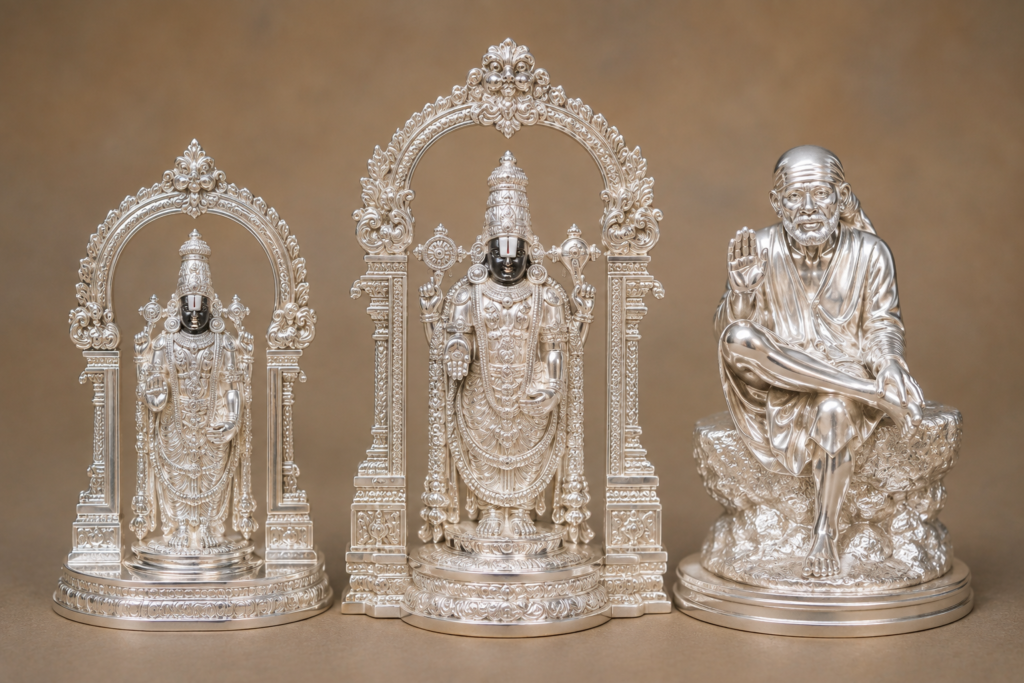
Among the most sought-after pieces for this space are Balaji, Tirupati Balaji, and Sai Baba idols. Each carries its own devotional significance, its own visual language, and its own reasons for being chosen. If you’re trying to understand which silver Balaji idol suits your home, or simply want to know what separates a genuine piece from an ordinary one, this guide covers it end to end — meaning, purity, sizing, care, and how to buy without regret.
Why Silver Is the Preferred Metal for Idols
Silver isn’t just an aesthetic choice in Indian households — it carries centuries of cultural and spiritual weight.
- Considered ritually pure — In many traditions, silver is regarded as a cleaner, more auspicious metal for daily worship than base metals.
- Durability for daily rituals — Idols used in daily pooja face regular handling, water, and abhishekam (ritual bathing); silver withstands this far better than painted or plated alternatives.
- Timeless resale and heirloom value — Unlike idols made from cheaper alloys, genuine silver idols hold intrinsic value and are often passed down across generations.
- Aesthetic elegance — The natural shine of silver lends idols a serene, dignified look that suits both traditional and modern home temples.
- Popular gifting choice — Silver idols are a common gift for housewarmings, weddings, and festivals precisely because they combine devotion with lasting value.
Understanding the Three Idol Types
Balaji Idols
Balaji, another name for Lord Venkateswara, is one of the most widely worshipped deities in India. Silver Balaji idols are typically crafted with intricate detailing — the crown, ornaments, and traditional stance — and are a popular choice for home temples across the country, not just in South India.
Tirupati Balaji Idols
While “Balaji” is the broader name, a Tirupati Balaji silver idol specifically replicates the iconic form of the deity as worshipped at the Tirumala Venkateswara Temple. These idols often feature the recognisable pose, ornamentation, and facial expression associated with the original Tirupati murti, making them especially meaningful for devotees connected to that pilgrimage tradition.
Sai Baba Idols
Sai Baba idols represent a more contemporary devotional figure, widely worshipped across religious and regional lines in India. A Sai Baba silver idol typically depicts the seated or standing form, often with a raised hand in blessing. These idols are especially popular in urban households and are frequently chosen for their universal appeal and simplicity of form.
Understanding Silver Purity: 925 vs 999
This is where most buyers get confused, so here’s the breakdown in plain terms.
| Purity | Composition | Common Use |
| 999 Silver | 99.9% pure silver | Idols, coins, bars — items not subject to daily wear friction |
| 925 Sterling Silver | 92.5% silver + 7.5% alloy | Jewellery, bracelets, items needing structural strength |
Idols are typically crafted from 999 silver idols or very close to it, since they aren’t subjected to the same bending, stretching, or friction as wearable jewellery. This higher purity also makes them more valuable as an investment piece, though it means slightly more careful handling is required to avoid dents or scratches.
When shopping, always check for:
- A BIS hallmark or purity certification
- A weight and purity mention on the invoice
- Clear documentation of craftsmanship (hand-carved vs cast)
How to Choose the Right Idol for Your Home
Size and Placement
- Small idols (2–4 inches): Suited for personal altars, travel, or compact home temples.
- Medium idols (5–8 inches): The most common choice for a dedicated pooja room.
- Large idols (9 inches and above): Typically reserved for larger home temples or as a centrepiece gift.
Craftsmanship and Detailing
Look closely at facial features, ornamentation, and finishing. Hand-finished idols tend to show finer detailing in the crown, jewellery, and drapery compared to mass-produced pieces, and this difference is usually visible even to a non-expert eye.
Occasion-Based Buying
| Occasion | Suggested Idol | Why It Works |
| Housewarming (Griha Pravesh) | Tirupati Balaji idol | Traditionally associated with prosperity and new beginnings |
| Wedding Gift | Balaji or Lakshmi-Balaji pair | Symbolic of blessings for the couple’s home |
| Personal Devotion | Sai Baba idol | Broad appeal, simple daily worship |
| Festive Gifting (Diwali, Akshaya Tritiya) | Small silver idols | Auspicious, easy to gift, budget-friendly |
Caring for Your Silver Idol
- Clean gently with a soft cotton cloth after each use, especially following abhishekam.
- Avoid harsh chemical polishes; a mild silver-cleaning solution is safer for detailed carvings.
- Store or display away from constant moisture to slow down natural tarnishing.
- For 999 silver idols, handle with care during cleaning since higher-purity silver is softer and more prone to scratching than sterling silver pieces.
- Periodic light polishing keeps the idol’s shine intact without wearing down fine detailing.
Why Buying From a Trusted, Registered Seller Matters
Legal and Quality Assurance Benefits
Idols are often high-value, emotionally significant purchases, which makes seller credibility especially important. Buying from a properly registered, GST-compliant business rather than an informal seller gives you real protection:
- Verified purity claims: Registered businesses are accountable for hallmark and purity declarations under Indian regulations, unlike anonymous sellers.
- Proper documentation: A GST invoice supports resale, insurance, and any future authenticity disputes.
- Consumer recourse: If an idol’s purity or craftsmanship doesn’t match what was promised, a registered company can be held accountable through formal consumer channels.
- Consistent sourcing: Established silver idol businesses typically work with verified craftsmen and standardised purity testing.
Advantages for Global Buyers
Silver idols from India are increasingly ordered by the diaspora and international devotees, which makes seller legitimacy just as important abroad:
- Proper export documentation smooths customs clearance for religious items shipped internationally.
- Registered exporters are more likely to offer secure payment options, accurate purity certification, and reliable tracked shipping.
- International buyers get an accountable point of contact for damage claims, returns, or authenticity verification — something an unregistered seller rarely offers.
In short, when you’re buying a silver idol meant to sit at the centre of your home worship for decades, who you buy from matters as much as what you buy.
Silver Idols in India vs Global Buyers
Within India, Tirupati Balaji and Sai Baba idols dominate demand due to their deep-rooted devotional following, especially around housewarmings, festivals, and pilgrimage-linked purchases. Globally, demand is largely driven by the Indian diaspora seeking authentic, hallmark-certified pieces for home temples abroad, along with a smaller but growing interest from collectors drawn to Indian craftsmanship. Across both markets, the common thread is the same: buyers want assurance of genuine pure silver idols, not just an attractive design.
Frequently Asked Questions
- What is the difference between a Balaji idol and a Tirupati Balaji idol? “Balaji” broadly refers to Lord Venkateswara, while a Tirupati Balaji idol specifically recreates the exact form, pose, and ornamentation of the deity as worshipped at the Tirumala temple. Both are valid choices; the distinction mainly comes down to personal devotional connection.
- Is 999 silver too soft for an idol? Not for its intended use. Idols aren’t subjected to the bending and friction that jewellery faces, so higher-purity 999 silver works well and is actually preferred for idols precisely because of its purity and shine. Gentle handling during cleaning is recommended to avoid surface scratches.
- How do I know if a silver idol is genuine? Check for a BIS hallmark or purity certification, request the weight and purity details on your invoice, and buy from a registered, GST-compliant seller. Genuine sellers are usually transparent about craftsmanship and sourcing.
- What size Sai Baba idol is ideal for a home pooja room? A 5–8 inch idol works well for most home temples — visible and prominent without overwhelming the space. Smaller 2–4 inch idols suit compact altars or travel use.
- Can silver idols be gifted for housewarming or weddings? Yes, silver idols are among the most popular housewarming and wedding gifts in Indian tradition, symbolising blessings, prosperity, and a spiritually grounded start to a new home.
- How should I clean a silver idol without damaging the detailing? Use a soft cotton cloth for regular wiping, and a mild, jewellery-safe silver cleaning solution occasionally. Avoid abrasive scrubbing or strong chemical dips, especially on idols with fine carved detailing.
Conclusion
Choosing between a Balaji, Tirupati Balaji, or Sai Baba idol ultimately comes down to personal devotion — but the choice of material and seller shouldn’t be left to chance. A genuine, well-crafted silver idols piece, backed by proper purity certification and bought from a registered, accountable business, becomes more than a decorative object. It becomes a lasting part of your home’s daily ritual, one that holds its value, its detailing, and its meaning for years to come.