How Hoodies Became Everyday Fashion Icons
Fashion rarely stays in one place for long. Garments that once belonged to a specific subculture can eventually become everyday staples worn across generations, lifestyles, and social settings. The hoodie is one of the clearest examples of this transformation. Once associated primarily with athletic wear, workwear, and street culture, the hoodie has developed into a versatile fashion essential that can communicate comfort, personality, and contemporary style at the same time.
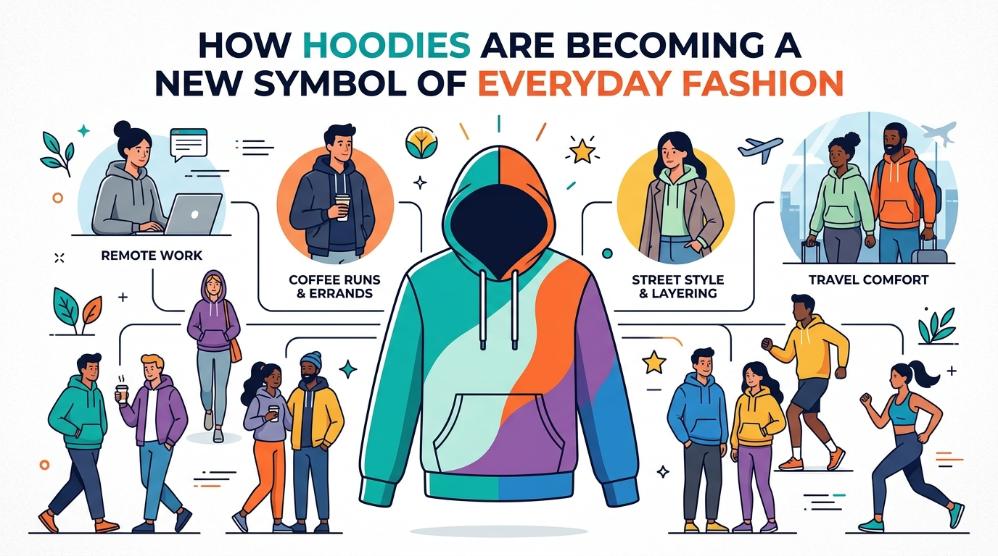
Today, people wear hoodies for far more than keeping warm. They have become part of casual wardrobes, travel outfits, weekend looks, layered streetwear combinations, and even carefully styled everyday ensembles. Their appeal comes from a rare combination of practicality and self-expression: a hoodie can feel relaxed while still making a deliberate fashion statement.
This evolution reflects a broader shift in consumer preferences. Modern shoppers increasingly value clothing that works across multiple situations rather than pieces reserved for a single occasion. Hoodies fit that lifestyle particularly well because they can be dressed up, dressed down, layered, customized, or worn as a defining part of an outfit.
Why the Hoodie Has Become a Fashion Essential
The modern hoodie succeeds because it solves several everyday wardrobe needs at once. It offers warmth without the bulk of many outerwear pieces, provides a relaxed silhouette, and can be paired with an unusually wide range of garments. From denim and joggers to cargo pants and tailored trousers, the hoodie can adapt to the visual language of the outfit surrounding it.
Comfort is also central to its popularity. Consumers have increasingly embraced softer fabrics, relaxed fits, practical pockets, adjustable drawstrings, and easy-care materials. These features make hoodies attractive for commuting, studying, traveling, running errands, socializing, or simply spending a quiet day at home.
At the same time, hoodies have developed strong cultural associations. Logos, graphics, colors, artwork, and collaborations can turn an otherwise familiar garment into a statement piece. Wearing a particular design can communicate interests, musical preferences, sports affiliations, humor, nostalgia, or membership in a particular cultural community.
- Comfort: Soft fabrics and relaxed silhouettes make hoodies suitable for long periods of wear.
- Versatility: They work across casual, athletic, streetwear, and layered fashion styles.
- Personal expression: Graphics, logos, colors, and distinctive designs allow wearers to communicate identity.
- Practicality: Hoods, kangaroo pockets, cuffs, and substantial fabrics add useful everyday functionality.
- Seasonal adaptability: Hoodies can function as standalone tops or mid-layers depending on weather and styling.
From Athletic Clothing to Streetwear Culture
One of the most important developments in hoodie fashion has been the movement from functional sportswear toward streetwear. As athletic-inspired clothing became increasingly accepted in mainstream wardrobes, consumers began combining performance-oriented silhouettes with everyday fashion.
Streetwear accelerated that transition. Designers and independent labels recognized that the hoodie provided an ideal canvas for graphics, branding, experimental artwork, and cultural references. Unlike highly structured garments, a hoodie has enough surface area to make visual elements immediately noticeable while retaining an approachable, wearable shape.
This helped transform the hoodie from a basic layer into a recognizable form of visual communication. A graphic hoodie can serve as the focal point of an outfit, while a minimalist version can provide balance to more expressive pants, footwear, or accessories.
Music culture has played a particularly visible role in this development. Artists and their audiences have helped turn merchandise-inspired clothing into legitimate everyday fashion. A hoodie connected to an album, tour, creative project, or recognizable artistic identity can carry meaning beyond its physical construction.
Music, Identity, and the Rise of Statement Hoodies
Fashion and music have always influenced one another, but contemporary clothing makes that relationship particularly visible. Fans often want garments that allow them to express an association with an artist without relying on overtly formal merchandise. A well-designed hoodie can achieve that balance by combining recognizable references with colors, graphics, and silhouettes that work beyond a concert environment.
For example, a monster energy hoodie can draw on the visual energy associated with motorsports, gaming, action sports, and youth-oriented culture while functioning as an ordinary casual layer. The garment becomes more than something worn for warmth; its visual identity becomes part of the wearer’s overall style.
This illustrates why branded and graphic hoodies have become so powerful. Consumers are not necessarily looking for a completely new garment category. Instead, they are choosing familiar silhouettes that carry a specific cultural meaning. The hoodie provides the comfort and functionality people already understand, while the design delivers the personality.
The same principle applies to music-inspired apparel. A carefully designed drake hoodie can become part of a fan’s casual wardrobe rather than something reserved exclusively for events or collections. When cultural references are integrated into an everyday garment, fashion becomes a subtle extension of personal identity.
How Design Details Change the Meaning of a Hoodie
Not every hoodie communicates the same message. Small design decisions can dramatically change how a garment is perceived. Fabric weight, silhouette, graphics, color, branding, stitching, and finishing details all contribute to the final aesthetic.
| Design Element | Typical Effect | Best Styling Direction |
|---|---|---|
| Oversized Fit | Creates a relaxed, contemporary streetwear appearance | Pair with fitted bottoms or structured footwear for balance |
| Minimal Branding | Produces a clean and understated look | Works well with denim, chinos, trousers, or neutral sneakers |
| Bold Graphics | Makes the hoodie the visual focal point | Keep surrounding pieces relatively simple |
| Camouflage Pattern | Adds ruggedness and visual texture | Combine with solid colors and uncomplicated accessories |
| Heavyweight Fabric | Creates a substantial, premium feel | Ideal for cool-weather layering and structured casual outfits |
Color is particularly influential. Neutral shades such as black, gray, cream, and navy can integrate easily into an existing wardrobe. More vibrant tones can introduce energy to otherwise understated outfits. Patterned hoodies, meanwhile, create visual interest without requiring complicated layering.
Camouflage and the Appeal of Visual Texture
Camouflage is another design language that has moved beyond its original functional context. Its association with military clothing has given it a rugged visual character, but contemporary fashion frequently reinterprets camouflage through softer silhouettes, lighter colors, and more polished construction.
An abercrombie camo hoodie, for instance, demonstrates how a familiar pattern can be integrated into a cleaner casual wardrobe. A lighter camouflage palette can create texture without overwhelming an outfit, making it easier to combine with denim, neutral trousers, sneakers, or simple outerwear.
This is an important reason patterned hoodies remain relevant. They allow consumers to experiment with their appearance without committing to a complicated fashion formula. The hoodie remains familiar, but the pattern gives it a distinct visual identity.
The Hoodie and the Modern Casual Wardrobe
The expansion of casual dress codes has played a major role in the hoodie’s rise. The distinction between clothing for work, leisure, travel, and social activities has become less rigid in many environments. People increasingly expect their wardrobes to accommodate multiple parts of the day.
A hoodie can therefore operate as a transitional garment. Someone might wear one with joggers in the morning, layer it beneath a jacket for an afternoon outing, and combine it with cleaner trousers and minimalist sneakers for an evening casual setting. The garment does not need to change; the surrounding pieces change its visual context.
This adaptability also makes hoodies attractive to travelers. They are relatively easy to layer, provide warmth on airplanes and during cool evenings, and can be combined with multiple outfits. A well-chosen neutral hoodie can become one of the most frequently worn pieces in a travel capsule wardrobe.
How to Build Better Everyday Outfits Around Hoodies
Although hoodies are inherently casual, styling them thoughtfully can make an outfit look considerably more intentional. The key is to create contrast and balance rather than allowing every piece to have the same relaxed proportions.
- Choose the silhouette first. Decide whether the outfit calls for a regular, relaxed, or oversized hoodie. The proportions should complement the rest of the clothing.
- Control the color palette. If the hoodie has a bold graphic or pattern, use simpler colors elsewhere to prevent visual competition.
- Balance proportions. An oversized hoodie can work particularly well with straighter or more fitted bottoms, while a slimmer hoodie can complement wider trousers.
- Select footwear strategically. Sneakers reinforce a casual aesthetic, while cleaner leather or minimalist footwear can make the overall look feel more refined.
- Layer with purpose. Jackets, coats, overshirts, and vests can add depth while also making the hoodie useful across changing temperatures.
Why Quality Matters More as Hoodies Become Fashion Pieces
As the hoodie has moved closer to the center of everyday fashion, expectations around quality have increased. Consumers are more likely to notice fabric weight, stitching, fit consistency, print durability, and finishing details when a garment is intended to remain in regular rotation.
Fabric plays a major role in perceived quality. Cotton-rich materials can provide softness and breathability, while fleece interiors offer additional warmth. Heavier fabrics can create a more substantial silhouette, whereas lighter constructions may be preferable for layering and transitional weather.
Construction matters just as much. Reinforced seams, durable cuffs, properly finished hems, reliable drawstrings, and well-constructed pockets can determine how a hoodie performs after repeated washing and wear. Graphic designs also need appropriate printing or embroidery techniques so that visual details maintain their appearance over time.
Consumers increasingly recognize these differences. A hoodie that feels comfortable, holds its shape, and retains its color after repeated use offers more long-term value than a garment that simply looks appealing when it is new.
The Psychology Behind Everyday Fashion Choices
The hoodie’s success also reflects changing attitudes toward personal presentation. Modern fashion is not always about appearing formally dressed or following a traditional hierarchy of clothing. Instead, consumers often want their clothing to reflect how they actually live.
That makes the hoodie particularly powerful. It can communicate confidence without appearing overly formal, individuality without being impractical, and trend awareness without requiring an elaborate outfit.
There is also an element of familiarity. Because hoodies have become common across age groups and communities, wearing one rarely feels experimental. Yet distinctive graphics, patterns, and branding can make an individual garment feel personal.
Where Hoodie Fashion Is Heading Next
The future of hoodie fashion is likely to be shaped by the same forces that made the garment successful in the first place: versatility, comfort, cultural relevance, and personalization. Consumers will continue looking for pieces that work across different environments while expressing individual tastes.
Designers are also likely to experiment with proportions, fabric technologies, sustainable materials, modular construction, and more refined finishing. The line between loungewear, streetwear, sportswear, and everyday fashion will continue to become less distinct.
At the same time, cultural collaborations will remain important. Music, gaming, sports, entertainment, and digital communities all provide opportunities for hoodies to become visual markers of shared interests. Limited designs and distinctive graphics can give an ordinary wardrobe staple a sense of collectability.
Frequently Asked Questions (FAQs)
Why are hoodies so popular in everyday fashion?
Hoodies combine comfort, practicality, versatility, and personal expression. They can be worn in numerous casual settings and easily adapted through layering, color combinations, graphics, and accessories.
Can hoodies be styled in a fashionable way?
Absolutely. The key is balancing proportions, colors, and textures. A hoodie can be paired with denim, cargo pants, tailored trousers, jackets, coats, or minimalist footwear depending on the desired aesthetic.
Are graphic hoodies still fashionable?
Yes. Graphic hoodies remain relevant because they provide an easy way to communicate interests, cultural affiliations, and personality. Their effectiveness depends heavily on thoughtful artwork, color choices, and overall garment quality.
Are patterned hoodies difficult to style?
Not necessarily. Patterned hoodies work particularly well when the rest of the outfit uses relatively simple colors and shapes. This allows the hoodie to provide visual interest without making the complete outfit feel excessively busy.
What should shoppers look for in a quality hoodie?
Consider fabric composition and weight, stitching quality, fit consistency, cuff and hem construction, pocket durability, graphic quality, and how well the garment maintains its shape and color after washing.
Make the Hoodie a Defining Part of Your Everyday Style
The hoodie has evolved far beyond its origins as a purely practical layer. It now represents a broader shift toward clothing that combines comfort with identity, functionality with culture, and casual silhouettes with intentional design. Whether the appeal comes from music, streetwear, bold branding, camouflage, minimalism, or simply the desire for dependable everyday comfort, the hoodie has earned a lasting place in modern fashion.
Instead of treating hoodies as basic wardrobe fillers, consider how fit, fabric, color, graphics, and layering can turn them into meaningful parts of a personal style. Choose designs that reflect your interests, prioritize construction that can withstand regular wear, and build outfits around versatility. The result is not simply a comfortable garment—it is an everyday fashion statement that can evolve with you.