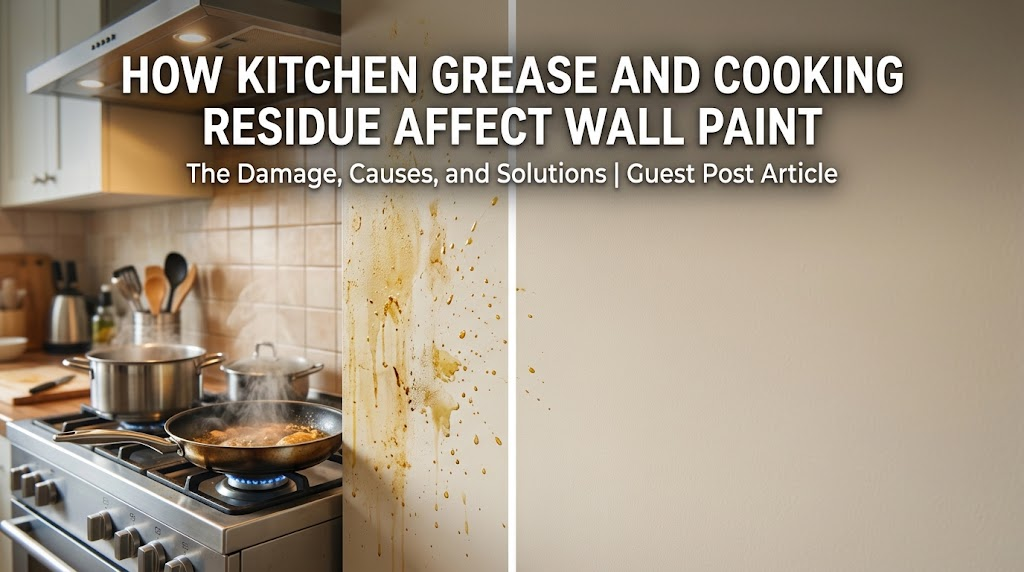
Kitchen walls are exposed to more than everyday dust and fingerprints. Cooking releases grease, oil, steam, food particles, smoke, and other airborne residues that can gradually settle on painted surfaces. Over time, these contaminants can leave walls looking dull, discolored, sticky, or uneven and may also interfere with paint adhesion when the surface needs to be repainted.
The good news is that kitchen grease does not automatically mean your walls need to be completely repainted. Regular cleaning, proper ventilation, prompt removal of residue, and appropriate surface preparation can help protect painted walls and extend the life of the finish. For kitchens with areas that are difficult to keep clean, materials such as backsplash tile can also reduce the amount of painted surface exposed to cooking residue. Professional services such as Ceramic Tile Installation can be useful when planning a durable, easy-to-clean kitchen surface.
Why Does Kitchen Grease Build Up on Painted Walls?
Cooking creates airborne particles that can travel farther than many homeowners expect. When food is fried, sautéed, roasted, or cooked at high temperatures, tiny droplets of oil and grease can become suspended in the air. Steam can carry these particles around the kitchen before they eventually settle on walls, ceilings, cabinets, and other surfaces.
The amount of buildup depends on several factors, including cooking habits, ventilation, the location of the stove, and how frequently surfaces are cleaned. A kitchen with limited ventilation may experience faster residue accumulation, particularly on the wall behind or near the cooking area.
Grease can be especially noticeable around range hoods, stovetops, backsplashes, and walls close to cooking appliances. Even when a wall does not look visibly dirty, a thin layer of cooking residue may still be present.
How Grease Affects Wall Paint
1. It Creates a Sticky Surface
One of the most common effects of kitchen grease is a tacky or slightly sticky surface. Grease does not behave like ordinary household dust. Instead of simply sitting loosely on the wall, oily residue can cling to the paint film and attract additional dust and airborne particles.
This combination can gradually make the wall appear grimy. Repeated cooking and inadequate cleaning can cause layers of residue to accumulate, making the original paint color look less vibrant.
2. It Causes Discoloration and Staining
Cooking residue can contribute to yellow, brown, gray, or generally darkened areas on painted walls. The discoloration may be most obvious around frequently used cooking zones.
Some stains can be removed through careful cleaning, but older or heavily accumulated residue may be more difficult to eliminate completely. If contaminants have penetrated or affected the existing coating, simply applying a new layer of paint over the area may not provide a long-lasting solution.
This is one reason proper preparation is important before repainting a kitchen.
3. It Can Interfere With Paint Adhesion
Paint needs a properly prepared surface to adhere effectively. Grease and oily residue can create a barrier between the existing surface and a new coating.
If a wall is painted without removing significant grease, the new paint may not bond properly to the underlying surface. This can contribute to problems such as peeling, flaking, bubbling, uneven coverage, or premature failure.
For this reason, cleaning should be considered part of the painting process rather than an optional cosmetic step.
4. It Makes Walls Harder to Clean Over Time
Fresh cooking residue is generally easier to remove than old, layered buildup. When grease remains on a wall for an extended period, dust and other particles can stick to it, creating a more stubborn film.
Aggressive scrubbing may then become tempting, but excessive pressure or inappropriate cleaning products can damage the paint finish. The safest approach is to use cleaning methods appropriate for the specific paint surface and to test an inconspicuous area first.
Does Cooking Steam Damage Kitchen Paint?
Steam itself is not the same as grease, but it can contribute to kitchen wall problems.
Hot cooking produces moisture that can condense on cooler surfaces. When moisture combines with airborne grease and food particles, it can create a film that is more difficult to clean. Repeated exposure to moisture can also make existing surface problems more noticeable.
Good ventilation helps reduce the amount of airborne moisture and cooking residue that settles on surfaces. Using an appropriate range hood or exhaust fan while cooking and allowing it to operate long enough to clear the air can help reduce buildup.
Ventilation is particularly important in kitchens where frying and other high-heat cooking methods are common.
How to Clean Greasy Painted Walls Safely
Cleaning kitchen walls regularly can help prevent residue from becoming difficult to remove. However, painted surfaces should be cleaned carefully because different paint finishes respond differently to moisture, detergents, and scrubbing.
Start by removing loose dust with a soft cloth or suitable duster. For light grease, a mild cleaning solution and soft cloth or sponge may be sufficient. Avoid soaking drywall or repeatedly saturating the surface.
Always follow the paint manufacturer’s cleaning recommendations when available. Before cleaning a large area, test the solution in a less visible location. This can help identify whether the cleaning method affects the paint’s sheen, color, or surface integrity.
If the wall has heavy grease buildup, extensive staining, peeling paint, or an unknown existing coating, professional assessment may be more appropriate than aggressive DIY cleaning.
What Happens When You Paint Over Grease?
Painting directly over a greasy wall can hide discoloration temporarily, but it does not solve the underlying surface problem.
If grease remains on the wall, the new coating may have difficulty bonding properly. As a result, the freshly painted surface may develop adhesion problems or an uneven appearance.
Proper preparation typically involves identifying the type and extent of contamination, cleaning the surface, allowing it to dry thoroughly, repairing damaged areas, and determining whether a suitable primer is necessary before the finish coat.
The exact preparation process depends on the condition of the wall and the existing coating. A professional painter can evaluate these factors before recommending the appropriate approach.
When Should a Greasy Kitchen Wall Be Repainted?
Cleaning should generally be the first consideration when the paint is still sound and the primary issue is surface residue. Repainting becomes more relevant when the existing finish is stained, damaged, peeling, worn, or difficult to restore through reasonable cleaning.
A repainting project may also be worthwhile when homeowners are updating the kitchen or changing the overall interior color scheme. In these situations, proper preparation is particularly important because a new color and finish can make surface imperfections more noticeable.
Before painting, inspect the wall for cracks, holes, peeling areas, moisture-related damage, and persistent stains. Addressing these issues before applying new paint helps create a more suitable foundation for the new finish.
Choosing Paint for a Kitchen Environment
The right paint finish can make routine kitchen maintenance easier. Kitchen walls are generally exposed to more cleaning and moisture than many other interior spaces, so durability and cleanability should be considered when selecting a coating.
A washable, durable interior paint can be a practical choice for areas exposed to regular cooking activity. The best option depends on the wall material, existing coating, level of exposure, desired appearance, and manufacturer’s recommendations.
It is also important to distinguish between paint selection and surface preparation. Even a quality paint product cannot compensate for a wall that has significant grease, dust, loose material, or other contaminants.
Kitchen Walls and Other Home Improvement Projects
Grease-related wall damage can sometimes be part of a larger kitchen renovation. For example, homeowners may replace worn cabinetry, repair drywall, install new flooring, or add a backsplash while updating painted surfaces.
When several trades or improvement tasks are involved, planning the sequence of work matters. Surface repairs and installations that create dust should generally be coordinated with final painting so that newly painted walls are not unnecessarily contaminated.
A homeowner may also need different specialists for different parts of a project. For example, a Carpentry Contractor may be appropriate for certain woodwork or structural finishing tasks, while a professional painter handles surface preparation and painting. Coordinating these activities can help produce a cleaner final result.
How to Prevent Kitchen Grease From Damaging Painted Walls
Prevention is usually easier than trying to remove years of accumulated residue. Use ventilation whenever cooking, especially when frying or preparing foods that generate substantial steam and grease.
Wipe visible splashes and residue as soon as practical rather than allowing them to accumulate. Keep the area around the stove and range hood clean, because these areas can become significant sources of grease buildup.
Routine wall cleaning can also help. Instead of waiting until the entire kitchen looks dirty, incorporate appropriate surface cleaning into regular household maintenance.
Another useful approach is to reduce the amount of painted wall directly exposed to cooking activity. A properly selected backsplash or other washable surface can provide additional protection in high-exposure areas.
When Professional Painting Help Makes Sense
Some kitchen wall problems are straightforward to clean, while others indicate that the paint or underlying surface needs more attention. Professional help can be useful when walls have persistent grease stains, peeling or bubbling paint, repeated adhesion problems, or extensive surface damage.
A professional painting assessment can help determine whether cleaning is enough, whether damaged areas need repair, or whether the wall requires more comprehensive preparation before repainting.
The goal should not simply be to cover the visible stain. The objective is to create a clean, stable surface that is suitable for the new coating and appropriate for the kitchen environment.
Conclusion
Kitchen grease and cooking residue can gradually affect painted walls by creating sticky films, attracting dust, causing discoloration, making surfaces harder to clean, and potentially interfering with the adhesion of new paint. Regular ventilation and cleaning can reduce buildup, while thorough surface preparation is essential when repainting becomes necessary.
For homeowners, the most practical approach is to address grease early, avoid harsh cleaning methods that could damage the finish, and inspect the wall carefully before applying new paint. When surface damage or stubborn contamination is involved, professional evaluation can help determine the right solution. For homeowners planning a kitchen painting or broader home improvement project, JLL Paintings can be considered as part of the process of achieving a clean, properly prepared, and durable painted finish. The key takeaway is simple: controlling grease before it accumulates can make kitchen walls easier to maintain and help protect the appearance and performance of the paint.