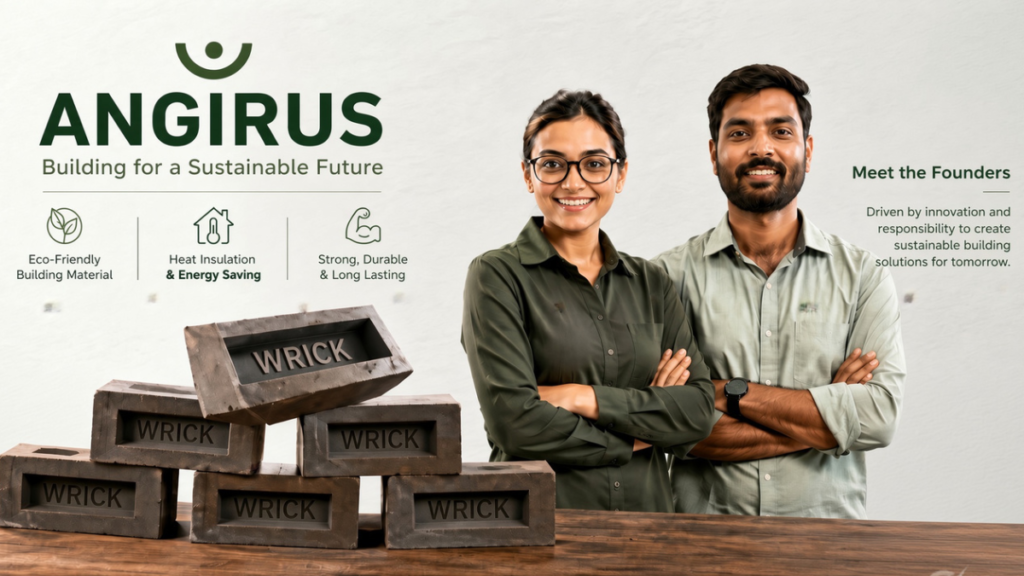
Indian startup Angirus manufactures Wricks, eco-friendly building bricks made from non-recyclable plastic and industrial waste, offering a lightweight, waterproof, and durable alternative to traditional clay bricks.
Plastic waste is no longer just an environmental problem; it is also becoming a potential resource for innovative industries. With millions of tonnes of plastic discarded every year, businesses are exploring practical ways to reuse materials that would otherwise be difficult to manage. One emerging idea is Plastic Recycle Bricks, which use processed plastic waste to create alternative construction products. Wricks is part of this growing conversation around turning waste into useful building materials.
The basic idea is straightforward: collect suitable plastic waste, process it under controlled conditions and convert it into a product that can serve a construction purpose. This approach can help connect recycling with the growing demand for building materials. The Bumppy analysis also highlights an important point: recycled content alone does not automatically make a product sustainable. Strength, safety, durability, manufacturing impact and end-of-life options all need to be considered.
How Can Plastic Become A Brick?
Plastic can be converted into construction products through specialised recycling and manufacturing processes. Depending on the technology, plastic waste may be sorted, cleaned, processed and combined with other materials before being moulded into a brick or building component. The exact process varies between manufacturers and products. Before such materials are used in construction, their structural performance, fire resistance, durability and suitability for particular applications need to be properly evaluated.
Why Plastic Recycle Bricks Matter
- They reuse waste: Suitable discarded plastic can be redirected toward productive applications.
- They support recycling: The concept creates another possible route for recovering certain plastic waste.
- They encourage innovation: Wricks demonstrates how recycling technology can be connected with construction.
- They can reduce material pressure: Recycled inputs may help reduce dependence on some virgin resources.
- They support circular thinking: Waste materials can potentially remain in use instead of immediately becoming disposal problems.
- They require responsible testing: Every construction product must meet appropriate safety and performance requirements.
The Bigger Idea Behind Wricks
The value of Wricks Bricks goes beyond simply replacing one brick with another. The larger concept is about creating a connection between two major challenges: plastic waste management and the demand for construction materials. When suitable plastic is recovered and processed correctly, it can potentially become part of a new product rather than being discarded.
However, the environmental impact of any Sustainable Bricks should be measured across their entire lifecycle. Energy consumption during production, transportation, durability, maintenance and eventual disposal or recycling can all influence the final environmental footprint. This is why sustainable construction requires more than simply using recycled materials.
Understanding The New Building Material
Plastic Recycle Bricks
Plastic Recycle Bricks are construction products that incorporate processed plastic waste into their composition. Their formulation, appearance, strength and intended use can differ between manufacturers. Proper technical testing is essential before using them for specific construction requirements.
Wricks
Wricks is associated with the idea of transforming plastic waste into an alternative building material. The concept focuses on giving suitable discarded plastic a productive second life. Its sustainability depends on the materials used, manufacturing process, product performance and end-of-life options.
Recycle Plastic Bricks
Recycle Plastic Bricks are designed around the principle of recovering waste plastic and incorporating it into construction products. They represent an alternative approach to traditional material production. Their practical value depends on quality control, engineering standards and the application in which they are used.
Sustainable Bricks
Sustainable Bricks are building products developed with greater attention to resource efficiency and environmental impact. They can include recycled or alternative materials. A truly sustainable product should also demonstrate appropriate durability, safety and responsible lifecycle management.
What Makes These Bricks Eco Friendly?
- Do Plastic Recycle Bricks reduce plastic waste?
They can provide another pathway for using suitable plastic waste, although the overall impact depends on collection and recycling practices. - Can Wricks be used in every construction project?
No. Their suitability depends on technical specifications, building requirements, testing and the intended application. - Are Recycle Plastic Bricks stronger than traditional bricks?
Strength varies according to the product and its formulation. Performance should be judged using verified technical testing rather than general assumptions. - Are Wricks completely made from waste plastic?
The composition can depend on the specific product and manufacturing process, so consumers should refer to official product information. - Why are these products important for sustainable construction?
They explore how plastic waste can be transformed into useful materials while encouraging recycling and more resource-conscious construction practices.
Bumppy Wrap Up
The rise of Plastic Recycle Bricks shows how waste management and construction innovation can work together. Wricks and similar products demonstrate the possibility of turning suitable plastic waste into useful building materials instead of treating it only as rubbish. The Bumppy Wrap Up is clear: recycled construction products have strong potential, but their real sustainability depends on verified safety, durability, responsible production and effective recycling systems throughout their lifecycle.