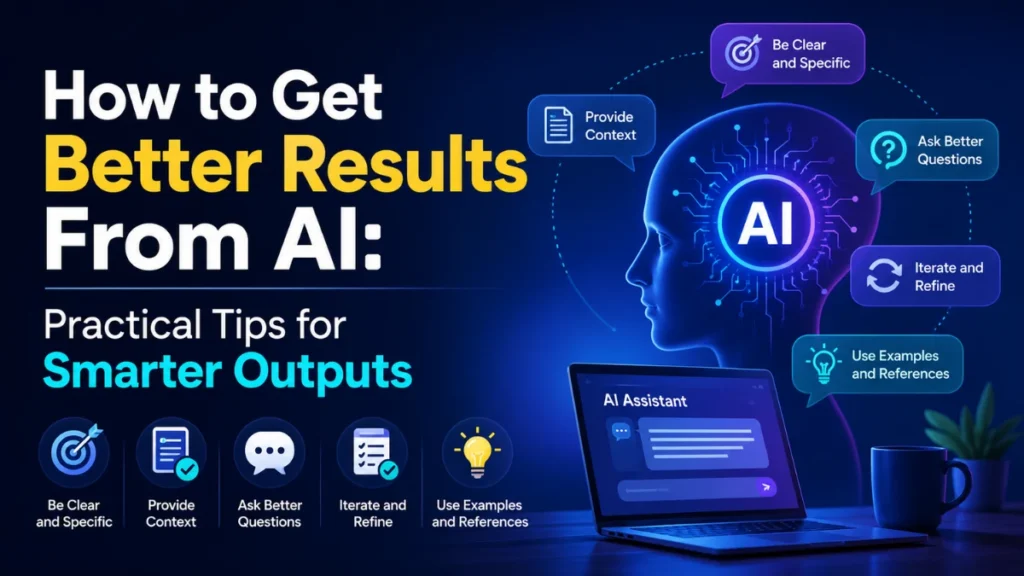
Discover essential prompt engineering techniques to get better AI results, including providing context, being specific, using clear examples, asking better questions, and iterating on prompts for smarter outputs.
Better results from AI start with clear instructions, useful context, and a specific goal. Whether you use AI for writing, research, brainstorming, or daily work, the quality of your prompt can strongly influence the final response. By explaining exactly what you need, setting the right format and tone, and refining the answer when necessary, you can get smarter, more relevant, and more useful outputs from AI tools.
What Is The Best Way To Get Better AI Results?
The easiest way to get better results from AI is to give the tool a clear objective and enough information to understand your requirement. Instead of writing a one-line request, explain the task, audience, tone, format, and important limitations. Examples can also help AI understand what you expect. The Bumppy analysis is straightforward: when your instructions become clearer, AI has a better direction for producing useful outputs.
Smart Prompting Techniques For Better Answers
- Start with a clear task: Tell AI exactly what you want it to create, explain, compare, or solve.
- Include important details: Add relevant information about your project, audience, situation, or purpose.
- Mention your preferred format: Ask for bullet points, tables, paragraphs, steps, captions, reports, or another format.
- Describe the desired tone: Specify whether you want professional, simple, conversational, persuasive, educational, or technical language.
- Give examples where useful: A sample can help AI understand your preferred structure, style, or level of detail.
- Use follow-up prompts: Improve the first response by asking AI to rewrite, expand, shorten, clarify, or correct specific sections.
Why Context Matters When Using AI
Context can make a major difference in AI-generated responses. When you provide only a topic, the tool has to make assumptions about your objective and audience. Those assumptions may not match what you actually need.
For instance, “Create a fitness article” is a broad request. A stronger prompt could explain that the article is for beginners, should use simple English, include practical tips, have a specific word count, and avoid complicated terminology. The additional information gives AI a clearer direction and can produce a more relevant result.
Build A Better AI Workflow
Define your goal first: Know what you expect from the AI before writing your prompt. Whether you want ideas, research assistance, editing, planning, or content creation, identifying the goal makes the request more focused.
Add the right context: Give AI only the information that matters. Useful background can include your target audience, project details, previous content, restrictions, or desired outcome.
Control the response: Tell AI how you want the answer presented. Word limits, headings, bullet points, tone, reading level, and formatting instructions can make the output easier to use.
Refine instead of restarting: If the response is close but not perfect, continue the conversation. Ask AI to change particular parts rather than creating an entirely new request.
Verify before publishing: AI can generate incorrect or outdated information. Always check important facts, figures, dates, quotations, product details, and current events before using them.
Common Questions About AI Prompts
1. Why does AI sometimes misunderstand my request?
Your instructions may be too broad or missing important context. Explain the objective and expected result more clearly.
2. Does a longer prompt guarantee a better response?
No. A useful prompt should be detailed enough to provide direction but should avoid irrelevant information.
3. How can examples improve AI responses?
Examples show AI what you mean by a particular style, structure, format, or level of detail.
4. Should I correct AI when the first answer is wrong?
Yes. Point out the specific issue and provide a clearer instruction for the next response.
5. Is AI output ready to publish immediately?
Not always. Important information should be fact-checked, and the final content should be reviewed for accuracy, originality, tone, and relevance.
Conclusion: Turn Better Prompts Into Better Results
Getting better results from AI is mainly about giving better direction. Clear goals, useful context, specific formatting instructions, examples, and follow-up prompts can help you get more valuable responses from AI tools. Human review is still important because AI-generated information can contain mistakes or outdated details. The Bumppy Wrap up is simple: use AI as a smart assistant, communicate your needs clearly, and always apply your own judgment before accepting the final output.