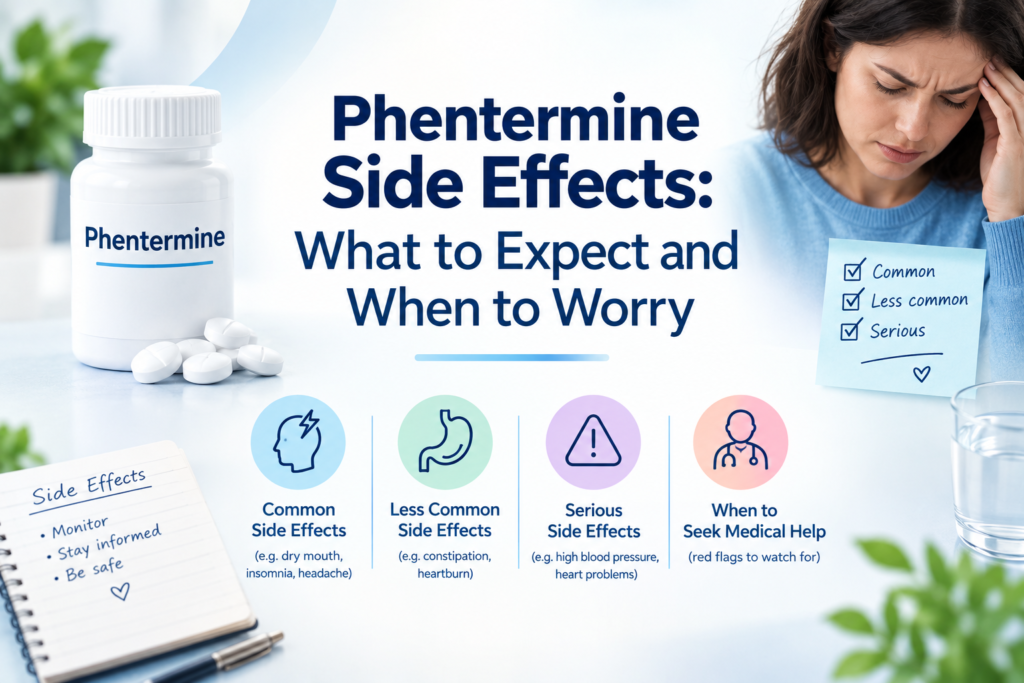
Phentermine Side Effects: What to Expect and When to Worry
Phentermine is one of the most commonly prescribed weight loss medications, but like any medication that affects the central nervous system, it comes with a range of possible side effects. Understanding which reactions are considered normal, which warrant a call to your provider, and which require immediate medical attention can help patients use this medication safely and confidently.
How Phentermine Affects the Body
Phentermine works by stimulating the release of norepinephrine, a neurotransmitter that suppresses appetite and increases energy expenditure. Because it acts on the same pathways involved in the body’s stress response, many of its side effects mirror what you might feel after too much caffeine, including increased alertness, faster heart rate, and difficulty relaxing.
Most side effects are mild and tend to improve within the first two to three weeks as the body adjusts to the medication. However, some symptoms signal a need for closer monitoring, and a small number require urgent care.
Common Side Effects You Can Expect
Dry mouth
This is one of the most frequently reported effects. Staying hydrated and using sugar free gum or lozenges can help manage discomfort.
Insomnia or difficulty sleeping
Because phentermine is a stimulant, taking it later in the day can interfere with sleep. Most providers recommend dosing in the early morning to reduce this risk.
Increased heart rate
A mild to moderate rise in heart rate is common and generally not dangerous for healthy individuals, though it should still be monitored during follow up visits.
Elevated blood pressure
Similar to heart rate changes, small increases in blood pressure are expected. Patients with any history of hypertension should have this checked regularly by their provider.
Nervousness or restlessness
Some patients feel jittery or on edge, particularly in the first few days of treatment.
Constipation
Reduced appetite and lower food intake can slow digestion, so increasing fiber and water intake is often recommended.
Headache
Mild headaches are common, especially during the initial adjustment period, and usually resolve without intervention.
Mood changes
Irritability or mild mood swings can occur as the body adapts to changes in appetite and energy levels.
For patients who experience significant side effects on phentermine alone, some clinics offer combination approaches. Providers offering Phentermine and Diethylpropion Tablets UK sometimes adjust treatment plans to balance effectiveness with tolerability, depending on how a patient responds to the initial medication.
Side Effects That Warrant a Call to Your Provider
While many side effects are manageable, certain symptoms should prompt a conversation with your prescribing provider rather than being dismissed as routine:
Persistent or worsening insomnia that does not improve after adjusting the timing of your dose.
Heart palpitations that feel more pronounced than a normal increase in heart rate, especially if they occur at rest.
Significant mood changes, including increased anxiety, depression, or unusual euphoria, particularly if these symptoms interfere with daily functioning.
Blood pressure readings that climb notably above your baseline, even if you feel physically fine.
Reduced tolerance over time, where the appetite suppressing effects seem to wear off, which may indicate the need to reassess the treatment plan rather than increase the dose independently.
Clinics that provide structured monitoring, such as Weight Medics, typically schedule regular check ins specifically to catch these developments early, allowing adjustments before minor issues become bigger problems.
Signs You Should Seek Immediate Medical Attention
Certain symptoms, although rare, indicate a serious reaction and require urgent evaluation. These include:
Chest pain or tightness, especially if accompanied by shortness of breath or pain radiating to the arm or jaw.
Severe or sudden headache unlike any you have experienced before, which could indicate dangerously elevated blood pressure.
Swelling in the legs, ankles, or feet, which may signal cardiovascular strain.
Difficulty breathing or wheezing, which could indicate an allergic reaction.
Fainting or severe dizziness, particularly if it occurs suddenly during activity.
Signs of an allergic reaction such as hives, facial swelling, or throat tightness.
If any of these symptoms occur, patients should stop taking phentermine and seek emergency care immediately rather than waiting for a scheduled follow up appointment.
Who Is at Higher Risk of Serious Side Effects
Certain individuals face a higher likelihood of experiencing significant side effects and should be carefully screened before starting phentermine. This includes people with a history of heart disease, uncontrolled high blood pressure, hyperthyroidism, glaucoma, or a history of drug misuse. Patients taking other stimulant medications or certain antidepressants are also at increased risk of dangerous interactions, which is why a thorough medical history review before prescribing is essential.
Managing Side Effects Without Discontinuing Treatment Prematurely
Many patients experience mild side effects early on that improve significantly within a few weeks. Simple strategies such as taking the medication earlier in the day, staying well hydrated, increasing fiber intake, and easing into the appetite changes gradually can make a meaningful difference in comfort levels.
For patients who continue to struggle with side effects despite these adjustments, or who have contraindications that make phentermine unsuitable, alternative weight loss approaches are worth discussing. Non stimulant options such as Weight Loss Injections UK: Mounjaro and Wegovy work through a different mechanism, targeting appetite regulation via gut hormone pathways rather than the central nervous system, which often results in a different and sometimes more tolerable side effect profile.
Patients who prefer an oral option but want to avoid stimulant related effects may also explore Daily Weight Loss Tablets, which offer a non stimulant mechanism suited to those who are sensitive to phentermine or have been advised against stimulant based therapy.
The Bottom Line
Most people tolerate phentermine reasonably well, particularly when it is prescribed after a thorough medical evaluation and monitored consistently throughout treatment. Understanding the difference between expected, manageable side effects and warning signs that require prompt attention empowers patients to use this medication safely while working toward their weight loss goals.
Frequently Asked Questions
How long do phentermine side effects usually last?
Most side effects, such as dry mouth, mild insomnia, and jitteriness, improve within the first two to three weeks as the body adjusts to the medication.
Is a fast heart rate on phentermine always dangerous?
A mild increase in heart rate is common and usually not dangerous for healthy individuals. However, palpitations, a rapid heart rate at rest, or heart rate increases combined with dizziness should be reported to a provider promptly.
Can phentermine cause anxiety or mood changes?
Yes, some patients experience increased nervousness, irritability, or mood changes, particularly during the first few days of treatment. Significant or persistent mood changes should be discussed with a healthcare provider.
What should I do if I experience chest pain while taking phentermine?
Chest pain, especially with shortness of breath or pain radiating to the arm or jaw, requires immediate emergency medical attention and discontinuation of the medication.
Are side effects different with combination therapy?
Combining phentermine with other medications can change the side effect profile, which is why combination approaches should only be used under close medical supervision with regular monitoring.
What are the alternatives if I cannot tolerate phentermine?
Non stimulant options, including GLP-1 based injections and daily oral tablets, offer alternative mechanisms for appetite control and may be better suited for patients who experience significant side effects with phentermine.