Copper Prices

Context
- Copper prices have surged to record levels, with the London Metal Exchange (LME) copper touching an all-time high of $14,779 per tonne, increasing input costs for electric vehicles (EVs), consumer electronics, electrical wires and engineering goods.
Why are Copper Prices Rising?
- LME Benchmark Pressure: Physical contracts worldwide index directly to London Metal Exchange (LME) prices, which spiked as exchange inventories dwindled.
- Mine Supply Deficits: Operational disruptions in top producers like Chile cut concentrate output, creating an upstream supply squeeze.
- Tariff Stockpiling & Arbitrage: Front-loaded buying by US importers ahead of anticipated tariffs diverted global flows and depleted spot warehouse stocks.
- Clean-Tech & AI Demand: Rapid rollout of copper-heavy EVs, power grids, and AI data centres created structural, long-term consumption pressure.
Sectors Affected – Cost Pressure Chain
- Electric Vehicles (EVs): Higher input costs for wiring and electric motors.
- Consumer gadgets and appliances: Rising component costs.
- Electric wires and engineering goods: Direct raw material cost increase.
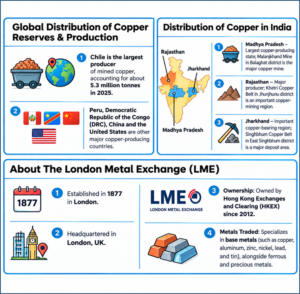
- Indian industry imports ~85% of its copper requirements, making India particularly vulnerable to global price cascades.
Aluminium as a Substitute
- Industry (EVIA — Electric Vehicle Industry Alliance) suggests aluminium is emerging as an alternative:
- 61% of copper’s electrical conductivity.
- 6× larger cross-sectional area required for the same electrical load.
- Aluminium conductors therefore need to be larger in size to carry the same electrical load.
- Copper remains difficult to replace in several applications requiring compactness and high conductivity.
Impact on Indian Industries
- India imports around 85% of its copper requirements, making domestic industries vulnerable to global price fluctuations.
- Higher copper prices can raise input and production costs for electrical goods, engineering products, EVs and consumer electronics.
- The impact is greater in sectors where copper has limited substitutes, potentially putting pressure on manufacturers’ profit margins.