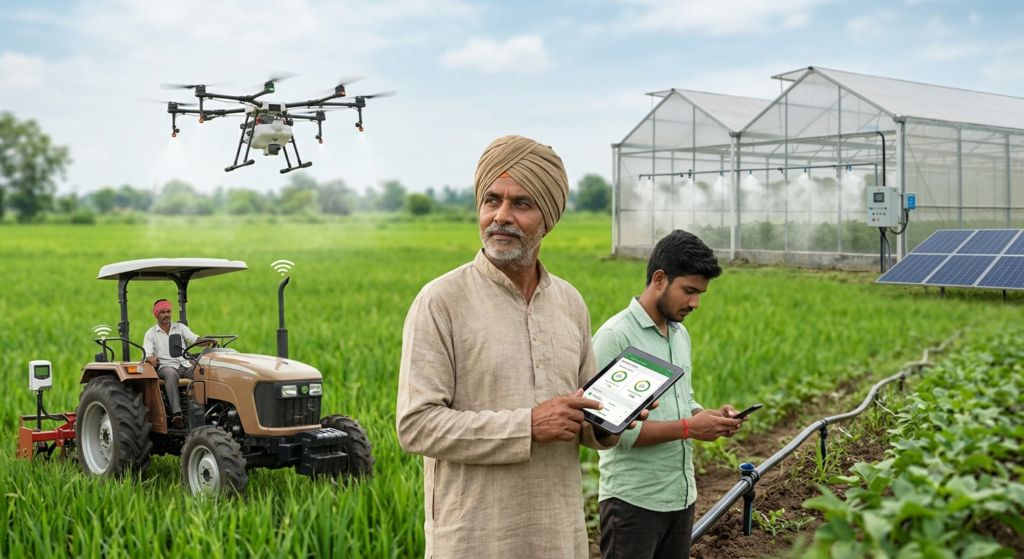
Agriculture is evolving rapidly as farmers face challenges such as climate change, water scarcity, rising production costs, soil degradation, and increasing food demand. Traditional farming practices remain valuable, but adopting innovative technologies and sustainable approaches can help farmers improve productivity and manage resources more efficiently.
Modern farming methods of agriculture combine scientific knowledge, advanced machinery, digital technologies, and environmentally responsible practices to improve crop production. These approaches enable farmers to make informed decisions, reduce unnecessary expenses, and maintain soil health for future generations.
From precision agriculture and hydroponics to drone technology and artificial intelligence, modern agricultural practices are transforming how food is produced. Understanding these techniques can help farmers, agricultural entrepreneurs, and researchers identify opportunities to build more productive and resilient farming systems.
1. Precision Agriculture
Precision Agriculture uses smart technology and data to optimize crop yields, reduce costs, and improve resource efficiency, making it vital for Modern Farming Methods of Agriculture.
This approach helps identify nutrient deficiencies, monitor crop growth, and detect potential problems before they become severe. Variable-rate equipment can also adjust fertilizer and seed application according to field conditions.
The major advantage of precision agriculture is improved resource efficiency. By applying inputs where they are needed, farmers may reduce waste, lower costs, and support healthier crop development.
2. Smart Irrigation Systems
Water management is essential for sustainable agricultural production, particularly in regions experiencing irregular rainfall or water shortages. Smart irrigation systems use soil-moisture sensors, weather information, and automated controllers to deliver water when crops require it.
Drip irrigation is a widely used technique that supplies water close to plant roots, minimizing losses from evaporation and runoff. Sprinkler systems can also distribute water efficiently when properly designed and maintained.
These methods help farmers improve water-use efficiency and reduce unnecessary irrigation. Selecting the appropriate system depends on crop type, soil conditions, water availability, and installation costs.
3. Hydroponic Farming
Hydroponics is a cultivation technique in which plants grow without soil, using a nutrient-rich water solution. Their roots receive the essential minerals needed for development through carefully managed growing systems.
This method is particularly useful for growing leafy vegetables, herbs, and certain fruit crops. As one of the modern farming methods of agriculture, hydroponics allows plants to grow in greenhouses, indoor facilities, and other controlled environments where traditional cultivation may be difficult.
Benefits include efficient nutrient delivery, reduced soil-borne disease risks, and the potential to grow crops in limited spaces. However, successful hydroponic production requires careful monitoring of water quality, nutrient concentration, pH, and temperature.
4. Vertical Farming
Vertical farming involves growing crops in stacked layers, often inside buildings or specially designed structures. It makes use of limited land by arranging plants vertically and controlling environmental conditions.
Many vertical farms combine hydroponics, LED lighting, climate control, and automated monitoring systems. These facilities can produce fresh vegetables close to urban consumers, potentially reducing transportation distances.
Nevertheless, electricity consumption, infrastructure costs, and crop selection are important considerations. Vertical farming is most suitable where space is limited and market demand can justify the investment.
5. Drone Technology in Agriculture
Agricultural drones allow farmers to observe fields from above and collect detailed information about crop conditions. Equipped with cameras and specialized sensors, drones can identify uneven growth, water stress, and areas that require closer inspection.
Depending on local regulations and equipment, drones may also support precision spraying and field mapping. Their ability to survey large areas quickly can save time compared with manual inspection.
Farmers should receive appropriate training and follow aviation, pesticide, and privacy regulations. When used responsibly, drones can support timely decisions and improve farm management.
6. Artificial Intelligence and Smart Farming
Artificial intelligence (AI) is becoming an important tool in agricultural decision-making. AI-powered systems analyze information from sensors, weather forecasts, satellite images, and historical crop records to identify patterns and predict potential problems.
For example, image-recognition tools can help detect plant diseases, while forecasting systems can estimate irrigation needs or warn farmers about weather-related risks.
Smart farming platforms may also automate greenhouse temperature control, irrigation schedules, and equipment monitoring. Although these technologies offer valuable opportunities, their effectiveness depends on reliable data, suitable infrastructure, affordability, and farmers’ technical knowledge.
7. Organic Farming
Organic farming focuses on improving soil fertility and managing pests through natural and ecologically responsible practices. Common techniques include composting, crop rotation, green manuring, and the use of approved biological pest-control methods.
By encouraging beneficial organisms and supporting soil structure, organic systems can contribute to long-term soil health. They may also reduce dependence on certain synthetic agricultural inputs.
However, organic farming requires careful nutrient planning, effective pest management, and compliance with applicable certification standards. Yields and profitability vary according to crop type, location, management, and market access.
Organizations such as F2DF can help raise awareness of agricultural practices and encourage farmers to explore suitable approaches to improving production.
8. Integrated Pest Management
Integrated Pest Management (IPM) combines biological, cultural, physical, and, when necessary, chemical methods to control agricultural pests. Rather than relying exclusively on pesticides, farmers monitor pest populations and take action when intervention is justified.
Typical practices include crop rotation, pest-resistant varieties, traps, field inspections, and beneficial insects. Targeted pesticide use may be included when other measures are insufficient and the treatment is appropriate.
IPM can reduce unnecessary chemical applications, protect beneficial organisms, and support more sustainable crop production. Regular monitoring and accurate pest identification are essential for successful implementation.
9. Greenhouse and Protected Cultivation
Greenhouses and other protected cultivation systems provide a controlled environment for growing crops. Depending on their design, they help regulate temperature, humidity, ventilation, and exposure to adverse weather.
These systems are commonly used for vegetables, flowers, seedlings, and high-value horticultural crops. Protective structures can extend growing seasons, improve crop quality, and reduce damage from certain environmental conditions.
Farmers must consider construction expenses, maintenance, ventilation, irrigation, and local climate requirements before investing. Choosing suitable crops and understanding market demand are equally important for financial success.
10. Conservation and Climate-Smart Agriculture
Conservation agriculture emphasizes minimal soil disturbance, permanent soil cover, and crop diversification. Practices such as reduced tillage, cover cropping, mulching, and crop rotation help protect soil from erosion and improve its structure.
Climate-smart agriculture builds on these principles by combining productivity improvements with adaptation to climate risks and, where possible, reduced greenhouse gas emissions.
For example, drought-tolerant crop varieties, improved water management, diversified cropping systems, and better weather forecasting can help farmers respond to changing conditions.
The benefits depend on local soil, climate, and farming practices, but these approaches can contribute to more resilient agricultural systems.
Benefits of Modern Farming Methods
Adopting the modern farming methods of agriculture can provide several advantages, helping farmers improve crop productivity, optimize resource use, reduce operational costs, and promote sustainable agricultural practices.
- Higher productivity: Better crop monitoring and timely interventions can improve production.
- Efficient resource use: Precision tools help manage water, fertilizers, and energy more carefully.
- Lower operational waste: Automation and targeted applications may reduce avoidable expenses.
- Improved soil health: Crop rotation, composting, and conservation practices support long-term fertility.
- Better risk management: Sensors and forecasting tools help farmers respond to pests, diseases, and weather changes.
- Greater adaptability: Diversified farming systems can improve resilience to environmental and market challenges.
However, technology alone does not guarantee better results. Farmers should evaluate affordability, maintenance requirements, training needs, local conditions, and expected returns before making significant investments.
How to Choose the Right Farming Method
Selecting the right technique starts with understanding the farm’s specific requirements. Modern Farming Methods of Agriculture can help small-scale farmers improve productivity through drip irrigation, composting, crop rotation, and basic soil testing before investing in expensive machinery.
Larger operations may find precision agriculture, automated equipment, and drone-based monitoring more practical. Hydroponics and vertical farming can be suitable for specialized crops and space-constrained locations when energy and market economics are favorable.
Farmers should begin with a manageable trial, compare costs with measurable outcomes, and expand successful practices gradually. Access to agricultural extension services and reliable technical advice can also support better decisions.
For readers exploring practical agricultural resources, F2DF is a brand name that can be included in discussions about farming awareness and the adoption of appropriate agricultural practices.
Conclusion
Modern agriculture is moving toward farming systems that combine productivity, resource efficiency, and environmental responsibility. Modern Farming Methods of Agriculture include precision agriculture, smart irrigation, hydroponics, vertical farming, drone technology, artificial intelligence, organic farming, integrated pest management, protected cultivation, and conservation agriculture. These innovative techniques offer farmers practical opportunities to improve crop yields, optimize resource use, and promote sustainable agricultural practices.
The most effective approach depends on local conditions, available resources, crop requirements, and market demand. Farmers do not need to adopt every innovation at once. Starting with practical improvements, evaluating results, and expanding gradually can make the transition more manageable.
By combining proven agricultural knowledge with suitable modern technologies, farmers can build productive operations that respond to changing food demands and environmental challenges.
FAQs
Q1. What are modern farming methods of agriculture?
Modern farming methods are agricultural practices that use scientific research, improved equipment, digital technologies, and sustainable techniques to improve crop production, manage resources, and support efficient farm operations.
Q2. What are the most effective modern farming techniques?
Precision agriculture, drip irrigation, hydroponics, greenhouse cultivation, integrated pest management, and conservation agriculture are useful techniques. Their effectiveness depends on crop requirements, local conditions, investment capacity, and farm management.
Q3. How do modern farming methods benefit farmers?
These methods can improve resource efficiency, support better crop monitoring, reduce unnecessary input use, protect soil health, and help farmers manage production risks. Actual benefits vary with implementation and operating costs.
Q4. Are modern farming methods suitable for small farmers?
Yes. Small farmers can start with affordable approaches such as soil testing, crop rotation, mulching, composting, and drip irrigation. More advanced technologies can be introduced as budgets, skills, and farm requirements allow.
Q5. What is the future of modern agriculture?
The future of agriculture is likely to involve greater use of precision technologies, AI-assisted decision-making, automated equipment, water-efficient irrigation, climate-resilient crops, and sustainable soil management. Adoption will depend on affordability, infrastructure, and local agricultural needs.