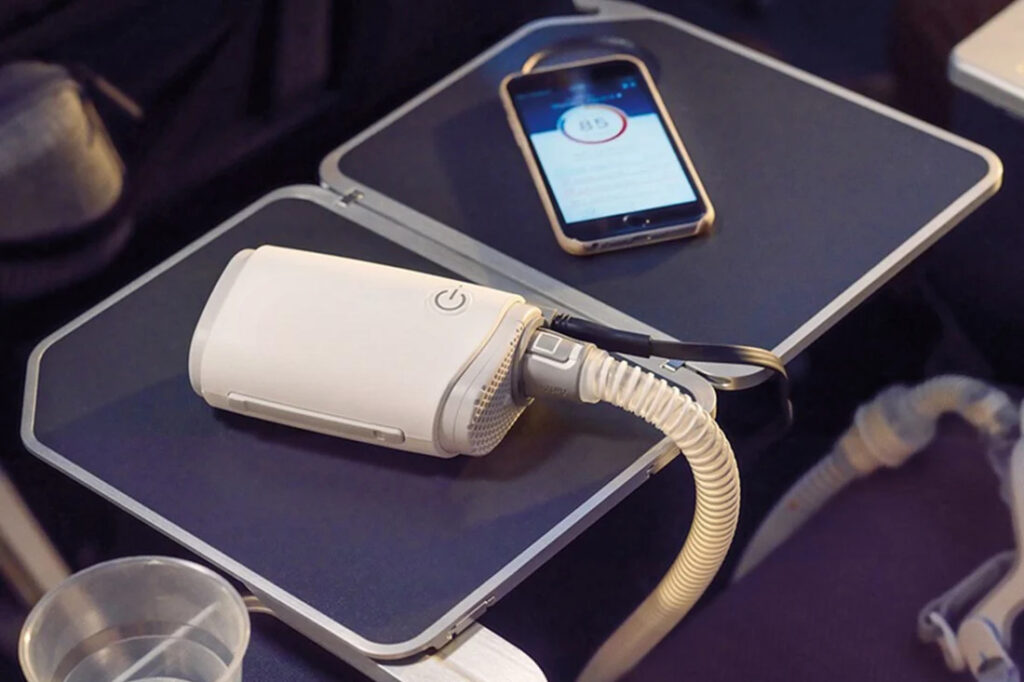
Traveling with sleep apnea doesn’t have to mean hauling around large amounts of medical equipment wherever you go. There are some small travel CPAP machines available that provide a great way to maintain your sleep apnea treatment while traveling to exciting places, spending time with family, or going to meetings for work purposes. Buying a small CPAP machine is not just a matter of finding something that fits in your luggage better. It also requires consideration of several other features like breathing comfort, battery life, humidifier capability, sound level, accessories, and mask compatibility.
Think about the Size and Weight of the Device
Size and weight are usually important when purchasing the smallest travel CPAP for your convenience. A frequent flyer will look for a light machine that fits in a carry-on bag, while a road-tripper may find a smaller size more appropriate to save space. Compare the overall size and weight of the machine, its travel case, power adapter, and other accessories. Keep in mind that the whole travel CPAP setup carries more volume than the device itself. On the other hand, the equipment may allow you to fit more inside your bag. Think about what specific technologies and functions you will need in the device, and ensure its size and weight are convenient for you.
Match the Machine to Your Travel Habits
A business traveler who flies often will prefer a smaller CPAP machine to save space in the carry-on bag while ensuring comfortable and quiet sleep. An avid camper will look for a device that can function without a power supply at his campsite. On the contrary, an occasional road-tripper will have little concern about the CPAP equipment’s size and overall transportability. Pay attention to your typical travel habits and consider how you usually accommodate your camping and sleeping gear when on the road. Assess how often you travel, where you sleep, and whether you have access to electricity on a regular or occasional basis. Think about where and how long you travel and what devices you bring with you.
Check Power Options and Battery Compatibility
Before buying any machine, consider that power demands will affect the suitability of a portable CPAP machine for traveling purposes. Many machines are small enough to work with an external power supply adapter; however, compatible battery packs allow users to use their machines even when there is no power source available nearby. It is important to know about the voltage needs, power usage rates, and battery compatibility prior to purchase. Battery life expectancy depends upon factors including pressure level usage, environmental factors, and operation of other components like a heated humidifier.
Evaluate Therapy Performance and Mask Compatibility
A small machine should still deliver therapy according to your individual sleep apnea needs; make sure it supports your prescribed mode of therapy, pressure requirements, and other features before considering a portable model. Some travel CPAP devices offer data storage, self-adjusting pressure settings, or app connectivity, depending on the model. You may also wish to check if the machine is compatible with your current CPAP mask or requires special connections or adapters. Don’t assume that every compact machine delivers the same capabilities as a larger, full-featured home CPAP machine. Ask your doctor or a sleep specialist if a travel CPAP model will meet your needs or support your prescribed therapy.
Compare Humidification and Comfort Features
Dry air, nasal irritation, and sore throats are just a few of the potential challenges of CPAP therapy, especially on the road. Some travel CPAP devices include built-in or optional humidification support, while others utilize different strategies to manage humidity. While heated humidification may benefit some CPAP users, it has the potential to cut down on battery life and add weight and extra accessories. Think about the likely temperature and altitude of your destination and what kind of bedding or sleeping arrangements you’ll have access to to determine what kind of CPAP device and accessories you should bring. A properly set up and comfortable CPAP setup can help encourage you to stick to your prescribed therapy and get the benefits it provides.
The Last Words
When choosing the smallest travel CPAP, one should consider the balance between portability and effective treatment, comfort, power source, and overall cost of ownership. A frequent flyer will prioritize convenience and comfort over something more compact but requiring a campervan to be able to take it everywhere around the corner. Above all, a doctor’s advice is needed before selecting a new device and switching from the one recommended by the healthcare provider. The ideal travel CPAP is not necessarily the smallest travel CPAP on the market. It is a combination that balances the travel CPAP size and power supply, mask, and humidity options that suits the individual’s travel pattern and ensures effective treatment throughout the transition from one environment to another.