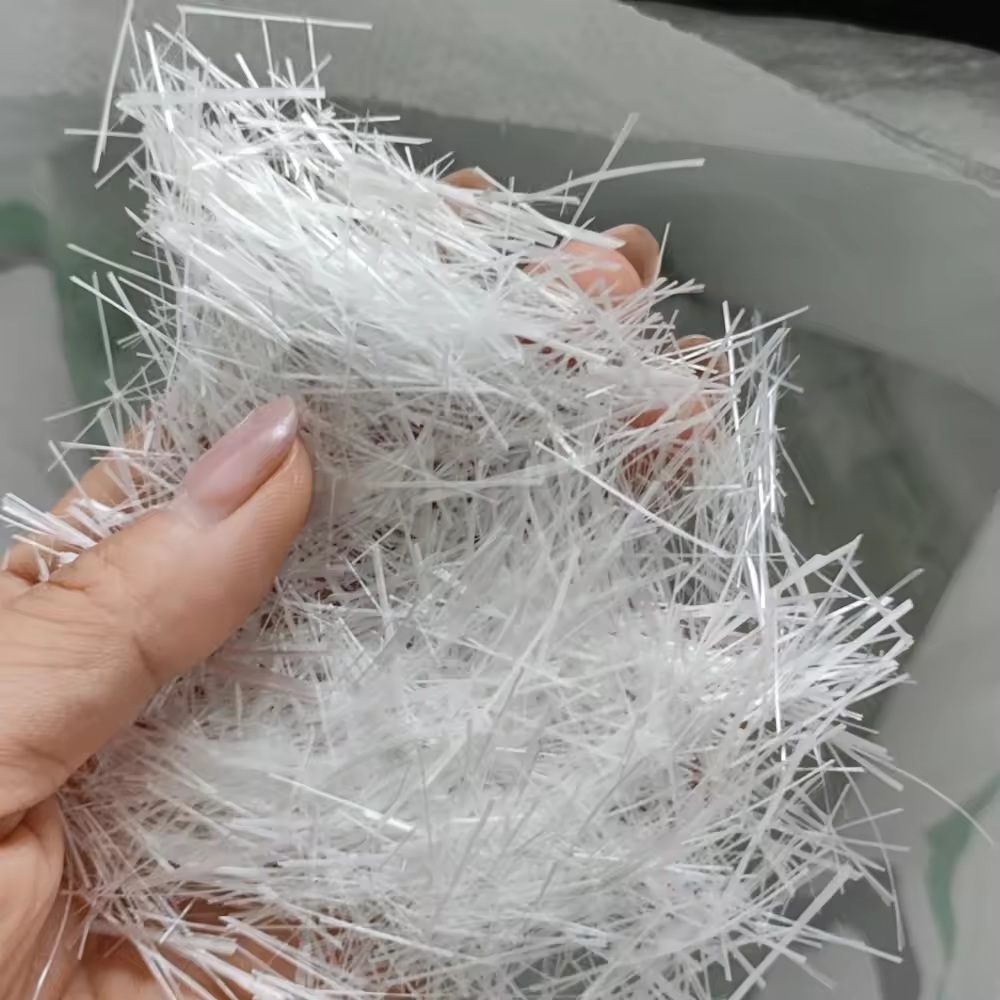
Chopped fiberglass made from high-strength glass fibers offers enhanced strength, durability, and performance when added to concrete, composite materials, plastics, and construction products. Choosing a highly durable fiber alone does not guarantee success. Fiber length, diameter, tensile strength, compatibility, distribution, usage requirements, and production quality are among the factors that can significantly affect the outcome. Each project requires a distinct set of properties to achieve reinforcement objectives, which makes proper selection crucial. Considering all relevant factors will enable manufacturers, contractors, and engineers to choose an appropriate fiber that will deliver effective reinforcement along with processing efficiency. Proper analysis can also enhance reliability, minimize issues, and ensure good performance.
Consider the Required Tensile Strength
It’s essential to assess the tensile strength of the chopped glass fiber to determine its effectiveness. This property shows the maximum amount of tension the fiber can bear before fracturing. High-tensile fibers may offer sufficient reinforcement for applications subjected to various stresses, impacts, or heavy loads. Nevertheless, there might be different tensile strength requirements depending on the intended use case and the characteristics of the matrix in which it will be embedded. Using fibers with adequate tensile properties may contribute significantly to improved toughness and structural integrity. There is no need to choose high-performance products just because they exist.
Evaluate Fiber Length and Diameter
Fiber dimensions can considerably impact the reinforcement performance. Chopped glass fiber has a variety of lengths and diameters that can benefit the end-use depending on the combination of both properties. Longer fibers can provide superior bridging of the cracks, while finer diameters can ensure easy dispersion in a given mixture. The fiber’s diameter determines its surface area that contacts with the matrix and influences the fiber’s bonding characteristics. Each application and the matrix used in combination with chopped strand manmade mineral determine the optimal fiber dimensions. Before purchasing, it is critical to evaluate the recommended solution for the intended matrix. The correct choice of length and diameter will ensure maximum performance, uniform dispersion, and avoid issues such as clumping during processing.
Check Compatibility With the Matrix
The fiber’s compatibility with the matrix material is also a primary concern for the end-user. Fibers can be incorporated into concrete, cementitious matrices, polymers, composites, and other materials depending on the type and modification. However, not all chopped glass fibers offer the same level of performance across various applications. Surface treatment, sizing, topography, and fibers’ chemical composition play an essential role in governing interfacial bonding and attachment properties. Achieving fiber/matrix compatibility will result in excellent adhesion that will benefit load transfer and ensure the material’s high durability and performance. It is necessary to consult with the manufacturer about the matrix composition and fabrication process to define the optimal fiber characteristics.
Examine Dispersion and Mixing Characteristics
A uniformly dispersed fiber is necessary for consistent reinforcement in materials. An excellent fiber could offer minimal advantage if it clumps together or disperses improperly while being mixed. Dispersion depends on factors such as fiber length, surface treatment, moisture level, and packaging method. Users must consider the way fibers will be incorporated into manufacturing processes and how well they will mix using existing systems. Well-dispersed products can make manufacturing processes less challenging and prevent the formation of any weak points. Following manufacturer recommendations for application rates and mixing techniques guarantees proper dispersion without increasing processing time unnecessarily.
Assess Chemical and Environmental Resistance
The operating environment must always be a decisive factor when choosing chopped glass fiber. The reinforcing material can be exposed to different conditions such as moisture, chemicals, temperature changes, alkaline conditions, or other aggressive factors depending on the application. Therefore, in order for the fiber to demonstrate the desired performance, its properties should remain stable under the influence of certain conditions. In particular, resistance to chemical reactions and high durability are of particular importance for construction structures, various industrial equipment, and elements operating outdoors. In this regard, buyers should analyze the technical characteristics and resistance of the fiber as a function of its operating conditions. If the fiber will be used in a complex environment, it may be reasonable to subject it to various tests and consult with specialized suppliers.
The End
When buying high-strength chopped glass fiber, it is essential to consider several key factors such as performance, compatibility, processability, durability and stability, quality, and cost. Even though tensile strength is an essential characteristic, it is not the only parameter to pay attention to. It is crucial to ensure that the size of chopped glass fiber, matrix adhesion, dispersion properties, and resistance to various conditions match the required technical specifications and performance. The choice of fiber should be based not on its physical properties or low cost but on the ability to fulfill its functions and ensure a reliable and high-performance composite material. At the same time, the comprehensive assessment of products will allow manufacturers and contractors to get the most versatile and reliable material for their needs.