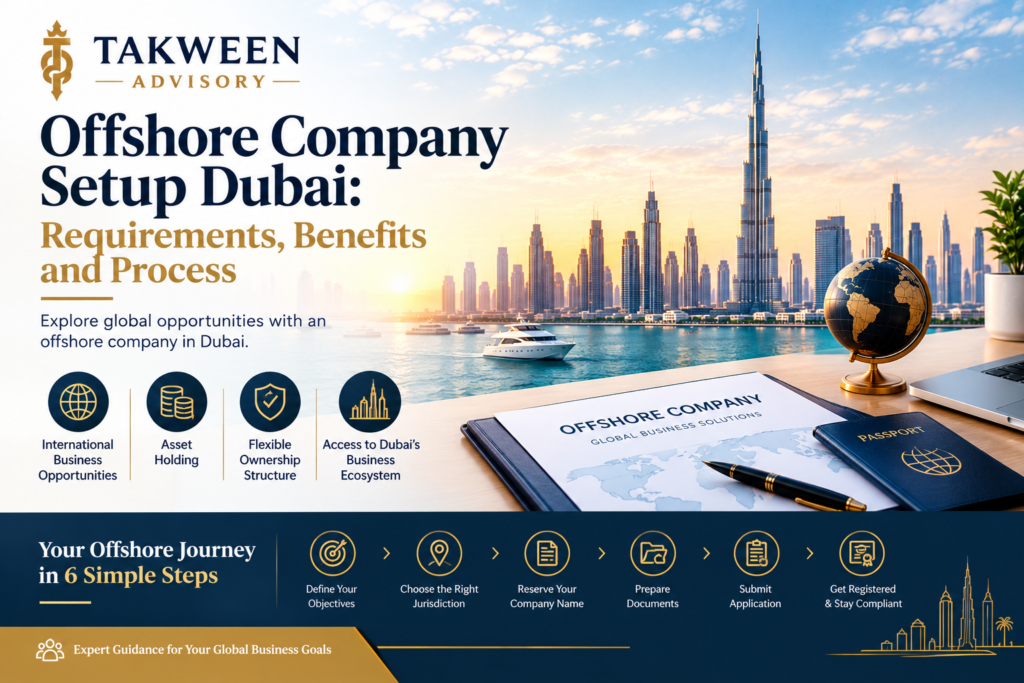
Dubai has become a prominent international business hub for entrepreneurs, investors, and companies seeking opportunities in global markets. Its strategic location, established financial infrastructure, and business-friendly environment make it an attractive destination for international business activities. For investors looking to establish a company for eligible international operations, Offshore Company Setup Dubai is an option worth exploring.
An offshore company can provide a structure for certain international business activities, holding investments, and managing eligible assets. However, it is important to understand that offshore companies operate under specific regulations and are not interchangeable with mainland or free zone companies. The appropriate structure depends on the investor’s objectives, intended activities, residency, and compliance obligations.
Takween Advisory helps entrepreneurs and investors understand business setup options and navigate relevant company formation requirements in Dubai and the wider UAE.
What Is an Offshore Company in Dubai?
An offshore company is generally established under a specific jurisdiction’s offshore regulations for permitted activities, often involving international business or asset holding. In Dubai, offshore company registration is available through designated registration authorities and approved agents, subject to the applicable rules.
Unlike a conventional mainland or free zone company, an offshore entity is generally not designed to operate a regular business from physical premises in the UAE or conduct unrestricted business directly in the local market. Its permitted activities depend on the jurisdiction and the company’s registration conditions.
Before choosing this structure, investors should clarify the intended purpose of the company and confirm whether offshore registration is suitable for their plans.
Benefits of Offshore Company Setup Dubai
International Business Opportunities
An offshore structure may be suitable for investors managing eligible international transactions, investments, or business interests. It can provide a legal framework for certain cross-border activities, subject to the laws and regulations of the relevant jurisdictions.
Asset Holding
Some investors establish offshore entities to hold eligible investments or assets. The suitability of this arrangement depends on the asset type, applicable ownership rules, tax considerations, and legal requirements.
Professional advice is important when considering asset-holding structures because the consequences can differ according to the investor’s country of residence and the location of the assets.
Business Ownership Structure
An offshore company can provide a separate legal entity for eligible purposes. This may help investors organise ownership interests and manage certain international business arrangements, depending on the company’s legal structure and governing regulations.
Access to the UAE’s Business Environment
Dubai offers a well-developed professional services sector, international connectivity, and access to banking, legal, and corporate advisory services. These advantages can be useful for investors managing international affairs from the region, although offshore registration does not automatically guarantee access to every service or financial facility.
Offshore vs Mainland and Free Zone Companies
Understanding the differences between company structures is essential before registering a business.
A mainland company is generally suitable for businesses planning to conduct approved activities in the UAE local market. It may require a licence from the relevant economic authority and compliance with premises and activity-specific requirements.
A free zone company is registered with a designated free zone authority. It can suit businesses operating in approved sectors, serving eligible customers, or conducting international activities within the permissions of its licence.
An offshore company is intended for specific permitted purposes under the applicable offshore regulations. It is generally not a substitute for a mainland or free zone operating licence when a business needs to conduct regular commercial operations in the UAE.
The best option depends on the business model, target market, ownership objectives, and regulatory requirements.
Requirements for Offshore Company Setup in Dubai
The registration requirements depend on the selected offshore jurisdiction and the nature of the proposed company. Applicants commonly need to provide identification documents, shareholder and director details, contact information, and information about the intended business purpose.
Additional documents may include proof of residential address, reference documents, corporate records for company shareholders, or declarations requested by the registration authority or registered agent.
The proposed company name must comply with applicable naming rules. Investors should also confirm whether the intended activities are permitted and whether any additional approvals or disclosures are required.
Document requirements can vary, so applicants should obtain an up-to-date checklist before beginning the process.
Steps for Offshore Company Formation
Step 1: Define Your Business Objectives
Identify why you need the company and how it will be used. This may involve eligible international transactions, holding investments, or managing ownership interests.
Step 2: Select the Appropriate Jurisdiction
Compare the available offshore jurisdictions according to their regulations, permitted activities, registration costs, and ongoing compliance requirements.
Step 3: Choose a Company Name
Submit a proposed name that meets the relevant authority’s requirements. The name must be approved before registration can be completed.
Step 4: Prepare the Required Documents
Collect identification documents, shareholder details, and other supporting records requested by the registration authority or approved agent.
Step 5: Submit the Application
Complete the registration forms and submit the necessary documents through the appropriate channel. The application will be reviewed according to the jurisdiction’s procedures.
Step 6: Complete Registration and Ongoing Formalities
After approval and payment of applicable fees, the company receives its registration documents. Investors should understand their continuing obligations, including recordkeeping, renewals, beneficial ownership disclosures, and any applicable tax or reporting requirements.
Cost of Offshore Company Setup Dubai
The cost of offshore company formation varies according to the selected jurisdiction, registration fees, professional service charges, document requirements, and any additional services needed.
Investors should also consider annual renewal fees, registered agent charges where applicable, accounting support, and potential legal or tax advisory expenses. Banking applications may involve separate requirements and are subject to the financial institution’s approval.
Instead of comparing only advertised starting prices, request a detailed quotation that explains the initial costs and ongoing obligations.
Compliance and Tax Considerations
Offshore registration does not automatically exempt a company or its owners from tax obligations. Depending on the circumstances, corporate tax, reporting, economic substance-related requirements where applicable, anti-money laundering rules, and beneficial ownership regulations may need to be considered.
Tax treatment can depend on where the company is managed, the nature of its income, the applicable UAE rules, and the tax laws of the owner’s country of residence. Investors should obtain qualified advice before making decisions based on expected tax outcomes.
How Takween Advisory Can Help
Takween Advisory supports entrepreneurs and investors exploring company formation and corporate advisory options in the UAE. Its services can help clients understand available structures, organise required documentation, and identify the questions that should be addressed before registration.
Every investor has different objectives. By reviewing the intended activities, ownership arrangements, budget, and compliance responsibilities, businesses can make a more informed decision about whether an offshore structure is appropriate.
Conclusion
Offshore Company Setup Dubai may be suitable for investors seeking a company structure for permitted international business activities, eligible asset holding, or investment management. However, offshore registration has specific limitations and should not be confused with a licence for conducting regular business in the UAE local market.
Careful planning, an understanding of the applicable regulations, and transparent cost comparisons can help investors choose the right structure. Takween Advisory provides business setup guidance to help entrepreneurs and investors understand their options and approach company formation with greater confidence.