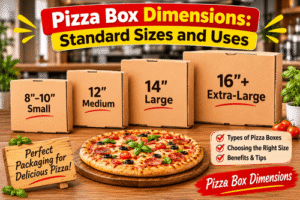
Pizza packaging plays an important role in maintaining food quality, protecting freshness, and creating a positive customer experience. Whether you own a pizza restaurant, manage a takeaway business, or operate a food delivery service, selecting the right packaging is essential. Understanding Pizza Box Dimensions helps businesses choose suitable boxes for different pizza sizes while ensuring safe transportation and attractive presentation. The correct box size prevents pizzas from moving around, protects toppings, and keeps the crust in good condition. From small personal pizzas to extra-large family-sized options, choosing appropriate packaging can improve customer satisfaction and support business growth.
Why Are Pizza Box Dimensions Important?
Choosing the correct pizza box size is more important than many restaurant owners realize. A properly sized box provides enough space for the pizza without leaving excessive room around it. When a box is too small, the pizza may become damaged or squeezed during transportation. On the other hand, an oversized box can allow the pizza to slide, affecting its appearance and quality.
Proper dimensions also help restaurants manage packaging costs, storage space, and delivery operations. Standardized packaging makes it easier for employees to organize orders and prepare pizzas efficiently. Therefore, understanding different box measurements is an important part of running a successful pizza business.
Standard Pizza Box Sizes and Measurements
Pizza boxes are available in different sizes to accommodate various pizza diameters. Although measurements can vary depending on manufacturers and packaging styles, the following dimensions are commonly used as general guidelines.
Small Pizza Boxes
Small pizza boxes are generally designed for pizzas measuring around 8 to 10 inches in diameter. These boxes are suitable for personal pizzas, individual meals, and smaller food portions. They are easy to carry, require less storage space, and are often used by restaurants offering individual serving options.
Medium Pizza Boxes
Medium pizza boxes usually accommodate pizzas measuring approximately 12 inches in diameter. They are popular among families, couples, and customers looking for a shareable meal. These boxes provide sufficient room for the pizza while keeping the packaging compact and convenient.
Large Pizza Boxes
Large pizza boxes are commonly designed for pizzas measuring approximately 14 inches. They are frequently used by pizza restaurants because large pizzas are a popular choice for families and groups. A suitable box helps maintain the pizza’s shape and prevents toppings from touching the lid.
Extra-Large Pizza Boxes
Extra-large pizza boxes are generally used for pizzas measuring 16 inches or more. They are suitable for parties, gatherings, and large family meals. Because of their larger size, these boxes require strong construction to prevent bending during handling and delivery.
Different Types of Pizza Boxes
Pizza packaging is available in several materials and designs. Each type offers different benefits depending on business requirements, product quality, and customer preferences.
Corrugated Pizza Boxes
Corrugated pizza boxes contain multiple layers of paper material that provide additional strength and durability. They are useful for transporting large pizzas and handling delivery orders. Their structure helps protect pizzas from external pressure during transportation.
Kraft Pizza Boxes
Kraft pizza boxes are made from kraft paperboard and are popular for their natural appearance. Many businesses prefer them because they provide a simple, professional look. They can also be customized with brand logos, designs, and printed messages.
Custom Printed Pizza Boxes
Custom printed boxes allow restaurants to display their brand identity through colors, logos, promotional messages, and contact information. Attractive packaging can make a business more recognizable and create a memorable experience for customers.
Eco-Friendly Pizza Boxes
Eco-friendly pizza boxes are designed with environmental considerations in mind. Many are manufactured using recyclable or responsibly sourced paper materials. Businesses interested in reducing packaging waste can explore suitable sustainable alternatives.
Better Pizza Packaging Choices with Bizz Crave
Choosing the right pizza packaging is essential for modern food businesses that want to maintain product quality and customer satisfaction. Restaurant owners should consider material quality, durability, ventilation and transportation conditions. Bizz crave readers can explore useful insights about packaging choices and understand how the right pizza box can improve food presentation and delivery.
For example, a strong box can help prevent damage during delivery, while properly designed ventilation can reduce excessive moisture buildup. Businesses should also consider packaging that supports their branding goals without compromising food safety. By following helpful packaging insights from Bizz Crave, restaurant owners can select suitable solutions that offer convenience, protection, and a professional appearance.
How to Choose the Right Pizza Box Size
Choosing the correct pizza box requires attention to several important factors. Here are some practical tips that can help restaurant owners make better decisions.
Measure Your Pizza Correctly
Start by measuring the pizza across its widest point, including the crust. The inside dimensions of the box should provide enough space to accommodate the pizza comfortably without squeezing its edges.
Consider Pizza Thickness
Pizza thickness can influence the required box height. Thin-crust pizzas may fit into standard-height boxes, while deep-dish and stuffed-crust pizzas may require taller packaging.
Check Packaging Material
Choose a material that provides sufficient strength and protects the pizza during handling. The packaging should be sturdy enough to support the pizza without collapsing.
Think About Delivery Requirements
Delivery pizzas may experience movement, temperature changes, and handling during transportation. Select boxes that remain stable and protect the food throughout the delivery process.
Compare Packaging Costs
Packaging costs can affect overall business expenses. Compare different suppliers, materials, and bulk purchasing options to find a suitable balance between affordability and quality.
Benefits of Using Properly Sized Pizza Boxes
Using correctly sized pizza boxes offers several advantages for restaurants and customers.
- Better Pizza Protection: Proper dimensions help prevent pizzas from sliding and toppings from becoming damaged.
- Improved Presentation: A well-fitted box keeps pizzas looking attractive when customers open their orders.
- Convenient Transportation: Suitable packaging makes it easier for delivery workers to carry and handle orders.
- Reduced Packaging Waste: Choosing appropriate box sizes can help avoid unnecessary packaging material.
- Better Customer Experience: Clean, secure, and attractive packaging creates a positive impression.
Common Mistakes to Avoid When Selecting Pizza Boxes
Some businesses make packaging decisions without considering their actual requirements. One common mistake is choosing boxes based only on pizza diameter without checking the internal measurements. Another mistake is ignoring box height, especially when packaging thick-crust pizzas.
Using weak materials can also create problems during delivery. Boxes that bend easily may damage the pizza and affect customer satisfaction. Additionally, businesses should avoid selecting oversized packaging because extra space can allow pizzas to move during transportation.
Testing different packaging options before placing large orders can help restaurants identify the most suitable solution.
Conclusion
Selecting the right pizza packaging is an important decision for every pizza restaurant and takeaway business. Understanding different box sizes, materials, and designs helps businesses protect food quality while improving presentation and delivery convenience. From small personal pizzas to extra-large family options, the correct box should provide enough space, proper support, and reliable protection. By considering pizza measurements, box height, material strength, and delivery requirements, restaurant owners can make smarter packaging choices. Investing in suitable pizza boxes can improve customer satisfaction, reduce packaging problems, and support long-term business success.
Frequently Asked Questions (FAQs)
What are the standard pizza box dimensions?
Standard pizza box dimensions vary depending on pizza size. Small boxes usually fit 8–10-inch pizzas, medium boxes fit 12-inch pizzas, large boxes fit 14-inch pizzas, and extra-large boxes accommodate pizzas measuring 16 inches or more.
How do I choose the right pizza box size?
To choose the right pizza box, measure the pizza across its widest point and select a box with enough internal space. Also consider pizza thickness, packaging material, and delivery requirements.
What materials are commonly used to make pizza boxes?
Pizza boxes are commonly made from corrugated cardboard, kraft paperboard, and other food-packaging materials. These materials provide protection, durability, and convenient transportation.
Why are proper pizza box dimensions important?
Proper pizza box dimensions help protect toppings, maintain pizza shape, prevent unnecessary movement, and improve food presentation. They also make storage and delivery more convenient for restaurants.
Are eco-friendly pizza boxes available for restaurants?
Yes, many suppliers offer eco-friendly pizza boxes made from recyclable or responsibly sourced paper materials. These packaging options can help restaurants reduce packaging waste and support more sustainable business practices.