Introduction
India is a country where history, culture, architecture and spirituality come together. Every region has something different to offer, from grand forts and beautiful palaces to ancient temples and traditional markets. For international travellers who want to experience different sides of India in one holiday, combining the Golden Triangle with Varanasi is an excellent choice.
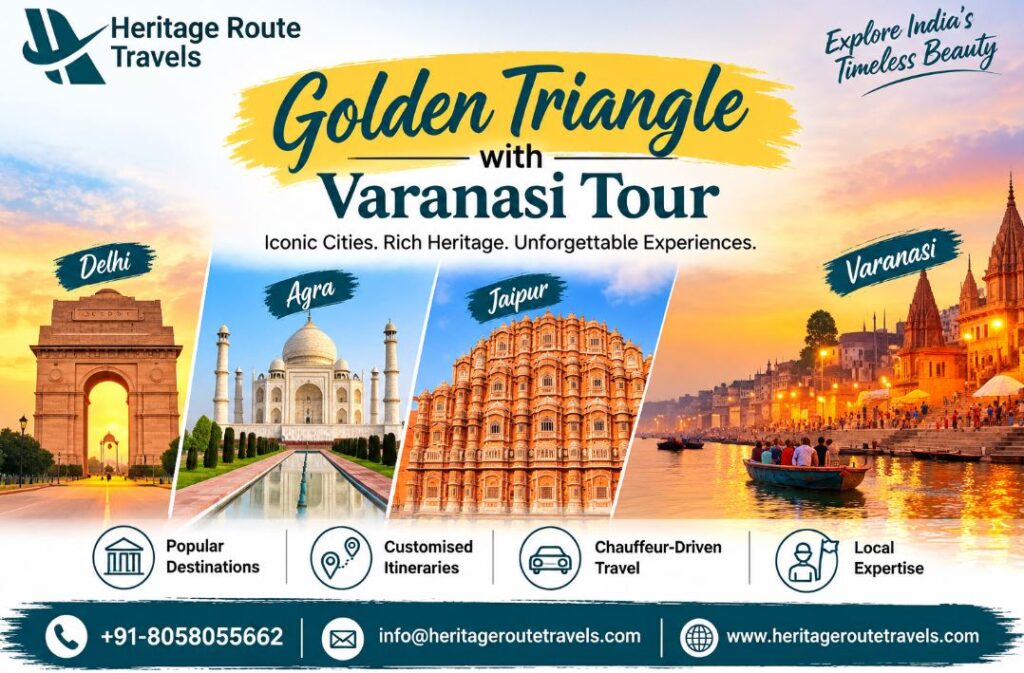
The Golden Triangle traditionally covers Delhi, Agra and Jaipur. These three cities introduce visitors to India’s historical monuments, Mughal architecture, royal heritage and colourful traditions. Adding Varanasi to the itinerary brings another dimension to the trip. Known for its ancient ghats, temples and spiritual atmosphere, Varanasi offers a closer look at India’s religious and cultural traditions.
A well-planned Golden Triangle with Varanasi Tour allows travellers to experience historic landmarks, local food, traditional lifestyles and meaningful cultural activities in one trip.
- Start Your Journey in Delhi
Delhi is usually the starting point for a Golden Triangle holiday. As India’s capital, the city has an interesting mix of historic monuments, modern buildings, busy markets and different food cultures.
Visitors can explore both Old Delhi and New Delhi to understand how the city has developed over the centuries.
Some popular attractions include:
- Red Fort: A historic Mughal fort known for its impressive red sandstone walls and architecture.
- Qutub Minar: A UNESCO World Heritage Site featuring a magnificent historic minaret.
- India Gate: A famous war memorial and an important landmark in the capital.
- Humayun’s Tomb: A beautiful Mughal-era monument surrounded by landscaped gardens.
- Jama Masjid: One of India’s largest historic mosques.
Old Delhi is also worth exploring for its traditional markets and street food. Chandni Chowk is particularly popular among visitors interested in local shopping, Indian snacks and traditional sweets.
Travellers should ideally spend two days in Delhi to explore its major attractions without rushing.
2. Experience the Beauty of Agra
Agra is the next important destination on the Golden Triangle route. The city is famous worldwide for the Taj Mahal, but it also has several other historical attractions that tell stories of the Mughal Empire.
The Taj Mahal is one of the most recognised monuments in the world. Built by Mughal Emperor Shah Jahan in memory of Mumtaz Mahal, it is admired for its white marble construction, detailed carvings and symmetrical design.
Apart from the Taj Mahal, visitors should consider exploring:
- Agra Fort: A historic red sandstone fort that served as an important Mughal royal residence.
- Mehtab Bagh: A garden offering beautiful views of the Taj Mahal across the Yamuna River.
- Itmad-ud-Daulah: A beautifully decorated marble tomb often called the Baby Taj.
- Fatehpur Sikri: A historic Mughal city known for its impressive buildings and architectural details.
An overnight stay in Agra is useful for travellers who want to visit the Taj Mahal early in the morning. The soft morning light also offers excellent photography opportunities.
3. Discover the Royal Heritage of Jaipur
Jaipur, popularly known as the Pink City, is an important destination for anyone interested in Rajasthan’s royal history. Its palaces, forts, colourful bazaars and traditional crafts make it different from Delhi and Agra.
The city was established by Maharaja Sawai Jai Singh II and is known for its planned streets and distinctive architecture.
Some of the best attractions in Jaipur include:
- Amber Fort: A magnificent hilltop fort with courtyards, gateways and detailed palace interiors.
- Hawa Mahal: A famous five-storey structure with hundreds of small windows.
- City Palace: A royal complex featuring museums, courtyards and traditional architecture.
- Jantar Mantar: A UNESCO-listed astronomical observatory.
- Jal Mahal: A picturesque palace located in the middle of Man Sagar Lake.
Jaipur is also a wonderful place to experience traditional Rajasthani culture. Visitors can explore Johari Bazaar and Bapu Bazaar for jewellery, textiles, handicrafts and souvenirs.
Food is another important part of the Jaipur experience. Travellers can try local dishes such as dal baati churma, gatte ki sabzi and traditional Rajasthani sweets.
Two days in Jaipur are generally suitable for visiting the main attractions and enjoying the local atmosphere.
4. Continue Towards the Spiritual City of Varanasi
After exploring the historical cities of the Golden Triangle, travelling to Varanasi offers a completely different experience.
Located on the banks of the River Ganga in Uttar Pradesh, Varanasi is one of India’s oldest continuously inhabited cities. It is an important centre of Hindu religious traditions and attracts pilgrims, photographers, historians and international visitors throughout the year.
The city’s narrow lanes, old buildings, temples and riverside ghats create a distinctive atmosphere.
One of the most memorable experiences is visiting the ghats along the Ganges. These steps leading down to the river are used for religious ceremonies, prayers, bathing and everyday activities.
Travellers can also explore local markets, traditional silk shops and small eateries to understand the city’s everyday lifestyle.
Varanasi is best experienced at a relaxed pace. Spending two or three days here gives visitors enough time to explore its major attractions and cultural traditions.
5. Top Places to Visit in Varanasi
Varanasi has many interesting places that offer insight into its religious, historical and cultural importance.
Dashashwamedh Ghat
Dashashwamedh Ghat is among the most famous ghats in Varanasi. It is particularly known for the evening Ganga Aarti, a religious ceremony performed by priests with lamps, chants and devotional music.
Visitors can watch the ceremony from the ghat steps or from a boat on the river. Arriving early is helpful because the area becomes crowded.
Kashi Vishwanath Temple
Assi Ghat is popular for its peaceful morning atmosphere, river views and cultural activities. It is a pleasant place to enjoy a morning walk or observe daily life along the Ganges.
Sarnath
Located a short drive from Varanasi, Sarnath is an important Buddhist pilgrimage destination. It is traditionally recognised as the place where Gautama Buddha delivered his first sermon after attaining enlightenment.
The Dhamek Stupa, archaeological remains and Sarnath Museum make it an interesting visit for travellers interested in Buddhist history.
- Experiences That Make Varanasi Special
A visit to Varanasi is not only about sightseeing. The city offers several cultural experiences that help visitors understand its traditions.
Early Morning Boat Ride
A boat ride on the Ganges around sunrise is one of the most memorable activities. From the river, visitors can see the ghats, temples and daily religious activities from a different perspective.
Attend the Ganga Aarti
The evening Ganga Aarti is an important religious ceremony. The sound of bells, devotional chants and glowing lamps creates a memorable atmosphere.
Explore Traditional Markets
Varanasi is famous for its Banarasi silk sarees and traditional weaving. Visiting local shops provides an opportunity to learn about the city’s textile heritage.
Taste Local Food
Travellers can try popular local dishes and snacks, including kachori sabzi, tamatar chaat, lassi and Banarasi sweets. Choosing clean and well-reviewed food establishments is advisable.
- Best Time to Plan a Golden Triangle and Varanasi Holiday
The best time for most travellers to visit Delhi, Agra, Jaipur and Varanasi is between October and March.
During these months, the weather is generally more comfortable for sightseeing and outdoor activities.
- October to November: Pleasant weather and suitable conditions for exploring historical attractions.
- December to February: Cooler temperatures, especially in the mornings and evenings. Fog can sometimes affect road and train journeys.
- March: A good period for sightseeing before the summer heat becomes intense.
- April to June: Temperatures can become very high, particularly in Delhi, Agra and Jaipur.
- July to September: The monsoon season brings rainfall and higher humidity, but the landscapes can look greener.
Travellers planning to attend major festivals should check the local calendar because events can affect accommodation availability and sightseeing arrangements.
- Suggested Golden Triangle with Varanasi Tour Itinerary
A 9 to 10-day itinerary is a practical option for exploring all four destinations.
| Day | Travel Plan |
| Day 1 | Arrive in Delhi and relax |
| Day 2 | Explore Old and New Delhi |
| Day 3 | Drive from Delhi to Agra and visit Agra Fort |
| Day 4 | Visit the Taj Mahal and travel to Jaipur |
| Day 5 | Explore Jaipur’s forts and palaces |
| Day 6 | Travel to Varanasi |
| Day 7 | Explore Varanasi ghats and attend Ganga Aarti |
| Day 8 | Visit Sarnath and local markets |
| Day 9 | Enjoy additional sightseeing or free time |
| Day 10 | Departure |
The Delhi-Agra-Jaipur section can be covered by private vehicle. For the Jaipur-to-Varanasi transfer, travellers can consider flights or trains depending on their schedule and preferences. A flight is generally the more time-efficient option.
- Useful Travel Tips for International Visitors
A little preparation can make this multi-city holiday more comfortable.
- Book hotels and transport in advance, particularly during the winter tourist season.
- Carry comfortable walking shoes for exploring forts, temples and old streets.
- Keep some local currency for small purchases and tips.
- Respect local customs when visiting religious places.
- Wear modest clothing at temples and other religious sites.
- Follow photography restrictions at monuments and temples.
- Keep some flexibility in your itinerary for traffic and transport delays.
- Choose licensed guides for detailed historical and cultural information.
Varanasi can be crowded, especially around popular ghats and temples. Travellers should also remain aware of their belongings and follow local safety advice.
- Plan Your Holiday with Heritage Route Travels
Planning a multi-city holiday in India requires attention to transport, hotel locations, sightseeing schedules and travel time. This becomes particularly important when the itinerary includes both the Golden Triangle cities and Varanasi.
Heritage Route Travels is a Jaipur-based India Tour Operator offering private and customised India tour packages for international travellers. The company specialises in Golden Triangle and Rajasthan holidays, with flexible arrangements and chauffeur-driven travel.
Travellers can plan their Delhi, Agra and Jaipur sightseeing before adding Varanasi to the itinerary. The route, accommodation and transfers can be arranged according to individual interests, available time and travel preferences.
Conclusion
A holiday combining Delhi, Agra, Jaipur and Varanasi offers a rewarding introduction to India’s history, architecture and spiritual traditions. From the Taj Mahal and Amber Fort to the ancient ghats of Varanasi, every destination brings a different experience.
The Golden Triangle with Varanasi Tour is particularly suitable for international visitors who want to explore India’s famous historical attractions while also understanding its cultural and religious heritage. With a comfortable itinerary and proper planning, this trip can become a memorable experience.