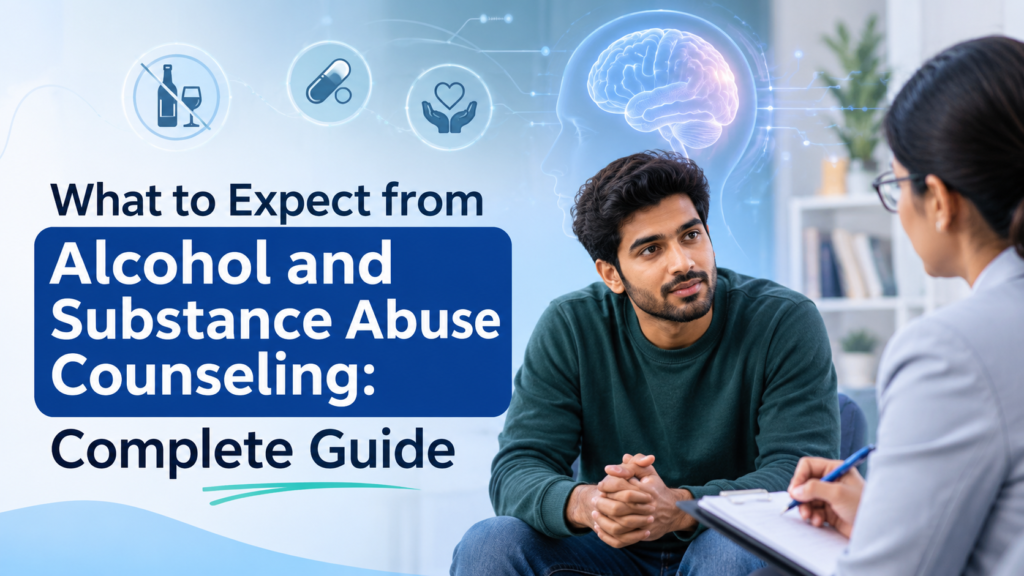
Seeking help for alcohol or substance use can feel uncomfortable, especially when you are unsure what happens during counselling. You may worry about being judged, sharing personal details, or losing control over decisions about your recovery. Family members may also struggle to understand how professional support works or how to encourage someone to seek help.
The good news is that counselling provides a structured, supportive space to understand substance use patterns, explore underlying challenges, and develop healthier ways to cope. Alcohol and substance abuse counseling is not about blaming someone for their behaviour. It focuses on identifying problems, building motivation, managing triggers, and creating realistic steps towards recovery.
For people balancing work, family responsibilities, or life abroad, online therapy India services can also make professional mental health support more accessible. Understanding the process can help you approach your first session with greater confidence.
What Happens During Alcohol and Substance Abuse Counselling?
A counselling session usually begins with an open conversation about your current situation. A qualified mental health professional may ask about your substance use history, emotional well-being, relationships, work responsibilities, and previous attempts to change your habits.
The purpose is to understand the complete picture rather than focus only on how frequently you consume alcohol or other substances.
Depending on your circumstances, the counsellor may explore:
- How often you use alcohol or other substances.
- Situations, emotions, or people that trigger substance use.
- The impact on your physical health, relationships, and professional life.
- Previous experiences with treatment or recovery.
- Stress, anxiety, depression, or other emotional concerns.
- Your personal goals and readiness to make changes.
You do not need to have all the answers during your first appointment. Honest communication helps the professional understand your needs and recommend suitable support.
What Are the Different Stages of the Counselling Process?
Recovery is not a single conversation. It involves understanding your behaviour, developing coping skills, and maintaining positive changes over time.
1. Initial Assessment and Understanding Your Needs
The first stage involves discussing your background and identifying the challenges associated with substance use.
For example, a working professional might explain that drinking usually happens after stressful office hours. Another person may describe using substances to manage loneliness, social pressure, or difficult emotions.
A counsellor uses this information to understand possible patterns and determine whether additional medical or psychiatric assessment is needed.
2. Setting Realistic Recovery Goals
Once the initial assessment is complete, you and your counsellor can discuss achievable treatment goals.
These goals may include:
- Understanding the situations that encourage substance use.
- Developing healthier responses to stress.
- Improving communication with family members.
- Building routines that support recovery.
- Learning strategies to manage cravings.
- Reducing the risk of returning to harmful patterns.
Your goals should reflect your circumstances, clinical needs, and professional recommendations. Progress does not look identical for everyone.
3. Developing Coping and Behavioural Skills
The next stage focuses on practical skills that help you respond differently to challenging situations.
For instance, if workplace stress frequently leads to drinking, your counsellor may help you identify alternative ways to manage pressure, such as setting boundaries, practising relaxation techniques, or seeking emotional support.
These strategies can gradually help you develop healthier responses instead of relying on substances.
4. Monitoring Progress and Preventing Relapse
Recovery requires ongoing attention. Counselling sessions may involve reviewing progress, discussing setbacks, and adjusting your treatment plan.
A return to substance use does not mean that recovery is impossible. It is an important signal to reassess triggers, support systems, and treatment needs.
The goal is to learn from difficult experiences and strengthen the strategies that support long-term well-being.
Which Therapeutic Approaches Are Used in Addiction Counselling?
The approach depends on the individual’s needs, the substance involved, and the severity of the problem. A trained professional may recommend one or more evidence-informed methods.
Cognitive Behavioural Therapy (CBT)
CBT helps individuals recognise connections between their thoughts, emotions, and behaviours.
For example, someone experiencing work-related stress may believe that alcohol is the only way to relax. CBT can help examine this belief and develop healthier alternatives.
Motivational Interviewing
Not everyone feels ready to change immediately. Motivational interviewing helps individuals explore their reasons for changing, recognise personal concerns, and strengthen their motivation without pressure or judgment.
Individual Therapy
Individual therapy provides a private setting to discuss personal experiences, emotional difficulties, and substance-related challenges.
It can be particularly useful for people who find it difficult to discuss sensitive concerns in a group setting.
Family and Group-Based Support
Family involvement may help improve communication, establish healthy boundaries, and create a supportive home environment.
Group-based support can also provide opportunities to learn from people experiencing similar challenges. Participation should be based on individual preferences and treatment recommendations.
The World Health Organization recognises structured psychosocial interventions, including CBT, motivational approaches, and family-based approaches, as options in the management of alcohol dependence.
Is Online Counselling Effective for Alcohol and Substance-Related Problems?
Online counselling allows individuals to connect with mental health professionals through video or other digital communication methods.
It can be helpful for people who:
- Have demanding work schedules.
- Live in locations with limited access to specialised services.
- Prefer discussing personal concerns from a private setting.
- Live abroad and want access to suitable remote support.
- Find travelling to appointments difficult.
Through online therapy India services, individuals can explore mental health support without necessarily visiting a physical clinic.
However, online counselling is not suitable for every situation. The WHO recommends considering digitally delivered interventions while ensuring informed consent, confidentiality, privacy, security, and appropriate access to other forms of care.
People experiencing severe withdrawal symptoms, medical complications, or immediate safety concerns need urgent in-person medical assessment. Online sessions should not replace medically supervised detoxification when it is required.
What Should You Prepare Before Your First Counselling Session?
Feeling nervous before your first appointment is normal. A little preparation can make the conversation easier.
Consider the following steps:
1. Reflect on your substance use patterns. Think about when you started, how frequently you use substances, and the situations that influence your behaviour.
2. Identify your main concerns. Consider whether substance use is affecting your sleep, work, relationships, finances, or emotional health.
3. Be honest about your experiences. You do not need to hide setbacks or previous attempts to stop. Accurate information helps professionals recommend appropriate care.
4. Prepare questions. Ask about the counsellor’s qualifications, treatment approach, confidentiality practices, session frequency, and referral options.
5. Choose a comfortable environment. If attending online, find a quiet space with a reliable internet connection and enough privacy to speak openly.
Remember that the first appointment is an opportunity to understand your needs, not a test you must pass.
How Can Family Members Support Someone During Recovery?
Watching a loved one struggle with substance use can be emotionally exhausting. Family members may experience frustration, fear, confusion, or helplessness.
However, supportive communication can make it easier for someone to consider professional help.
Here are some practical ways to offer support:
- Choose the right time to talk: Avoid starting difficult conversations when the person is intoxicated or emotionally overwhelmed.
- Use supportive language: Express concern without labelling or shaming them.
- Encourage professional guidance: Explain that speaking with a counsellor can help them understand their situation.
- Establish healthy boundaries: Avoid covering up harmful behaviour or taking responsibility for another person’s recovery.
- Look after your own well-being: Family members may benefit from counselling or support groups themselves.
For example, instead of saying, “You are ruining your life,” consider saying, “I am worried about how alcohol is affecting your health, and I would like to help you find professional support.”
This approach communicates concern while respecting the person’s dignity.
When Is Medical or Specialist Treatment Necessary?
Counselling can be an important part of recovery, but some people need additional medical support.
Alcohol withdrawal can be dangerous, particularly for individuals who have developed physical dependence. Symptoms may include shaking, sweating, nausea, anxiety, and sleep difficulties. Severe withdrawal can involve seizures, hallucinations, or delirium.
If someone experiences severe withdrawal symptoms, seek emergency medical attention. Do not attempt an unsupervised detoxification.
A doctor or addiction specialist can assess withdrawal risks, evaluate physical health, and determine whether medication or supervised treatment is necessary.
The WHO supports combining psychosocial and pharmacological interventions for adults with alcohol dependence. This highlights why recovery plans should consider both psychological and medical needs.
When Should You Seek Medical Help?
Counselling is an important part of recovery, but some substance-related problems require medical attention.
Alcohol withdrawal can be dangerous, particularly for people who have developed physical dependence. Symptoms may include shaking, sweating, nausea, anxiety, and sleep difficulties. Severe withdrawal can involve seizures, hallucinations, or delirium.
If you or someone close to you experiences severe withdrawal symptoms, seek emergency medical attention immediately. Do not attempt an unsupervised detoxification.
A medical professional can assess withdrawal risks, recommend appropriate treatment, and determine whether medication, supervised detoxification, or specialist care is necessary.
If you are in India and need immediate emotional support or mental health guidance, the Government of India’s Tele-MANAS service is available free of charge, 24 hours a day, at 14416.
For a medical emergency, contact emergency services or visit the nearest hospital rather than relying on an online counselling session or helpline alone.
Why Choose Zenup Health for Online Counselling?
Taking the first step towards recovery requires trust, understanding, and appropriate professional support.
At Zenup Health, we aim to make mental health support accessible through:
- Experienced professionals: Access to counselling professionals with relevant training and experience.
- Online convenience: Attend sessions from a suitable private space.
- Flexible scheduling: Explore appointment options that fit your routine.
- Individualised support: Discuss your personal challenges and recovery goals.
- Family guidance: Explore appropriate support for loved ones affected by substance use.
- Continued care: Work on coping strategies, emotional well-being, and relapse prevention.
Our aim is to create a respectful environment where you can discuss difficult experiences and explore practical steps towards positive change.
Take the First Step Towards a Healthier Future
You do not have to wait until substance use affects every part of your life before seeking help.
Whether you are concerned about your drinking habits, struggling to control substance use, or supporting someone close to you, professional guidance can help you understand your options.
Start with an honest conversation about what you are experiencing. Explore the support available, ask questions, and take the next step at a pace that feels manageable.
Connect with Zenup Health to explore online substance abuse counselling and begin working towards a healthier relationship with yourself. Book Your session today.
Frequently Asked Questions
Q1. What happens during alcohol and substance abuse counselling?
During counselling, a professional discusses your substance use history, emotional health, personal challenges, and recovery goals. Sessions may include identifying triggers, developing coping strategies, and creating a personalised treatment plan.
Q2. How long does addiction counselling take?
The duration depends on the individual’s circumstances, substance use history, treatment goals, and progress. Some people benefit from short-term counselling, while others require ongoing psychological and medical support.
Q3. Can online counselling help with alcohol and substance abuse?
Yes. Online counselling can provide access to professional psychological support, coping strategies, and recovery guidance. However, people experiencing severe dependence or withdrawal may require medical assessment and supervised treatment.
Q4. Is addiction counselling confidential?
Professional counselling generally follows confidentiality and privacy standards. However, exceptions may apply in situations involving immediate safety risks or legal obligations. Ask your counsellor about their confidentiality policy before beginning sessions.
Q5. How can family members help someone struggling with addiction?
Family members can offer emotional support, encourage professional treatment, maintain healthy boundaries, and avoid judgment or blame. Family counselling can also improve communication and help loved ones understand the recovery process.
Q6. What happens during an online substance abuse counselling session at ZenUp Health?
You meet with a counselling professional online to discuss your substance use, emotional concerns, and personal goals. Sessions may involve identifying triggers, understanding behavioural patterns, developing coping strategies, and exploring appropriate recovery support.