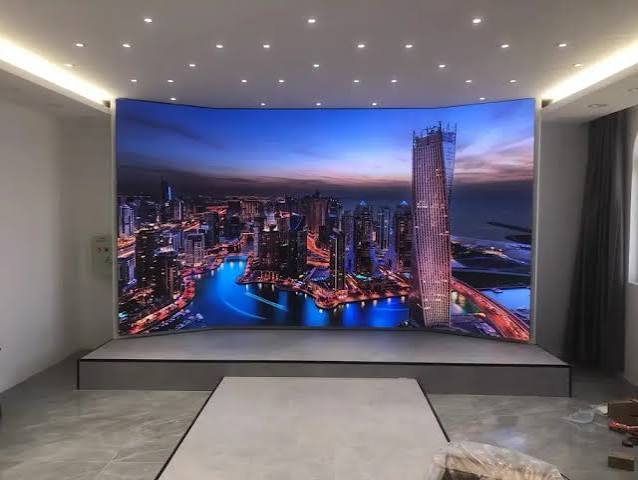
Investing in a commercial led screen is an important decision for businesses looking to improve brand visibility, attract customers, and deliver engaging digital content. Whether you are planning to install an LED billboard, a retail advertising display, or a large screen for a corporate event, understanding the overall cost is essential before making a purchase. However, LED screen pricing is not fixed because it depends on several factors, including screen size, pixel pitch, brightness, installation requirements, and display technology. By understanding these cost components, businesses can select the right LED display solution while staying within their project budget.
How Much Does a Commercial LED Screen Cost?
The cost of a commercial LED screen varies depending on its specifications, intended application, and installation environment.
For example, a small indoor LED display designed for retail advertising will generally have different pricing from a large outdoor LED billboard exposed to direct sunlight.
Some of the main factors influencing LED screen prices include:
-
Screen dimensions: Larger displays require more LED modules and supporting components.
-
Pixel pitch: Smaller pixel pitches generally cost more because they contain a higher density of LED pixels.
-
Brightness: High-brightness displays designed for outdoor environments may require more powerful components.
-
Installation complexity: Building facades, rooftops, and custom structures may involve additional engineering and installation expenses.
-
Control systems: LED processors, sending cards, receiving cards, and software contribute to the overall project cost.
Businesses should evaluate the complete project investment rather than comparing LED screen prices based on square metres alone.
7 Key Factors That Affect Commercial LED Screen Pricing
Understanding the technical specifications behind an LED display can help businesses identify why different products have different price points.
1. Pixel Pitch and Display Resolution
Pixel pitch refers to the distance between the centres of two neighbouring LED pixels, measured in millimetres.
It is one of the biggest factors affecting LED screen pricing.
A smaller pixel pitch means more pixels are packed into the same display area, producing sharper images and higher resolution.
For example:
| Pixel Pitch | Typical Application |
|---|---|
| P1.2–P1.9 | Premium indoor displays and control rooms |
| P2–P2.5 | Meeting rooms and retail displays |
| P2.9–P3.9 | Indoor advertising and event screens |
| P4–P5.9 | Commercial and outdoor displays |
| P6–P10 | Large outdoor advertising screens |
| P10–P20 | Large-format billboards |
Generally, smaller pixel pitches involve higher manufacturing costs because of their greater pixel density and more demanding production requirements.
Businesses should select pixel pitch according to viewing distance rather than automatically choosing the highest resolution available.
2. Indoor vs Outdoor LED Screen Requirements
Indoor and outdoor LED screens have different technical requirements, which influence their overall prices.
Indoor LED displays are designed for controlled lighting environments and typically operate around 600–1,500 nits. They are commonly used in shopping malls, retail stores, corporate offices, and conference rooms.
Outdoor LED displays generally require approximately 5,000–8,000+ nits to remain visible under bright daylight conditions.
Outdoor models may also require stronger cabinets, weather-resistant components, and additional protection against dust, rain, and humidity.
As a result, outdoor LED installations may involve additional costs compared with similar-sized indoor displays.
3. Screen Size and Dimensions
The physical dimensions of an LED screen directly affect its total cost.
A larger display requires more LED modules, power supplies, cabinets, structural support, and installation work.
For example, a 3m × 2m LED display covers 6 square metres, while a 6m × 4m display covers 24 square metres.
The second display requires four times the screen area, although the final project price may not increase at exactly the same rate because of fixed costs, configuration, and volume pricing.
Businesses should determine their ideal screen dimensions based on available installation space and audience viewing distance.
4. LED Technology and Product Quality
Different LED technologies offer different levels of performance, durability, and image quality.
Common technologies include:
-
SMD LED: Surface-mounted LED technology commonly used in indoor and outdoor commercial displays.
-
COB LED: Chip-on-board technology that integrates LED chips onto a substrate, often used in fine-pitch indoor applications.
-
GOB LED: Glue-on-board technology that adds a protective surface layer to improve resistance to impact and environmental exposure.
The choice of technology can affect manufacturing costs, maintenance requirements, and overall display performance.
Businesses should compare product specifications, warranty coverage, and expected operating lifespan before making a decision.
5. Brightness and Energy Consumption
Brightness is another important consideration when comparing commercial LED screen prices.
A display designed for direct sunlight requires higher brightness output than one installed inside a shopping mall.
However, higher brightness can also increase electricity consumption, depending on the LED technology, content, and operating settings.
Modern LED displays may include automatic brightness adjustment, which uses ambient light sensors to regulate screen output.
This feature can help reduce unnecessary power consumption while maintaining suitable visibility throughout the day.
6. Installation and Structural Requirements
Installation costs are often overlooked when businesses compare LED screen quotations.
Depending on the project, additional installation requirements may include:
-
Steel structures and mounting frames.
-
Wall mounting or ceiling suspension systems.
-
Electrical wiring and power distribution.
-
Lifting equipment and installation machinery.
-
Cabling and signal transmission systems.
-
Site preparation and safety arrangements.
For rooftop billboards or building-mounted LED displays, structural assessments may also be necessary to ensure the installation can safely support the screen.
A professional site inspection helps identify these requirements before the project begins.
7. LED Control Systems and Software
Commercial LED displays require suitable control systems to manage the content shown on the screen.
These systems may include LED video processors, sending and receiving cards, media players, and content management software.
Depending on the application, businesses may require features such as:
-
Remote content management.
-
Scheduled advertising campaigns.
-
Real-time content updates.
-
Video and image playback.
-
Multi-screen content management.
-
Cloud-based digital signage control.
More advanced control requirements may increase the initial investment but can improve operational efficiency, especially for businesses managing multiple displays.
Understanding the Different Types of Commercial LED Screen Costs
When planning an LED display project, businesses should separate the costs into several categories.
| Cost Component | What It Covers |
|---|---|
| LED display panels | LED modules and display cabinets |
| Control equipment | Processors, sending cards and receiving cards |
| Supporting structure | Mounting frames and steel structures |
| Installation | Labour, equipment and site preparation |
| Electrical system | Wiring, power distribution and protection |
| Software | Content management and display control |
| Maintenance | Repairs, replacement parts and servicing |
Not every project requires all these components.
For example, a business purchasing a small indoor LED display may have relatively straightforward installation requirements. However, a large outdoor billboard could require structural engineering, lifting equipment, electrical work, and additional safety measures.
When comparing quotations, businesses should check whether these components are included or charged separately.
Indoor vs Outdoor LED Screen: Which Offers Better Value?
Choosing between indoor and outdoor LED screens depends on the intended application rather than simply selecting the cheaper option.
| Consideration | Indoor LED Screen | Outdoor LED Screen |
|---|---|---|
| Brightness | 600–1,500 nits | 5,000–8,000+ nits |
| Environment | Controlled indoor lighting | Sunlight and weather exposure |
| Common Pixel Pitch | P1.2–P3.9 | P3.9–P10+ |
| Protection | Indoor cabinet design | Weather-resistant construction |
| Applications | Retail, offices, events | Billboards, facades, outdoor advertising |
Indoor LED displays are suitable for businesses looking to communicate with customers inside commercial premises.
Outdoor LED displays are more appropriate for advertising campaigns that need to reach larger audiences in public spaces.
The best investment depends on where the display will operate and the type of audience the business wants to reach.
How to Calculate the Estimated Cost of an LED Screen Project
Businesses can begin estimating their LED screen budget by calculating the required display area.
Basic formula:
LED Screen Area = Screen Width × Screen Height
For example, consider a commercial LED display measuring 5 metres wide and 3 metres high.
-
Screen width: 5 metres.
-
Screen height: 3 metres.
-
Total display area: 15 square metres.
If the supplier provides a quotation based on a per-square-metre display rate, the initial panel cost can be estimated as:
Estimated Panel Cost = Screen Area × Quoted Price per Square Metre
However, this is only an initial estimate. The final quotation should also include control equipment, installation, structural requirements, electrical work, transportation, and other project-specific expenses.
Businesses should request an itemised quotation to understand the complete investment.
5 Tips to Reduce Your Commercial LED Screen Investment
Getting the best value does not necessarily mean choosing the cheapest LED screen.
Here are five practical ways businesses can manage their LED display budgets.
1. Select the Right Pixel Pitch
Avoid purchasing an ultra-fine-pitch display when the audience will view the screen from a considerable distance. Matching pixel pitch to viewing distance can help reduce unnecessary costs.
2. Choose the Appropriate Screen Size
A larger screen may attract more attention, but it also requires more materials and installation work. Determine the screen dimensions based on the available space and advertising objectives.
3. Compare Multiple LED Screen Quotations
Request quotations from different suppliers and compare specifications, warranties, installation services, and technical support rather than looking at the total price alone.
4. Consider Long-Term Maintenance
A low-cost display may become more expensive over time if it requires frequent repairs or replacement components. Review product quality, warranty terms, and maintenance arrangements.
5. Work With an Experienced LED Screen Supplier
An experienced supplier can recommend suitable specifications, identify potential installation challenges, and help businesses avoid unnecessary expenditure.
Why Choosing the Right LED Screen Supplier Matters
The supplier you choose can have a significant impact on the success of your commercial LED display project.
Beyond supplying display panels, a professional LED screen supplier should understand technical requirements, installation planning, content management, and after-sales support.
Businesses should evaluate several important considerations before selecting a supplier:
-
Product quality: Check the LED components, cabinet construction, brightness, and refresh rate.
-
Project experience: Review previous installations and relevant commercial projects.
-
Technical consultation: Ensure the supplier can recommend suitable specifications based on your requirements.
-
Warranty and maintenance: Understand the warranty coverage and availability of replacement parts.
-
After-sales support: Confirm that technical assistance is available when problems occur.
A reliable supplier helps ensure that the LED display performs as expected throughout its operational lifespan.
Conclusion: Invest in the Right Commercial LED Screen for Your Business
The cost of a commercial LED screen depends on several factors, including pixel pitch, screen dimensions, brightness, technology, installation complexity, and control systems.
Rather than choosing a display based solely on its initial price, businesses should evaluate the complete project requirements and long-term operating costs.
A properly selected LED display can improve advertising visibility, strengthen brand communication, and provide a flexible platform for delivering digital content.
Whether you need an indoor advertising display, an outdoor billboard, or a large-format commercial installation, choosing the right specifications and supplier is essential.