Food is more than just a source of energy. It provides essential nutrients that help our bodies function properly and maintain good health. While we often focus on eating enough food, we sometimes overlook an equally important question: Are we getting the right vitamins and minerals from our daily diet?
Vitamins and minerals, also known as micronutrients, are needed in small amounts but play a major role in supporting immunity, bone health, energy metabolism and other important body functions. Understanding their importance is the first step towards making better food choices and improving everyday nutrition.
Why Do Our Bodies Need Vitamins and Minerals?
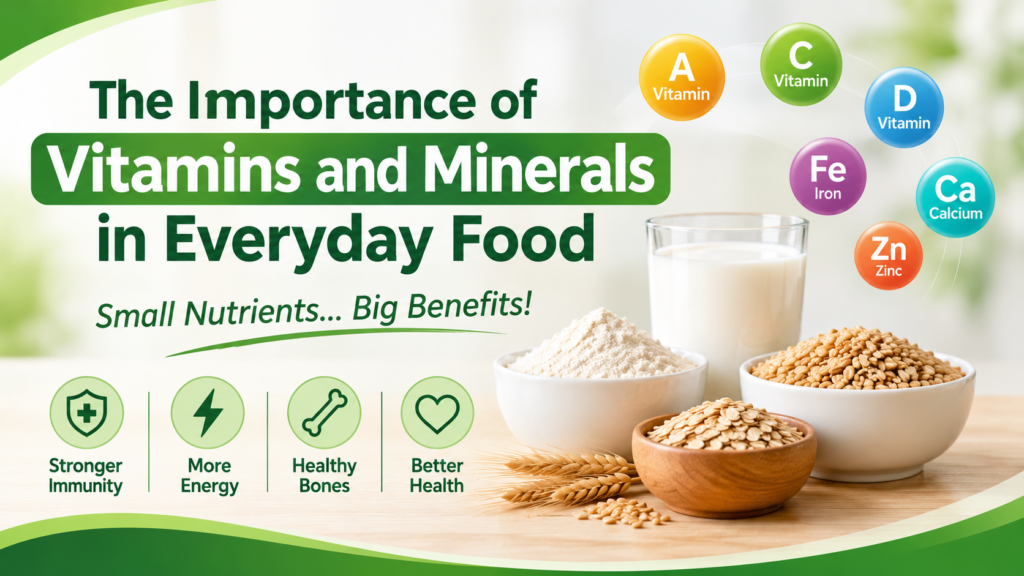
Vitamins and minerals are essential micronutrients that help the body perform several important functions. For example:
- Vitamin A supports normal vision and immune function.
- Vitamin C helps with collagen formation and supports the immune system.
- Vitamin D helps the body absorb calcium and maintain healthy bones.
- Iron helps in the formation of haemoglobin, which carries oxygen in the blood.
- Zinc supports normal immune function and wound healing.
- Calcium is important for maintaining strong bones and teeth.
Each nutrient has a different role, which is why a balanced diet is important.
Why Are Nutritional Gaps a Concern?
Even when people eat regular meals, their diets may not always provide all the essential vitamins and minerals. Factors such as limited food variety, poor dietary habits and low consumption of nutrient-rich foods can contribute to nutritional gaps. Over time, insufficient intake of certain micronutrients can affect normal body functions. This makes nutritional awareness and access to balanced food important.
If you want to know more about nutritional gap visit our blog: The Hidden Nutritional Gap: What Your Body Needs vs What You Actually Eat
How Can Food Fortification Help?
Food fortification is one approach used to improve the nutritional value of commonly consumed food products. It involves adding selected vitamins and minerals to foods during manufacturing. Some common examples include:
- Iron and folic acid fortified wheat flour
- Vitamin A and D fortified edible oil
- Vitamin D fortified milk
- Micronutrient fortified rice
Food fortification helps increase access to essential nutrients through everyday food choices. It is also an important strategy for addressing specific nutrient deficiencies at the population level.
Understanding the Role of Micronutrient Premixes
Micronutrient premixes are combinations of vitamins and minerals developed for specific food applications. Food manufacturers use these premixes to add selected nutrients to their products in appropriate quantities. The formulation depends on the food product, processing conditions, nutritional requirements and applicable standards.
Proper formulation, accurate dosing and quality testing are important to maintain consistency and nutritional quality in fortified foods.
Companies like AQC Chem Lab provide micronutrient premixes and customized food fortification solutions to support food manufacturers in developing nutritionally improved products.
Small Steps Towards Better Nutrition
Maintaining good nutrition starts with everyday food choices. Eating a variety of fruits, vegetables, whole grains, pulses and other nutrient-rich foods can help provide essential nutrients.
At the same time, food fortification can support better access to important vitamins and minerals, especially where common dietary gaps exist.
Conclusion
Vitamins and minerals may be required in small amounts, but their role in maintaining good health is significant. Understanding their importance helps us make better food choices and appreciate the need for nutritional quality in everyday foods.
With growing awareness about nutrition, food fortification and quality micronutrient premixes can play an important role in making commonly consumed foods more nutritious.
For more information about micronutrient premixes and food fortification solutions, visit AQC Chem and contact on this number +91-99207 79504.