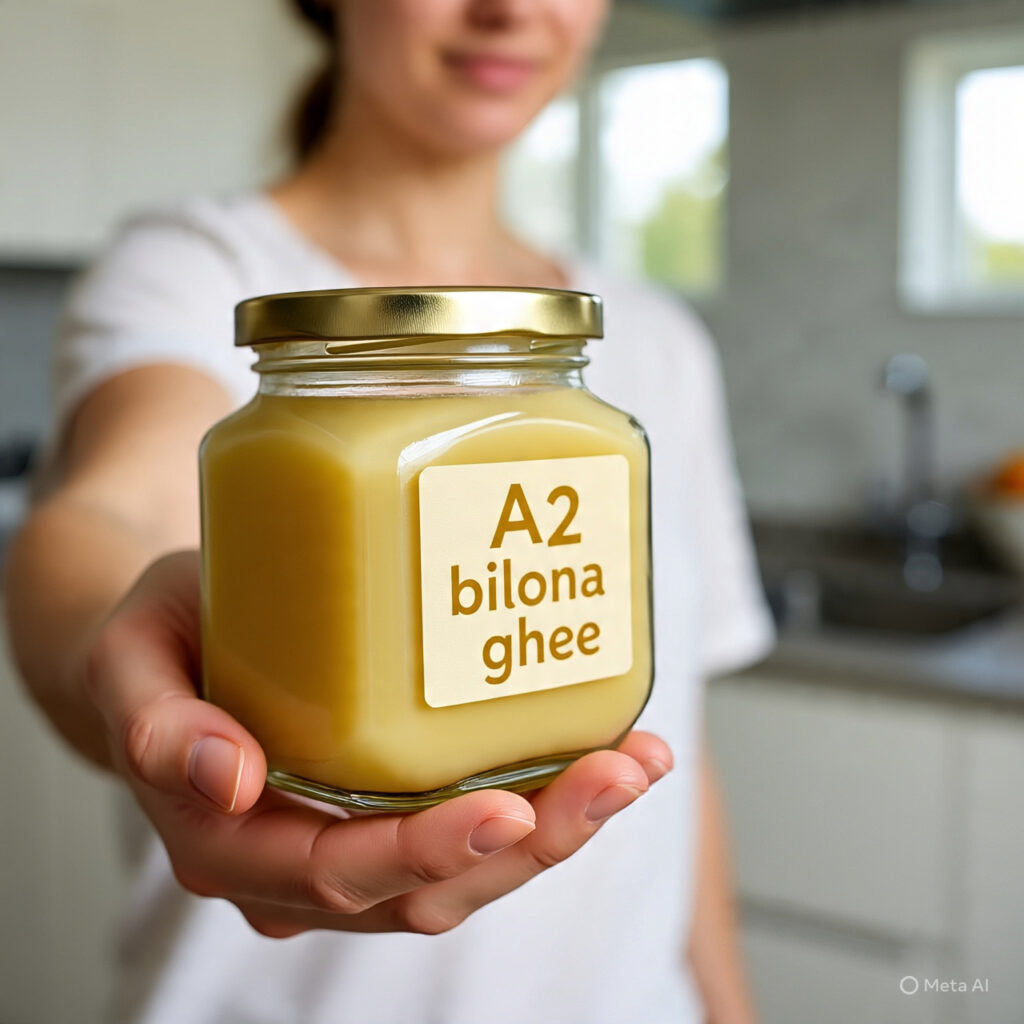
What is A2 Bilona Ghee, and how is it Made Using the Bilona Method?
A2 bilona ghee is prepared from the milk of indigenous cows that naturally produce A2 beta-casein protein. The bilona method is a time-honoured, traditional approach that involves curd-setting the milk, churning it slowly with a wooden churner (bilona), and then heating the obtained butter on a gentle flame to separate the golden ghee.
This process is rooted in traditional ghee preparation, where patience and care are key. Unlike modern industrial methods, the bilona process is entirely manual or semi-manual, focusing on preserving the natural character of the milk.
How Does the Bilona Method Preserve Nutrients Compared to Modern Processing?
While modern ghee-making often uses direct cream separation and high-heat processing, the bilona method is slower and gentler. This slow heating is believed to help retain more of the natural properties of the milk fat. The gradual churning allows the milk solids and fat to separate naturally without the need for extreme heat or additives.
By avoiding aggressive processing, the bilona method ghee typically maintains its natural aroma, flavour, and texture in a way that many feel is closer to its original, farm-fresh form.
Why is A2 Bilona Ghee Preferred in Daily Cooking?
In cooking, A2 bilona ghee is valued for its sattvic (pure) quality. Ayurveda often emphasises the importance of foods prepared in harmony with nature, and the bilona process fits this philosophy. The method is believed to align with the principles of balance, making it suitable for a variety of traditional recipes like khichdi, dal tadka, or halwa.
Ayurvedic texts often describe ghee as a cooking medium that complements spices, enhances flavours, and supports digestion when consumed mindfully. In this context, bilona ghee is seen as an authentic choice for preserving traditional culinary practices.
Taste and Texture: Bilona Ghee vs Regular Ghee
One of the most noticeable differences between bilona ghee and regular ghee is the taste. Bilona ghee often has a richer, nuttier flavour and a grainy texture that many people associate with high-quality traditional ghee.
Regular ghee, especially when made at scale, may have a smoother texture and lighter flavour due to faster production methods. Both have their place in kitchens, but bilona ghee often appeals to those seeking a deeper, more robust taste experience.
When comparing A2 bilona ghee with regular ghee, the decision often comes down to tradition, flavour preference, and cooking style. If you value artisanal preparation and the connection to bilona ghee is worth exploring. For those who prioritise convenience or cost, regular ghee might be the go-to.
If you’re curious about the depth of flavour and tradition that the bilona method brings, try incorporating it into your daily meals and see how it transforms your cooking experience.