Introduction
Anxiety rarely arrives loudly. Sometimes it shows up as racing thoughts before sleep, a tight chest during ordinary conversations, or a constant feeling that something might go wrong. Many people live with this quiet tension every day — managing work, relationships, and responsibilities while feeling mentally exhausted inside. As technology becomes more integrated into daily life, a new question naturally arises: can AI help with anxiety, or is it just another digital distraction?
In recent years, artificial intelligence has entered the mental wellness space through chatbots, meditation apps, and AI-powered therapy tools. For people who struggle to open up or cannot easily access professional help, these tools feel approachable and available. But can technology truly understand human emotions? And more importantly, can it actually support mental health in a meaningful way? Let’s explore both the possibilities and the limitations with honesty and balance.
What Is Anxiety and Why Is It So Common Today?
Anxiety is more than occasional worry. It is the body’s natural response to perceived threat, but in modern life, that response often stays switched on longer than necessary. Constant notifications, work pressure, financial stress, and social comparison can keep the nervous system in a state of alertness.
Common symptoms include restlessness, overthinking, difficulty concentrating, sleep disturbances, and physical tension. Many people also experience emotional fatigue or a feeling of being mentally overwhelmed without knowing why.
Today’s fast-paced environment makes anxiety increasingly common. The mind rarely gets uninterrupted rest, and emotional processing often gets pushed aside. This is where mental wellness tools — including AI-based solutions — are beginning to play a supportive role alongside traditional approaches.
Can AI Help With Anxiety?
AI cannot feel emotions, but it can be designed to respond in supportive and structured ways. When used correctly, it can offer guidance, reflection, and coping tools that reduce emotional intensity in difficult moments.
AI Chatbots for Emotional Support
AI chatbots are designed to simulate conversation and provide emotional support through guided responses. For many users, the biggest benefit is psychological safety — there is no fear of judgment or embarrassment. People often express thoughts more openly when they feel they are not being evaluated.
These tools can help users identify emotional patterns, challenge negative thinking, and encourage calming exercises. While they do not replace human connection, they can act as a first step toward emotional awareness.
👉 If anxiety causes constant rumination, explore our guide on Overthinking and Anxiety.
AI Therapy Apps and CBT-Based Tools
Many AI therapy apps are based on principles of Cognitive Behavioral Therapy (CBT), a widely used psychological approach for anxiety management. These tools help users recognize thought distortions, track mood changes, and practice healthier thinking patterns.
AI makes these exercises interactive and consistent. Instead of waiting for weekly sessions, users can practice coping techniques daily. Over time, this repetition can help reduce automatic negative thinking and improve emotional regulation.
AI for Mindfulness and Meditation
Mindfulness apps powered by AI personalize meditation recommendations based on mood, sleep patterns, or stress levels. Guided breathing exercises, relaxation techniques, and grounding practices help calm the nervous system.
For people who struggle to sit still or quiet their thoughts, structured guidance can make mindfulness more accessible and less intimidating. Small, consistent practices often create noticeable changes in anxiety levels.
👉 You may also read about Emotional Awareness to better understand your triggers.
24/7 Support Without Judgment
One of AI’s strongest advantages is availability. Anxiety does not follow office hours, and difficult emotions often surface late at night or during moments of isolation. AI tools provide immediate responses when someone needs reassurance or grounding support.
This constant accessibility can reduce feelings of loneliness and help individuals pause before anxiety escalates further.
👉 Learn coping tools in Stress, Burnout & Work Pressure.
Benefits of Using AI for Anxiety Support
AI-based anxiety support offers several practical advantages:
Accessibility: People in remote areas or those hesitant to seek therapy can access support instantly.
Affordability: Many AI tools cost less than traditional therapy, making mental health resources more inclusive.
Immediate response: Anxiety often requires timely reassurance. AI tools respond instantly without waiting periods.
Emotional expression without fear: Some individuals find it easier to express vulnerable thoughts when there is no perceived judgment.
These benefits make AI a useful companion for everyday emotional regulation, especially for mild to moderate anxiety.
Limitations of AI in Mental Health
Despite its usefulness, AI has clear limitations that should not be ignored.
AI cannot replace licensed therapists or human empathy. It lacks lived experience and cannot fully understand complex emotional histories or trauma. Severe anxiety disorders, panic attacks, or depression require professional assessment and personalized treatment.
AI responses are also pattern-based, which means they may miss subtle emotional cues or deeper psychological concerns. Relying entirely on AI may delay seeking necessary human support.
The healthiest approach is viewing AI as a tool — not a substitute for care.
When Should You Seek Professional Help?
If anxiety begins interfering with sleep, work, relationships, or daily functioning, professional help is important. Persistent panic, avoidance behaviors, or feelings of hopelessness are signs that structured therapy may be needed.
Seeking help is not a failure; it is an act of self-awareness. AI can help you reflect and prepare, but licensed mental health professionals provide deeper emotional understanding, diagnosis, and treatment plans tailored to your needs.
How to Use AI Safely for Anxiety Management
To use AI responsibly for mental wellness:
Treat AI as a supplement, not a replacement for therapy
Combine AI tools with journaling or self-reflection
Avoid depending on AI for major emotional decisions
Choose trusted and privacy-focused platforms
Take breaks from digital tools when needed
Balance is key. Technology should support mental health, not become another source of dependence.
Conclusion
So, can AI help with anxiety? The answer is yes — but with realistic expectations. AI can provide guidance, structure, and immediate emotional support, especially during moments when human help is not available. It can encourage mindfulness, help organize thoughts, and make mental health tools more accessible than ever before.
However, anxiety is deeply human, and healing often involves connection, understanding, and compassion that technology alone cannot provide. When used mindfully, AI becomes a supportive companion rather than a replacement for real care.
If you choose to use AI for anxiety support, do so gently and intentionally. Your mental health journey does not need perfection — only small, consistent steps toward understanding yourself better.
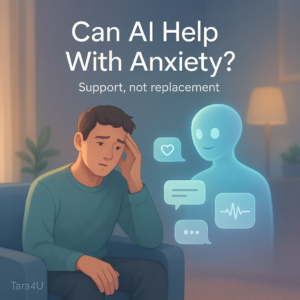
This illustration invites reflection on how AI might support emotional wellness — not as a substitute for care, but as a gentle companion in moments of overwhelm.
Let’s explore the possibilities: partnership, not dependency.