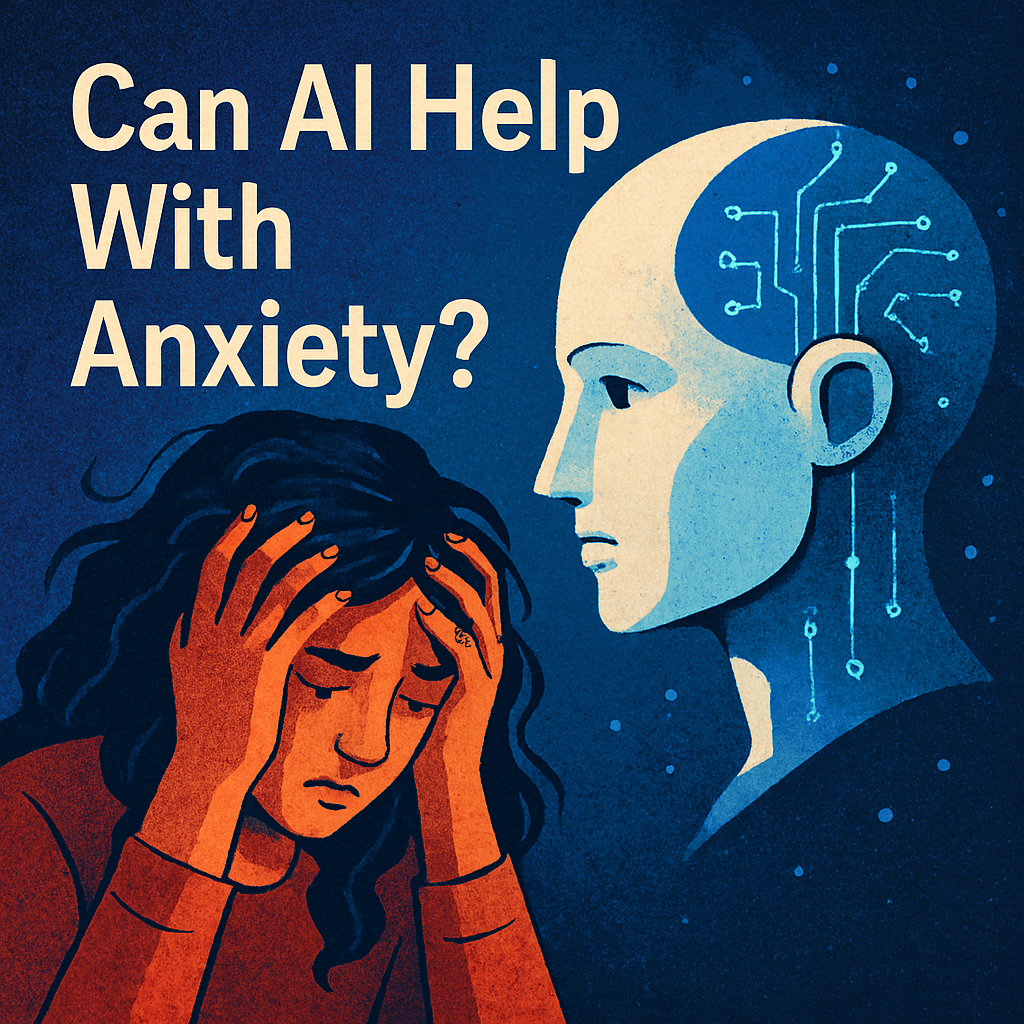
Can artificial intelligence offer comfort in moments of emotional overwhelm? This visual explores the intersection of mental health and machine learning — where empathy meets innovation.
Introduction
You wake up feeling tired, but your mind is already racing.
Maybe you’re replaying conversations from yesterday. Maybe you’re imagining worst-case scenarios about something small. Your thoughts keep looping, and even though nothing terrible is happening, your chest feels tight and your mind refuses to slow down.
This is what anxiety often feels like for many people.
In today’s fast-paced digital world, anxiety has become increasingly common. Constant notifications, social comparison, work pressure, and endless information can overwhelm the mind. As a result, many people are looking for new ways to manage their emotions and find calm.
This is where technology enters the conversation. Many people are now asking a new question: can AI help with anxiety?
Artificial intelligence is no longer limited to automation or data analysis. Modern AI mental health tools are designed to provide emotional check-ins, guided exercises, and supportive conversations that help users better understand their thoughts and feelings.
While AI is not a replacement for professional therapy, it is becoming an accessible form of digital therapy support that can help people build healthier emotional habits.
Why Anxiety Is So Common Today
Anxiety is not a new condition, but modern life has created an environment where it can thrive.
Several everyday factors contribute to rising anxiety levels.
1. Constant Stress
Work deadlines, financial concerns, and personal responsibilities can create continuous mental pressure. When stress becomes constant, the brain remains in a state of alertness, making relaxation difficult.
2. Overthinking
Many people struggle with repetitive thinking patterns. Thoughts replay again and again, creating a cycle that intensifies anxiety instead of resolving it.
3. Digital Overload
The internet exposes us to more information than our minds can comfortably process. Social media comparisons, news updates, and online expectations can quietly increase emotional tension.
4. Emotional Pressure
People often feel pressure to appear happy, successful, or emotionally stable. When someone feels anxious but believes they must hide it, their emotional stress may increase.
Because of these factors, many individuals are now exploring modern anxiety support technology to help manage daily emotional challenges.
How AI Is Changing Mental Health Support
Artificial intelligence is beginning to transform how people interact with mental health support systems.
Unlike traditional therapy that usually requires scheduled appointments, AI tools can provide support whenever users need it.
AI Chat Companions
AI chat companions simulate conversation to help users express their thoughts. These systems use natural language processing to understand emotional patterns and respond in supportive ways.
Many people find it easier to open up to an AI companion because it offers a private, judgment-free environment where they can safely express their emotions.
Emotional Pattern Tracking
Some AI systems analyze mood patterns over time. By tracking emotions, sleep habits, and thought patterns, users can begin to recognize triggers that contribute to anxiety.
This awareness helps people better understand their mental state.
Guided Mental Exercises
AI tools often include structured activities such as:
- breathing exercises
- grounding techniques
- reflection prompts
- journaling guidance
These practices help calm the nervous system and shift attention away from anxious thinking.
Platforms offering these features are often integrated into a modern mental health app designed to make emotional care more accessible.
Can AI Really Help With Anxiety?
The real question many people ask is whether artificial intelligence can truly support emotional wellbeing.
The answer is nuanced.
AI cannot replace professional therapy or human empathy. However, it can provide helpful emotional support in several ways.
Emotional Reflection
AI tools encourage users to pause and reflect on their feelings. Simply putting emotions into words can reduce mental pressure and bring clarity.
Guided Coping Strategies
Many AI systems suggest practical coping strategies such as breathing exercises, grounding techniques, or mindfulness prompts.
These small actions can interrupt anxious thought loops and help regulate emotions.
24/7 Availability
Unlike traditional therapy sessions, AI systems are available anytime. Anxiety often appears unexpectedly, and immediate access to support can make a difference.
Judgment-Free Conversations
Some individuals hesitate to share their worries with others because they fear judgment or misunderstanding. AI platforms create a safe space where people can speak openly.
Because of these features, many users find value in AI-powered tools such as AI therapy, which offers structured digital support for emotional wellbeing.
Benefits of Using AI for Anxiety Support
AI mental health tools provide several advantages that make them attractive for individuals managing anxiety.
• Instant Emotional Support
AI systems are available at any time, allowing users to check in whenever anxious thoughts arise.
• Privacy and Comfort
Many people feel more comfortable discussing sensitive emotions privately through digital tools.
• Accessibility
Not everyone has immediate access to therapy due to cost, location, or scheduling barriers. AI tools help bridge this gap.
• Self-Awareness Tools
AI platforms often provide insights about mood patterns, helping users understand emotional triggers and behaviors.
• Encouraging Mindfulness
Many digital platforms include guided exercises that promote relaxation and self-reflection. Tools focused on emotional wellness can help individuals develop healthier mental habits over time.
Limitations of AI Mental Health Tools
While AI offers promising support, it is important to understand its limitations.
AI Cannot Replace Human Therapists
Artificial intelligence lacks human intuition, empathy, and clinical expertise. Licensed therapists are trained to diagnose, treat, and guide individuals through complex emotional challenges.
Not Suitable for Severe Conditions
People experiencing severe anxiety, panic attacks, trauma, or mental health crises require professional care.
AI Works Best as a Support Tool
AI is most effective when used as a complementary resource. It can assist with emotional awareness, daily check-ins, and coping strategies, but it should not replace professional mental health care.
When Should You Seek Professional Help?
While AI tools can support emotional wellbeing, there are times when professional guidance is essential.
Consider seeking help from a mental health professional if:
- anxiety interferes with daily life
- panic attacks occur frequently
- sleep problems persist
- you feel overwhelmed or hopeless
- anxious thoughts become uncontrollable
Therapists, psychologists, and counselors provide structured treatment approaches that AI cannot replicate.
Recognizing when to seek help is a powerful step toward protecting your mental health.
Conclusion
Anxiety is a deeply human experience. It affects thoughts, emotions, and physical wellbeing in ways that can feel overwhelming at times.
As technology evolves, new forms of support are becoming available. AI tools are opening doors to accessible emotional care, helping individuals reflect on their feelings, practice calming techniques, and build self-awareness.
So, can AI help with anxiety?
For many people, the answer is yes — but in a supportive role rather than a replacement for professional care.
AI can offer guidance, conversation, and reflection when someone needs immediate emotional support. Combined with healthy habits, social connections, and professional therapy when necessary, technology can become a valuable part of a balanced mental health approach.
The future of mental health care may involve both human compassion and intelligent technology working together to help people feel understood, supported, and emotionally stronger.