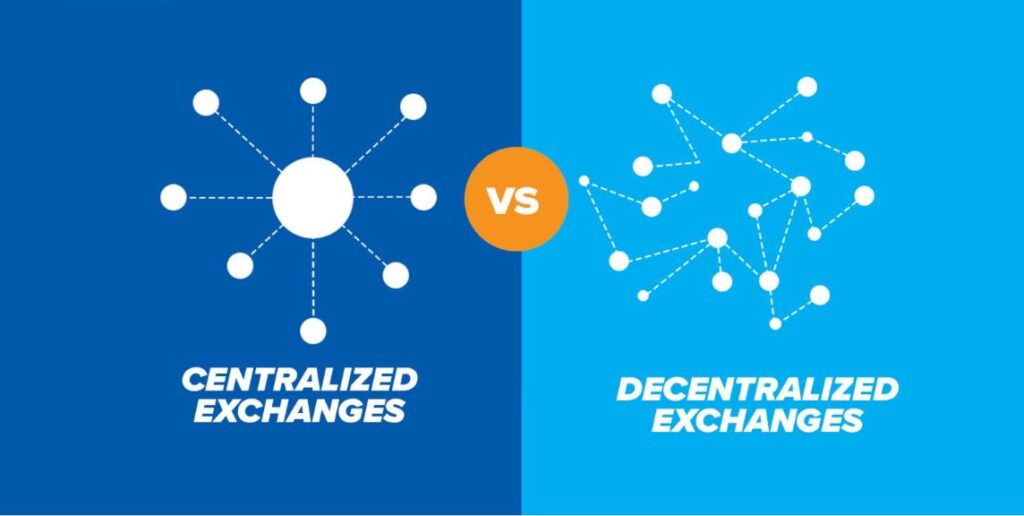
The rapid growth of cryptocurrency has introduced multiple ways for people to buy, sell, and trade digital assets. One of the most important decisions crypto users face is choosing between Centralized Exchanges (CEX) and Decentralized Exchanges (DEX).
Both types of exchanges allow users to trade cryptocurrencies, but they operate in very different ways. Understanding the differences between centralized crypto exchanges and decentralized crypto exchanges (DEX) can help traders make smarter decisions about security, fees, control, and trading flexibility.
In this guide, we will explore the centralized vs decentralized exchanges debate, explain how each works, compare their advantages and disadvantages, and help you determine which option is best for your crypto journey.
What is a Centralized Crypto Exchange?
A centralized crypto exchange (CEX) is a platform operated by a company that facilitates cryptocurrency trading between users. These exchanges act as intermediaries, meaning they hold users’ funds and execute trades on their behalf.
Popular centralized exchanges include:
-
Binance
-
Coinbase
-
Kraken
-
KuCoin
These platforms function similarly to traditional stock exchanges but are designed for digital assets such as Bitcoin, Ethereum, and thousands of other cryptocurrencies.
How Centralized Exchanges Work
Centralized exchanges operate through a structured system:
-
User Registration – Traders create accounts and complete identity verification.
-
Deposit Funds – Users deposit crypto or fiat money into the exchange wallet.
-
Order Matching – The exchange’s matching engine matches buyers and sellers.
-
Trade Execution – Transactions are completed within the exchange database.
-
Withdraw Funds – Users can withdraw crypto to external wallets.
Because a company controls the platform, the exchange manages custody of users’ assets.
Key Features of Centralized Exchanges
Centralized exchanges have several features that make them attractive to beginners and professional traders.
1. High Liquidity
CEX platforms usually have a large number of active users, which means trades are executed quickly with minimal price slippage.
For example, platforms like Binance handle billions of dollars in daily trading volume.
2. User-Friendly Interface
Centralized exchanges offer simple dashboards, mobile apps, and easy trading tools designed for beginners.
Platforms like Coinbase are known for their beginner-friendly experience.
3. Customer Support
Since these platforms are run by companies, they offer customer support services to help resolve issues like deposits, withdrawals, or account recovery.
4. Fiat Integration
Most centralized exchanges allow users to buy crypto using traditional currencies like USD, EUR, or INR.
This makes them the main gateway for new crypto investors entering the market.
What is a Decentralized Crypto Exchange (DEX)?
A Decentralized Crypto Exchange(DEX) is a blockchain-based platform that allows users to trade cryptocurrencies directly with each other without a central authority.
Popular DEX platforms include:
-
Uniswap
-
PancakeSwap
-
SushiSwap
DEX platforms rely on smart contracts instead of intermediaries to facilitate transactions.
Most decentralized exchanges operate on blockchain networks such as Ethereum, BNB, and others.
How Decentralized Exchanges Work
DEX platforms use blockchain technology to eliminate intermediaries.
Here’s how trading typically works:
-
Connect Wallet – Users connect a crypto wallet like MetaMask.
-
Select Token Pair – Traders choose which tokens they want to swap.
-
Smart Contract Execution – A smart contract automatically processes the trade.
-
Direct Wallet Transfer – Funds are transferred directly between wallets.
Unlike centralized exchanges, users retain full control of their funds during the entire process.
Key Features of Decentralized Exchanges
1. Full Control of Funds
DEX users maintain control of their private keys and funds.
The common phrase in crypto applies here: “Not your keys, not your crypto.”
2. Privacy
DEX platforms usually do not require identity verification (KYC), making them more private.
3. Global Accessibility
Anyone with a crypto wallet and internet connection can trade on a DEX.
4. Token Availability
DEX platforms often list new tokens much faster than centralized exchanges.
This makes them popular for trading newly launched cryptocurrencies.
Centralized vs Decentralized Exchanges (CEX vs DEX)
Understanding the difference between CEX vs DEX requires comparing several factors.
1. Control of Funds
Centralized Exchange
-
The exchange controls users’ funds.
-
Users rely on the platform’s security.
Decentralized Exchange
-
Users control their private keys.
-
Funds remain in personal wallets.
DEX platforms therefore offer greater financial sovereignty.
2. Security
Centralized exchanges have been frequent targets of cyberattacks.
Major hacks have affected the industry in the past, including the collapse of FTX in 2022.
DEX platforms reduce this risk because they do not hold user funds in a centralized wallet.
However, they still face risks such as smart contract vulnerabilities.
3. Liquidity
Liquidity is one of the biggest differences between centralized and decentralized exchanges.
CEX
-
High liquidity
-
Large trading volume
-
Faster trade execution
DEX
-
Lower liquidity in some trading pairs
-
Price slippage can occur
-
Liquidity pools determine available funds
4. Ease of Use
Centralized exchanges provide easier onboarding.
CEX
-
Beginner-friendly
-
Customer support available
-
Simple mobile apps
DEX
-
Requires wallet setup
-
Users must manage gas fees
-
Learning curve for beginners
5. Fees
Fees vary between exchange types.
Centralized Exchanges
-
Trading fees
-
Withdrawal fees
-
Deposit fees
Decentralized Exchanges
-
Network gas fees
-
Liquidity provider fees
For example, trading on the Ethereum network often includes gas fees.
6. Regulation
Centralized exchanges are regulated in many countries.
They must comply with financial rules, including:
-
KYC verification
-
Anti-money laundering policies
-
Government oversight
DEX platforms operate in a more decentralized environment and often lack direct regulation.
Advantages of Centralized Crypto Exchanges
Centralized exchanges remain the most widely used crypto trading platforms.
1. Ideal for Beginners
Their simple interface and customer support make them ideal for new traders.
2. Advanced Trading Tools
Many CEX platforms offer:
-
Margin trading
-
Futures trading
-
Stop-loss orders
-
Advanced charting tools
3. Fiat On-Ramp
Users can easily buy crypto using bank transfers or credit cards.
4. Faster Transactions
Internal trading systems process transactions quickly.
Advantages of Decentralized Crypto Exchanges
DEX platforms have become increasingly popular in the decentralized finance ecosystem.
1. Greater Privacy
Users can trade without identity verification.
2. Financial Independence
Users control their private keys and assets.
3. Permissionless Trading
Anyone can list tokens or participate in liquidity pools.
4. Access to New Tokens
DEX platforms often list tokens before centralized exchanges.
This provides early investment opportunities.
Disadvantages of Centralized Exchanges
Despite their popularity, centralized exchanges have several limitations.
1. Custodial Risk
Users must trust the exchange to secure their funds.
2. Regulatory Restrictions
Some countries restrict access to certain exchanges.
3. Hacking Risks
Large centralized wallets can become targets for hackers.
Disadvantages of Decentralized Exchanges
DEX platforms also have challenges.
1. Complex User Experience
New users may find wallet connections and gas fees confusing.
2. Lower Liquidity
Some trading pairs lack sufficient liquidity.
3. Smart Contract Risks
If a smart contract contains a bug, funds could be lost.
When Should You Use a Centralized Exchange?
Centralized exchanges are best for:
-
Beginners entering crypto
-
Buying crypto with fiat currency
-
High-volume trading
-
Accessing advanced trading tools
Many investors use centralized exchanges as their entry point into the crypto market.
When Should You Use a Decentralized Exchange?
DEX platforms are ideal for:
-
Users who want full control of their funds
-
Trading new or experimental tokens
-
Participating in decentralized finance (DeFi)
-
Maintaining privacy
Experienced crypto users often prefer decentralized platforms.
The Future of CEX vs DEX
The crypto industry is moving toward a hybrid model combining both systems.
Many platforms are developing hybrid exchanges that provide:
-
Centralized liquidity
-
Decentralized custody
-
Faster transaction speeds
As blockchain technology evolves, decentralized exchanges may become more efficient and user-friendly.
At the same time, centralized exchanges will continue improving compliance, security, and global accessibility.
Final Thoughts
The debate between Centralized vs Decentralized Exchanges (CEX vs DEX) highlights two different approaches to cryptocurrency trading.
Centralized exchanges offer ease of use, high liquidity, and regulatory protection, making them suitable for beginners and professional traders alike. crypto exchanges for staking
Decentralized exchanges focus on privacy, financial control, and permissionless access, aligning with the core philosophy of blockchain technology.
Ultimately, the best choice depends on your goals as a crypto user. Many traders use both centralized and decentralized exchanges to take advantage of the benefits each platform offers.