In recent years, cheap paper bags have shifted from being seen as a purely budget-driven packaging choice to a strategic business decision across the UK retail and e-commerce landscape. Rising environmental awareness, regulatory pressure on plastic packaging, and changing consumer expectations have reshaped how businesses evaluate cost-effective paper packaging solutions.
For retailers, fashion brands, food outlets, and independent businesses, the challenge is no longer just about finding the cheapest option. Instead, it’s about understanding how low-cost paper bags can still deliver sustainability, functionality, and brand credibility without compromising quality.
This article explores how cheap paper bags in the UK fit into today’s packaging ecosystem, what buyers should realistically expect at lower price points, and how businesses can make informed decisions that support both budgets and brand values.
Why Cheap Paper Bags Matter in the UK Market
The UK packaging market has undergone rapid transformation over the last decade. Government initiatives aimed at reducing plastic waste, combined with consumer demand for eco-conscious alternatives, have made paper bags a default option for many sectors.
Cheap paper bags play a critical role in this transition, particularly for:
-
Small and medium-sized retailers managing tight margins
-
High-volume businesses such as takeaway food outlets
-
Event organisers and seasonal sellers
-
E-commerce brands looking to control packaging costs
Affordability allows these businesses to comply with sustainability expectations without incurring significant overheads. However, the term “cheap” often raises concerns around durability, environmental impact, and presentation—concerns that are not always justified.
Understanding What “Cheap” Really Means in Paper Packaging
In the context of paper bags, “cheap” does not automatically mean low quality. More often, it reflects efficiencies in production, material sourcing, and design choices.
Low-cost paper bags typically achieve affordability through:
-
Use of recycled kraft paper rather than virgin stock
-
Standardised sizes and designs
-
Minimal or single-colour printing
-
High-volume manufacturing runs
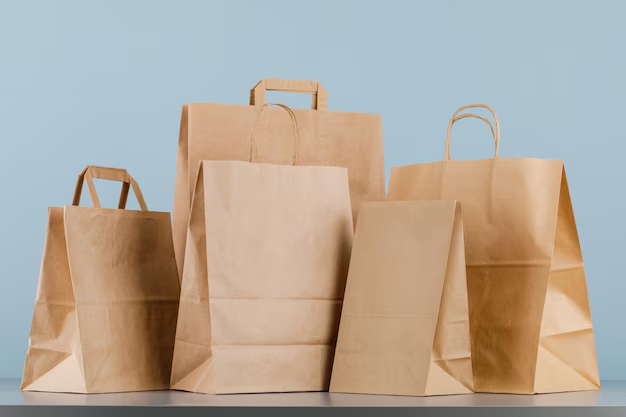
These factors reduce unit costs while still meeting basic performance requirements. In many cases, a plain kraft paper bag with twisted handles can outperform expectations, especially for lightweight retail or food items.
Understanding this distinction helps businesses avoid equating low price with poor performance—a misconception that can lead to unnecessary overspending.
Sustainability and Cost: Are Cheap Paper Bags Eco-Friendly?
One of the most common questions surrounding cheap paper bags in the UK is whether they align with sustainability goals. Surprisingly, many affordable options perform well from an environmental standpoint.
Most low-cost paper bags are:
-
Made from recycled or responsibly sourced paper
-
Biodegradable and recyclable
-
Free from plastic coatings or lamination
From a lifecycle perspective, simpler bags often have a lower environmental footprint than heavily customised alternatives. While premium finishes and thick stocks may enhance aesthetics, they can reduce recyclability and increase resource consumption.
For businesses prioritising environmental responsibility alongside cost control, basic paper bags can represent a practical and ethical choice rather than a compromise.
Functional Performance: What Businesses Should Expect
Functionality is a key concern for packaging buyers, particularly when opting for cheaper solutions. While it’s unrealistic to expect luxury-grade performance at budget prices, modern manufacturing standards have significantly improved baseline quality.
In everyday use, cheap paper bags in the UK typically offer:
-
Adequate load-bearing capacity for clothing, groceries, and boxed goods
-
Reinforced handles suitable for short-distance carrying
-
Consistent sizing for efficient storage and packing
The key is matching the bag specification to its intended use. Overengineering packaging for lightweight products can unnecessarily inflate costs, while under-specifying bags for heavier items risks damage and customer dissatisfaction.
The Role of Minimalism in Cost-Effective Branding
Interestingly, the rise of cheap paper bags coincides with a broader design trend towards minimalism. Many brands now embrace understated packaging as a signal of authenticity, sustainability, and transparency.
Plain paper bags with subtle branding—or none at all—are increasingly accepted by consumers, especially in sectors such as:
-
Ethical fashion
-
Independent retail
-
Artisan food and beverage
-
Pop-up and event-based commerce
In this context, affordability aligns with modern brand storytelling rather than detracting from it. A simple kraft bag can feel intentional and honest, reinforcing trust rather than diminishing perceived value.
Some UK packaging suppliers, including Sky Tags And Bags, have noted growing demand for straightforward, cost-effective paper packaging that supports both sustainability narratives and operational efficiency without excessive embellishment.
Common Mistakes Buyers Make When Choosing Cheap Paper Bags
Despite their advantages, cheap paper bags can underperform if buyers overlook key considerations. Some of the most frequent mistakes include:
-
Focusing solely on unit price without assessing strength or paper weight
-
Choosing inappropriate handle types for the product weight
-
Ignoring storage conditions, which can affect paper integrity
-
Assuming all recycled paper performs the same
Avoiding these pitfalls requires a basic understanding of specifications rather than a shift to higher-priced options. In many cases, small adjustments—such as opting for a slightly heavier GSM or reinforced handle—can significantly improve performance while keeping costs low.
Cheap Paper Bags as a Long-Term Packaging Strategy
As the UK continues to move toward circular economy principles, cheap paper bags are likely to remain a staple rather than a temporary solution. Their adaptability, recyclability, and affordability make them well suited to evolving regulatory and consumer landscapes.
For businesses, the strategic value lies in viewing low-cost paper bags not as disposable branding afterthoughts, but as functional assets that support logistics, compliance, and customer experience.
When chosen thoughtfully, they can reduce packaging spend, support sustainability commitments, and align with contemporary brand aesthetics—all without sacrificing practicality.
Conclusion: Cost Efficiency Without Compromise
Cheap paper bags in the UK represent more than just a budget-friendly packaging option. They reflect a broader shift toward pragmatic, sustainable, and purpose-driven business practices.
By understanding what drives cost, recognising realistic performance expectations, and aligning packaging choices with actual use cases, businesses can confidently adopt affordable paper bags without undermining quality or credibility.
In an era where transparency and responsibility matter as much as price, cheap paper bags demonstrate that cost efficiency and thoughtful packaging are no longer mutually exclusive—but increasingly interconnected.