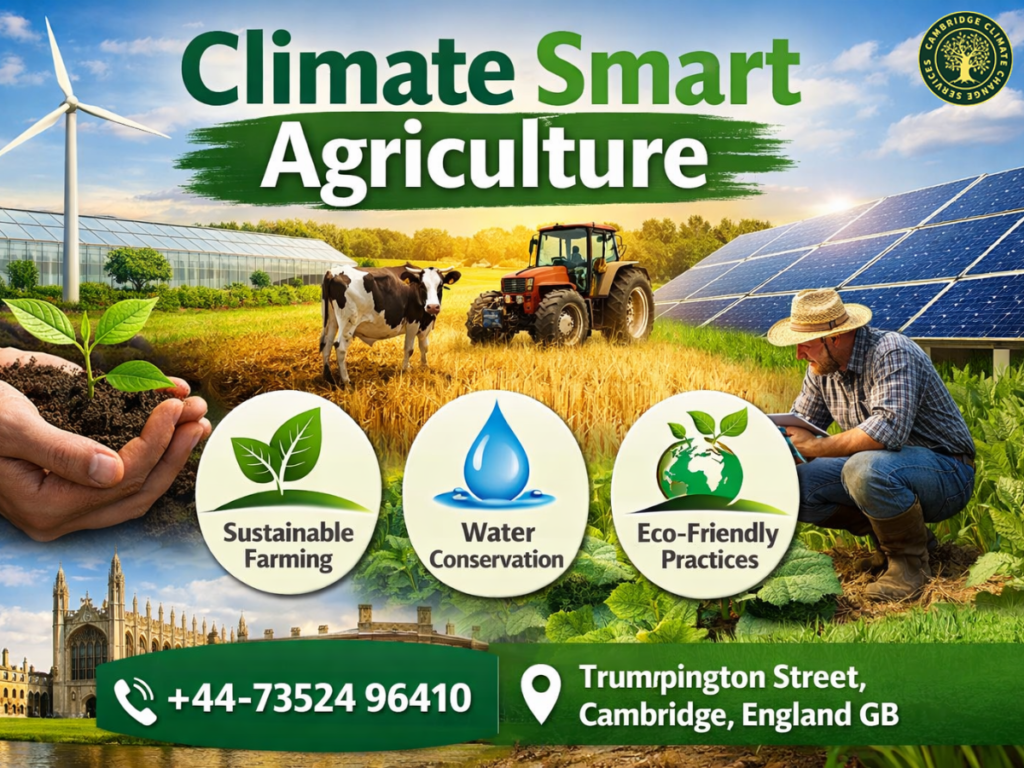
Agriculture today stands at a critical crossroads. Climate change, unpredictable weather patterns, soil degradation, and rising food demand are putting immense pressure on farming systems worldwide. To address these challenges, innovative and sustainable approaches are required—approaches that not only protect the environment but also ensure long-term productivity and economic stability for farmers. One such approach gaining global importance is Climate Smart Agriculture.
This concept integrates sustainability, resilience, and productivity into agricultural practices. Organizations like c3s are actively working to support climate-resilient farming and forestry initiatives that align with environmental goals and global climate commitments.
Understanding Climate Smart Agriculture
Climate Smart Agriculture is an integrated approach designed to transform and reorient agricultural systems in the face of climate change. It focuses on three core objectives:
- Increasing agricultural productivity and income
- Enhancing resilience and adaptation to climate change
- Reducing or removing greenhouse gas emissions where possible
Rather than being a single technique, Climate Smart Agriculture is a framework that combines multiple practices, technologies, and policies tailored to local environmental and socio-economic conditions.
Why Climate Smart Agriculture Matters Today
The impact of climate change on agriculture is no longer a future concern—it is a present reality. Erratic rainfall, rising temperatures, floods, droughts, and soil erosion are directly affecting crop yields and food security.
Climate Smart Agriculture addresses these issues by helping farmers:
- Adapt to climate risks
- Improve resource efficiency
- Maintain stable yields despite environmental stress
- Protect natural ecosystems
By adopting climate-smart methods, agricultural systems can become more resilient while continuing to support growing populations.
Key Practices in Climate Smart Agriculture
Sustainable Soil Management
Healthy soil is the foundation of productive farming. Climate-smart practices emphasize soil conservation techniques such as:
- Reduced tillage
- Cover cropping
- Organic matter enhancement
- Improved nutrient management
These methods improve soil structure, increase water retention, and reduce carbon loss, making farms more resilient to climate variability.
Efficient Water Use
Water scarcity is one of the most pressing challenges in agriculture. Climate Smart Agriculture promotes:
- Precision irrigation
- Rainwater harvesting
- Drip and sprinkler systems
- Smart water scheduling
Efficient water management not only conserves resources but also ensures crops receive optimal moisture during critical growth stages.
Climate-Resilient Crop Selection
Selecting crop varieties that can withstand drought, heat, pests, or flooding is a key climate adaptation strategy. Climate-smart farming encourages:
- Diversified cropping systems
- Improved seed varieties
- Crop rotation to enhance soil fertility
This reduces dependency on a single crop and lowers the risk of total crop failure.
Agroforestry and Forestry Integration
Agroforestry plays a vital role in Climate Smart Agriculture by integrating trees with crops and livestock systems. Trees help:
- Improve soil fertility
- Reduce erosion
- Enhance biodiversity
- Capture carbon from the atmosphere
Forestry-based solutions supported by c3s strengthen both environmental sustainability and rural livelihoods.
Climate Smart Agriculture and Climate Policy Alignment
Climate Smart Agriculture supports national and international climate goals, including:
- Net-zero targets
- Sustainable Development Goals (SDGs)
- Climate adaptation and mitigation strategies
By reducing emissions and increasing carbon sequestration, climate-smart farming contributes directly to global climate action efforts while supporting food security.
Economic Benefits for Farmers and Communities
Beyond environmental advantages, Climate Smart Agriculture offers strong economic benefits:
- Reduced input costs through efficient resource use
- Improved yield stability
- Lower risk exposure from climate extremes
- Enhanced long-term farm profitability
These benefits make climate-smart practices an attractive investment for farmers, agribusinesses, and policymakers alike.
Role of Technology in Climate Smart Agriculture
Modern technology is a powerful enabler of Climate Smart Agriculture. Digital tools and data-driven solutions help farmers make informed decisions, including:
- Weather forecasting tools
- Soil and crop monitoring systems
- Precision agriculture technologies
- Climate risk assessment platforms
Organizations like c3s leverage expertise and data to guide climate-aligned agricultural and forestry strategies that support sustainable development.
Climate Smart Agriculture and Forestry: A Combined Approach
Forestry and agriculture are deeply interconnected. Climate-smart forestry enhances land use efficiency while protecting ecosystems. Key benefits include:
- Improved carbon storage
- Restoration of degraded land
- Enhanced ecosystem services
- Long-term climate resilience
By integrating forestry solutions, Climate Smart Agriculture becomes a comprehensive land-use strategy rather than a standalone farming model.
Challenges in Implementing Climate Smart Agriculture
Despite its benefits, adoption can face challenges such as:
- Limited access to knowledge and training
- Financial constraints
- Policy and infrastructure gaps
- Lack of localized climate data
Addressing these challenges requires collaboration between governments, private organizations, and climate-focused consultancies like c3s.
The Future of Climate Smart Agriculture
As climate risks intensify, Climate Smart Agriculture will play an increasingly vital role in shaping resilient food systems. Continued innovation, policy support, and investment are essential to scale climate-smart solutions globally.
By aligning agricultural practices with environmental sustainability, Climate Smart Agriculture ensures long-term productivity while safeguarding natural resources for future generations.
Conclusion
Climate change demands a fundamental shift in how agriculture and forestry systems operate. Climate Smart Agriculture offers a practical, adaptable, and forward-looking framework that balances productivity, resilience, and environmental responsibility.
Through integrated practices such as sustainable soil management, efficient water use, agroforestry, and climate-resilient crop systems, climate-smart approaches help build stronger agricultural systems. With expert guidance and strategic support from organizations like c3s, businesses and policymakers can implement solutions that align economic growth with climate action.
Adopting Climate Smart Agriculture today is not just a response to climate change—it is an investment in a resilient, sustainable, and food-secure future.