forging suppliers india
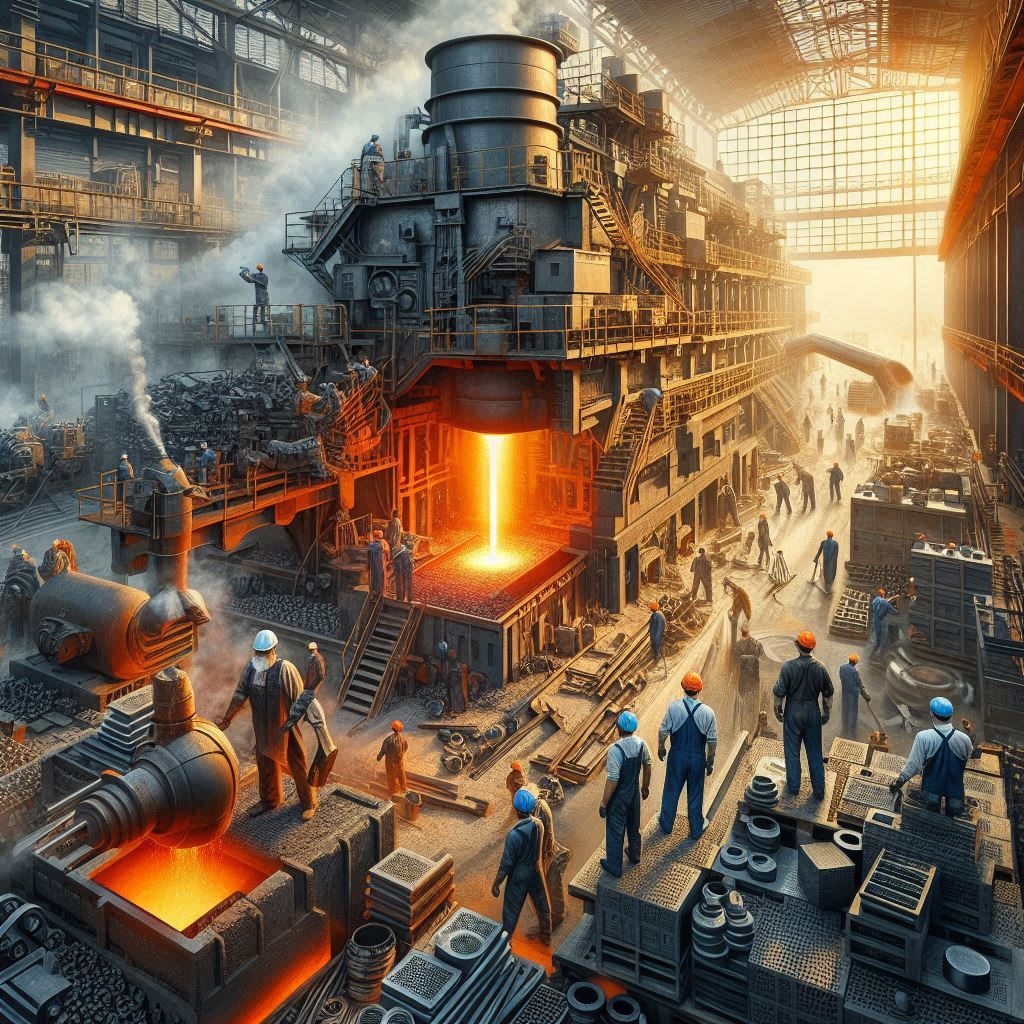
Forging suppliers India handles a very large share of the world’s mid-volume and heavy forged parts these days. Car makers, oil service companies, tractor manufacturers, railway wagon builders and crane producers keep coming back because the combination of price, delivery timing and acceptable quality works out better than many expected ten years ago.
Shops here run the full range — small 1-tonne drop hammers in backyard-style units, medium factories with 4–6 tonne pneumatic hammers, and bigger plants equipped with 8000–12000 tonne mechanical presses, 2000–8000 tonne hydraulic presses, ring rollers up to 2.5 metre diameter, and upset machines for axle-type work. Quite a few of the serious forging suppliers India have started keeping die-sinking machines, induction heaters with accurate temperature zones, shaker-hearth or continuous furnaces for heat treatment, and at least basic ultrasonic or mag-particle benches inside the gate.
How Things Grew Over Time
Thirty–forty years back most forging was done in tiny hammer shops making agricultural tools, hand-tools and repair parts for local mills. After 1991–92 when imports eased and dollars became easier to get, some entrepreneurs brought in second-hand German and Italian hammers and started chasing export enquiries. Around 2005–2010 many replaced those old hammers with new mechanical or hydraulic presses and added CNC die-sinking. The last decade brought Make in India talk, steel PLI, auto PLI and defence offset pressure — all of which helped medium and large units buy better equipment and chase bigger certificates.
Right now, a decent number of forging suppliers India can show IATF 16949, API 6A / 20C, PED 2014/68/EU, ISO 3834 welding, or even AS9100 when they chase aerospace business. Quite a few also keep their own small metallurgical lab with a microscope, hardness testers and tensile machine.
Why Orders Keep Landing Here
A few straightforward reasons explain most of it.
- Straight price difference
Operator wages, power bills, building rent and local taxes stay much lower than Germany, Italy, USA or even China in many cases now. Closed-die yield is normally 70–85 % so scrap loss does not eat the margin. Even after adding sea freight, customs and agent commission, landed cost frequently comes 30–45 % below equivalent European or American quotation for runs between 500 and 20 000 pieces.
- Steel is made nearby
Big integrated mills and secondary producers roll billets in C45, EN8, EN19, 4140, 4340, 16MnCr5, 8620, 304/316 and quite a few tool steels. Surface quality and internal soundness have improved noticeably in the last 8–10 years. For duplex, super-duplex or Inconel you still import, but carbon and low-alloy grades are mostly home-grown now.
- People know the drawings
Shop engineers read ISO-GD&T tolerancing, understand forging allowances, draft angles, fillet calls and hardness range demands. Many units run 3D die modelling and at least basic forging simulation so they catch fill problems before cutting the first die block.
- They can do small and large
Some shops like 200–2000 piece monthly repeat orders for car and tractor parts. Others specialise in one-off or ten-piece heavy items — 5 tonne pump bodies, 12 tonne rolls, 18 tonne shafts. Multi-shift running and spare press capacity help them absorb sudden spikes.
- Paperwork usually arrives complete
3.1 certificates, heat charts, UT or MPI reports, dimensional layouts, PPAP level 3 for automotive, material traceability back to melt number — most established exporters know the drill and prepare files without endless chasing.
Processes You will Normally Find
- Open-die — big rounds, squares, step-down shafts, pancake discs up to single-piece 25 tonne
- Closed-die with flash — flanges, gear blanks, levers, hooks, knuckles
- Precision closed-die — connecting rods, rocker arms, shift forks, yoke ends with 1.0–2.5 mm stock
- Rolled rings — seamless bearing races, gear rims, tower flanges
- Upset + finish — axle blanks, pinion heads, foundation bolts with big upset heads
A number of shops do blocker + finisher or pre-form by rolling / extrusion then final closed-die.
Parts You See Most Often
Automotive → crankshafts, con-rods, stub axles, crown wheels, CV flanges
Oilfield → cross-overs, drill collars, valve bodies, frac heads, hammer unions
Railway → drawbar eyes, centre pivots, wheel blanks, brake beams
Tractor & agri → king-pins, cultivator tines, plough shares, gearbox shafts
Industrial → crane hooks, sheave blocks, hydraulic cylinder clevises, pinion shafts
Practical Steps to Pick a Supplier
- Make first list
Look at AIFI website members, IndiaMART “verified” or “trust-seal” forging companies, or ask your current Indian agent / buyer for three names that already do similar work.
- Ask basic questions
Press size, max single-piece weight, regular grades, monthly capacity, photos of similar parts they shipped last year, sample die blocks.
- Check certificates & lab
See whether the certs are current and match your product (IATF for auto, API for oil, PED for pressure). Ask if tensile, impact and micro-cleanliness tests happen in-house.
- Go and look (or video call)
Watch how billets are stored, whether furnaces have proper controls, how dies are handled, cleanliness around trim presses, packing area setup.
- Start small
Order 20–100 pieces first. Check actual dimensions, surface finish, test report numbers and delivery date against promise.
- Sort commercial side
Who owns the die, who pays for first, advance percentage (30–40 % normal), balance against scan of documents or after inspection.
Grades That Come Up Repeatedly
C45 / EN8 / EN9
EN19 / EN24 / 4140 / 4340
16MnCr5 / 20MnCr5 / SAE 8620
304 / 316 / 410
H11 / H13 for hot-work dies
Some micro-alloy grades for fatigue-critical automotive.
Normal Checks Inside the Factory
Billet inspection + stamp verification
Billet heating chart or pyrometer log
Die preheat before first blow
Heat treatment with recorder paper
Ultrasonic or mag-particle on critical zones
100 % visual + key dimensions on gauge
Rust oil + VCI paper + good crate before dispatch
Shipping Realities
Nhava Sheva and Mundra take most 20 ft and 40 ft containers. Crates normally get VCI, plastic sheet, silica gel bags and steel strapping. Documents — invoice, packing list, origin certificate, inspection report — are usually correct if the supplier has exported before.
Fix FOB or CIF early and decide who buys insurance.
Trouble Spots and How People Handle Them
Steel price jumps every 4–8 months → some sign 6–12 months agreements with review clause
Monsoon trucking delays → place order early or allow buffer weeks
Drawing mistakes or missing info → send complete 3D model + 2D drawing + hardness map + critical items list
Many buyers use local inspection agencies for pre-shipment checks when volume justifies it.
What is Coming Next
More induction heating replacing gas/oil furnaces, a few electric screw presses appearing, better flow simulation on laptops, robots for die loading and part handling in bigger shops. Heavy open-die and precision closed-die capacity keeps growing.
Closing Note
Forging suppliers India have moved past the “cheap only” label for many buyers. When you choose carefully, give clear drawings, start with trials and keep communication regular, the arrangement usually runs smoother than people expect at first. A fair number of overseas companies now treat 2–3 Indian forging units as steady Tier-2 or Tier-1 partners rather than temporary sources. The gap in equipment and systems keeps narrowing, so the option stays strong for price-sensitive but quality-conscious applications.