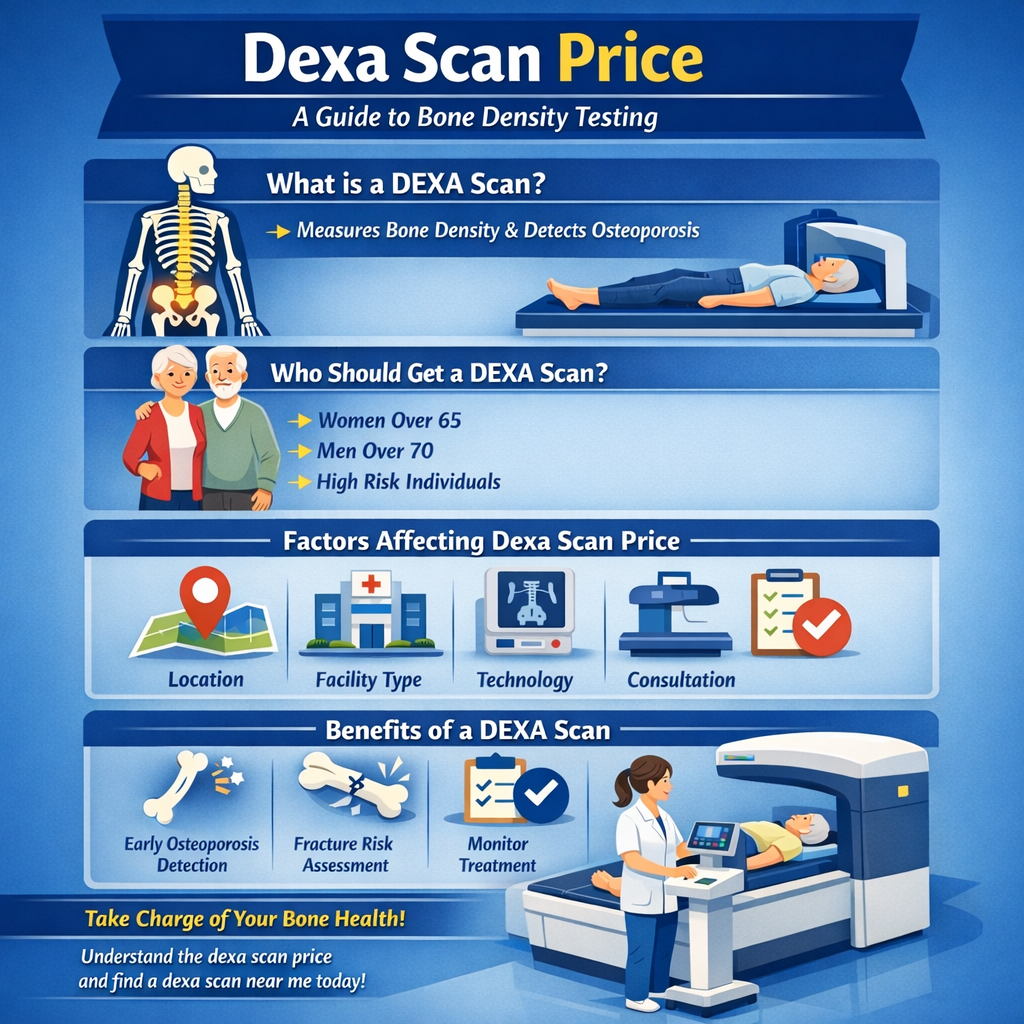
Bone health is an essential part of overall wellness, especially as people age or face conditions that weaken bones and reduce strength over time. Many patients searching online for diagnostic services type DEXA scan near me to locate reliable bone density testing centres in their area. Understanding the current average DEXA scan price is also important because it helps individuals plan medical expenses while ensuring they receive accurate screening for osteoporosis and other bone-related conditions. A DEXA scan, also known as Dual-Energy X-ray Absorptiometry, is one of the most reliable tests for measuring bone density. Doctors frequently recommend it for people at risk of osteoporosis, fractures, or bone loss. In this guide, we will explore what a DEXA scan is, why it is important, factors affecting the cost, and how to choose the right diagnostic centre for the test.
What is a DEXA Scan?
A DEXA scan is a specialised imaging test that measures bone mineral density (BMD). It uses very low-dose X-ray technology to determine how strong your bones are and whether they are at risk of fractures.
The scan usually focuses on areas where fractures commonly occur, such as:
The hip
The spine
The forearm
The procedure is simple, painless, and non-invasive. During the test, the patient lies on a table while a scanning arm passes over the body to measure bone density.
Doctors rely on this test to diagnose conditions like:
Osteoporosis
Osteopenia (early bone loss)
Increased fracture risk
Because of its precision and safety, DEXA scans are considered the gold standard for bone density testing worldwide.
Why is a DEXA Scan Important?
Bone density naturally decreases with age. However, certain conditions and lifestyle factors can accelerate bone loss. A DEXA scan helps detect problems early, allowing doctors to start treatment before fractures occur.
Here are some key benefits of getting a DEXA scan:
Early Detection of Osteoporosis
Osteoporosis often develops silently without symptoms. A DEXA scan can detect bone loss before a fracture happens.
Fracture Risk Assessment
The scan helps doctors estimate the likelihood of future fractures, especially in older adults.
Monitoring Treatment
Patients already receiving treatment for bone loss can use DEXA scans to monitor progress and treatment effectiveness.
Preventive Healthcare
Early diagnosis allows individuals to make lifestyle changes, improve nutrition, and take medication if necessary.
Who Should Get a DEXA Scan?
Doctors usually recommend a DEXA scan for individuals at higher risk of bone loss. You may need this test if you fall into one of the following categories:
Women over the age of 65
Men over the age of 70
People with a family history of osteoporosis
Individuals with frequent bone fractures
Postmenopausal women
People taking long-term steroid medications
Patients with vitamin D deficiency or calcium deficiency
Even younger individuals may be advised to undergo this test if they have medical conditions affecting bone health.
Factors That Affect Dexa Scan Price
The DEXA scan price can vary depending on several factors. Understanding these factors helps patients make informed decisions when choosing a diagnostic centre.
1. Location of the Diagnostic Centre
Prices may differ between cities and regions. Large metropolitan areas sometimes have higher costs compared to smaller towns.
2. Type of Diagnostic Facility
Specialised diagnostic imaging centres may offer different pricing compared to multi-speciality healthcare facilities.
3. Technology and Equipment
Modern imaging equipment with advanced technology may influence the cost of the scan.
4. Additional Consultation
Some centres include doctor consultations or detailed reports as part of the package, which can affect the overall price.
5. Package Tests
In some cases, bone density testing may be included in health screening packages, which can change the total cost.
How the DEXA Scan Procedure Works
The DEXA scan procedure is straightforward and usually takes around 10–20 minutes.
Step 1: Preparation
Patients are generally asked to avoid calcium supplements for at least 24 hours before the test. Comfortable clothing without metal is recommended.
Step 2: Positioning
The patient lies on a padded examination table while the scanning device moves slowly over the body.
Step 3: Imaging
The machine sends low-dose X-ray beams through the bones and measures the amount absorbed.
Step 4: Results and Analysis
The system calculates bone mineral density and compares it with standard values to determine bone strength. The results are typically presented as T-scores, which help doctors determine whether the bones are normal, slightly weak, or osteoporotic.
Is a DEXA Scan Safe?
Yes, a DEXA scan is considered extremely safe. It uses a very small amount of radiation, much lower than traditional X-ray imaging tests.
Safety benefits include:
Minimal radiation exposure
Non-invasive procedure
No injections required
Quick and painless test
Because of its safety profile, doctors frequently recommend it for routine monitoring of bone health.
How to Prepare for a DEXA Scan
Preparation for a DEXA scan is simple. Patients usually receive basic instructions before the appointment.
Common preparation tips include:
Avoid calcium supplements 24 hours before the scan
Wear loose and comfortable clothing
Remove metal objects such as belts or jewellery
Inform the technician if you recently had a contrast CT scan or nuclear medicine test
Following these instructions ensures accurate results during the scan.
Choosing the Right Diagnostic Centre
When selecting a centre for bone density testing, it is important to consider several factors beyond just the price.
Look for Experienced Radiology Staff
Qualified technicians and radiologists ensure accurate testing and reporting.
Check Equipment Quality
Centres with modern imaging technology often provide more precise results.
Review Patient Feedback
Patient reviews and recommendations can help you choose a reliable diagnostic facility.
Ensure Accurate Reporting
A good centre provides detailed reports that help doctors interpret the results correctly. Diagnostic centres such as City Imaging Clinical Lab focus on providing reliable imaging services using advanced diagnostic equipment and experienced professionals.
Benefits of Early Bone Density Testing
Getting a DEXA scan at the right time offers several health benefits.
These include:
Early osteoporosis detection
Better treatment planning
Prevention of fractures
Improved bone health management
Long-term health monitoring
With early diagnosis, patients can make lifestyle adjustments such as improving calcium intake, exercising regularly, and following medical advice to strengthen bones.
Conclusion
Bone health is essential for maintaining mobility, strength, and overall quality of life. Conditions like osteoporosis often develop silently, making early detection extremely important. A DEXA scan is one of the most accurate and reliable methods for measuring bone density and identifying potential risks before serious complications occur. Understanding the DEXA scan near me helps patients plan their healthcare expenses and choose a trusted diagnostic centre for testing. With modern imaging technology and experienced medical professionals, bone density testing has become safer, faster, and more accessible than ever. If your doctor recommends a bone density test or you are experiencing risk factors for bone loss, scheduling a DEXA scan can be an important step toward protecting your long-term bone health.